

10.3.2.2 Soil Classification and Fertility
Based on the different interviews, we identify two main soil classification systems
(Table 10.4). The first system relates to the type of forest cover and contains four
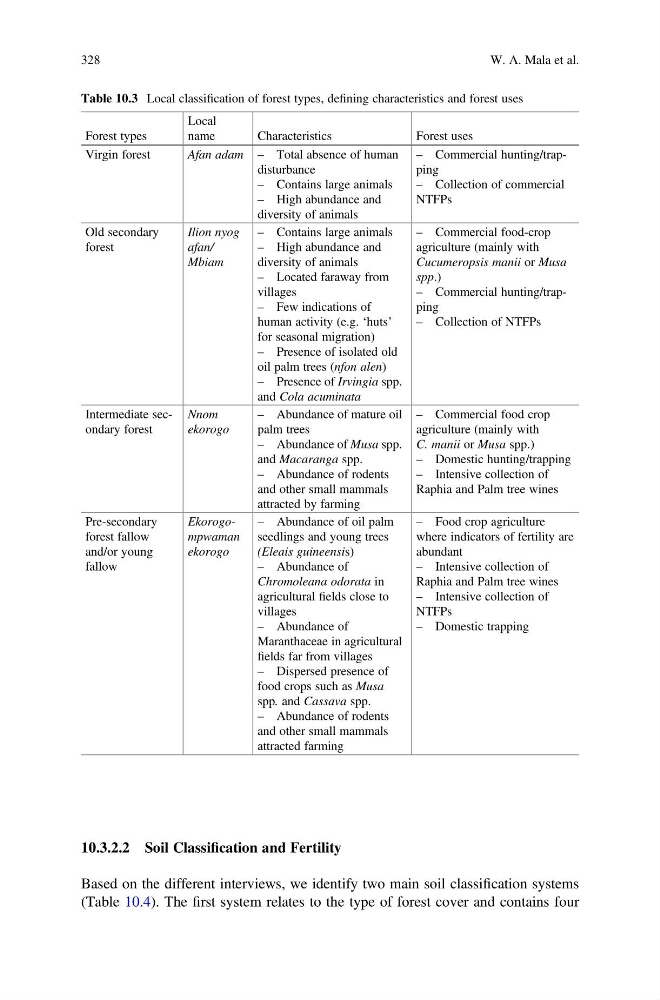
Table 10.3 Local classification of forest types, defining characteristics and forest uses
Forest types
Local
name
Characteristics
Forest uses
Virgin forest
Afan adam – Total absence of human
disturbance
– Contains large animals
– High abundance and
diversity of animals
– Commercial hunting/trapping
– Collection of commercial
NTFPs
Old secondary
forest
Ilion nyog
afan/
Mbiam
– Contains large animals
– High abundance and
diversity of animals
– Located faraway from
villages
– Few indications of
human activity (e.g. ‘huts’
for seasonal migration)
– Presence of isolated old
oil palm trees (nfon alen)
– Presence of Irvingia spp.
and Cola acuminata
– Commercial food-crop
agriculture (mainly with
Cucumeropsis manii or Musa
spp.)
– Commercial hunting/trapping
– Collection of NTFPs
Intermediate secondary forest
Nnom
ekorogo
– Abundance of mature oil
palm trees
– Abundance of Musa spp.
and Macaranga spp.
– Abundance of rodents
and other small mammals
attracted by farming
– Commercial food crop
agriculture (mainly with
C. manii or Musa spp.)
– Domestic hunting/trapping
– Intensive collection of
Raphia and Palm tree wines
Pre-secondary
forest fallow
and/or young
fallow
Ekorogompwaman
ekorogo
– Abundance of oil palm
seedlings and young trees
(Eleais guineensis)
– Abundance of
Chromoleana odorata in
agricultural fields close to
villages
– Abundance of
Maranthaceae in agricultural
fields far from villages
– Dispersed presence of
food crops such as Musa
spp. and Cassava spp.
– Abundance of rodents
and other small mammals
attracted farming
– Food crop agriculture
where indicators of fertility are
abundant
– Intensive collection of
Raphia and Palm tree wines
– Intensive collection of
NTFPs
– Domestic trapping
328
W. A. Mala et al.
Based on the different interviews, we identify two main soil classification systems
(Table 10.4). The first system relates to the type of forest cover and contains four
Table 10.3 Local classification of forest types, defining characteristics and forest uses
Forest types
Local
name
Characteristics
Forest uses
Virgin forest
Afan adam – Total absence of human
disturbance
– Contains large animals
– High abundance and
diversity of animals
– Commercial hunting/trapping
– Collection of commercial
NTFPs
Old secondary
forest
Ilion nyog
afan/
Mbiam
– Contains large animals
– High abundance and
diversity of animals
– Located faraway from
villages
– Few indications of
human activity (e.g. ‘huts’
for seasonal migration)
– Presence of isolated old
oil palm trees (nfon alen)
– Presence of Irvingia spp.
and Cola acuminata
– Commercial food-crop
agriculture (mainly with
Cucumeropsis manii or Musa
spp.)
– Commercial hunting/trapping
– Collection of NTFPs
Intermediate secondary forest
Nnom
ekorogo
– Abundance of mature oil
palm trees
– Abundance of Musa spp.
and Macaranga spp.
– Abundance of rodents
and other small mammals
attracted by farming
– Commercial food crop
agriculture (mainly with
C. manii or Musa spp.)
– Domestic hunting/trapping
– Intensive collection of
Raphia and Palm tree wines
Pre-secondary
forest fallow
and/or young
fallow
Ekorogompwaman
ekorogo
– Abundance of oil palm
seedlings and young trees
(Eleais guineensis)
– Abundance of
Chromoleana odorata in
agricultural fields close to
villages
– Abundance of
Maranthaceae in agricultural
fields far from villages
– Dispersed presence of
food crops such as Musa
spp. and Cassava spp.
– Abundance of rodents
and other small mammals
attracted farming
– Food crop agriculture
where indicators of fertility are
abundant
– Intensive collection of
Raphia and Palm tree wines
– Intensive collection of
NTFPs
– Domestic trapping
328
W. A. Mala et al.