

It is interesting to note that only one of the TSP respondents reported to use fuelwood
from mangrove forests. However, this fuelwood is mainly purchased from commercial fuelwood markets procured from other areas outside Balessourou district.
Traditional mangrove rice producers (TMR) and improved mangrove rice producers (IMR), reportedly consume fuelwood from mangrove forest (18.6% and
10.9% of the total surveyed households, respectively) (Table 7.2). Furthermore
14.1% and 21.8% of the total surveyed households collect fuelwood from the upland
forests, respectively.
When it comes to other cooking fuels, charcoal is used by 21.4%, 13.6%, 7.3%
and 1.3% of the TSP/GS, SM, WE and TMR, respectively (Table 7.2). Approximately 14% of households use kerosene for cooking, while none of the households
reported the use of electricity. For cooking devices, most households use inefficient
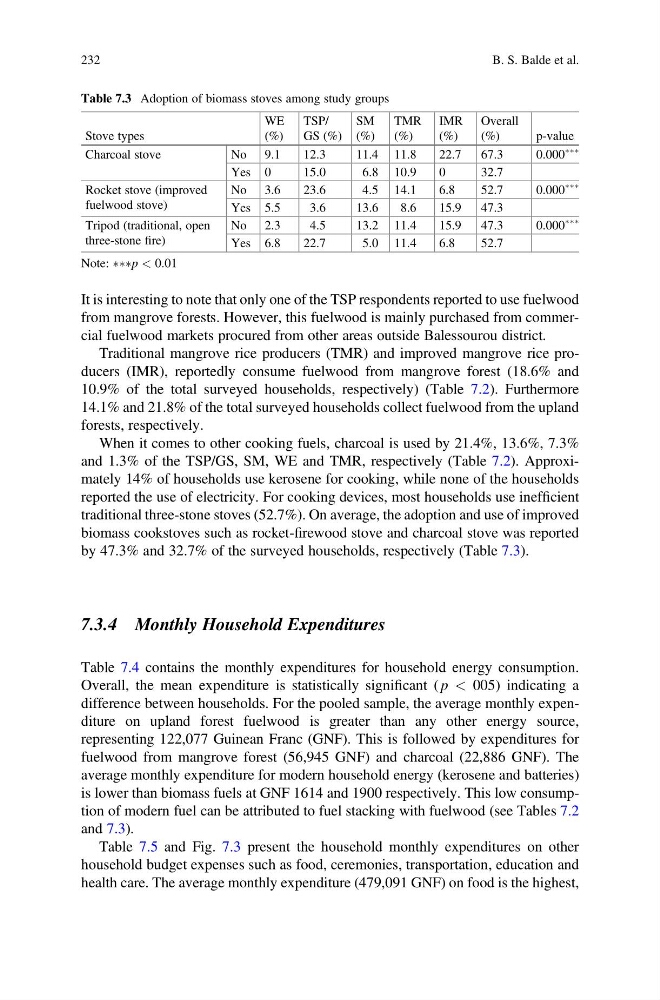
traditional three-stone stoves (52.7%). On average, the adoption and use of improved
biomass cookstoves such as rocket-firewood stove and charcoal stove was reported
by 47.3% and 32.7% of the surveyed households, respectively (Table 7.3).
7.3.4 Monthly Household Expenditures
Table 7.4 contains the monthly expenditures for household energy consumption.
Overall, the mean expenditure is statistically significant ( p < 005) indicating a
difference between households. For the pooled sample, the average monthly expenditure on upland forest fuelwood is greater than any other energy source,
representing 122,077 Guinean Franc (GNF). This is followed by expenditures for
fuelwood from mangrove forest (56,945 GNF) and charcoal (22,886 GNF). The
average monthly expenditure for modern household energy (kerosene and batteries)
is lower than biomass fuels at GNF 1614 and 1900 respectively. This low consumption of modern fuel can be attributed to fuel stacking with fuelwood (see Tables 7.2
and 7.3).
Table 7.5 and Fig. 7.3 present the household monthly expenditures on other
household budget expenses such as food, ceremonies, transportation, education and
health care. The average monthly expenditure (479,091 GNF) on food is the highest,
Table 7.3 Adoption of biomass stoves among study groups
Stove types
WE
(%)
TSP/
GS (%)
SM
(%)
TMR
(%)
IMR
(%)
Overall
(%)
p-value
Charcoal stove
No 9.1
12.3
11.4 11.8
22.7
67.3
0.000
ÃÃÃ
Yes 0
15.0
6.8 10.9
0
32.7
Rocket stove (improved
fuelwood stove)
No 3.6
23.6
4.5 14.1
6.8
52.7
0.000
ÃÃÃ
Yes 5.5
3.6
13.6
8.6
15.9
47.3
Tripod (traditional, open
three-stone fire)
No 2.3
4.5
13.2 11.4
15.9
47.3
0.000
ÃÃÃ
Yes 6.8
22.7
5.0 11.4
6.8
52.7
Note: ÃÃÃp < 0.01
232
B. S. Balde et al.
from mangrove forests. However, this fuelwood is mainly purchased from commercial fuelwood markets procured from other areas outside Balessourou district.
Traditional mangrove rice producers (TMR) and improved mangrove rice producers (IMR), reportedly consume fuelwood from mangrove forest (18.6% and
10.9% of the total surveyed households, respectively) (Table 7.2). Furthermore
14.1% and 21.8% of the total surveyed households collect fuelwood from the upland
forests, respectively.
When it comes to other cooking fuels, charcoal is used by 21.4%, 13.6%, 7.3%
and 1.3% of the TSP/GS, SM, WE and TMR, respectively (Table 7.2). Approximately 14% of households use kerosene for cooking, while none of the households
reported the use of electricity. For cooking devices, most households use inefficient
traditional three-stone stoves (52.7%). On average, the adoption and use of improved
biomass cookstoves such as rocket-firewood stove and charcoal stove was reported
by 47.3% and 32.7% of the surveyed households, respectively (Table 7.3).
7.3.4 Monthly Household Expenditures
Table 7.4 contains the monthly expenditures for household energy consumption.
Overall, the mean expenditure is statistically significant ( p < 005) indicating a
difference between households. For the pooled sample, the average monthly expenditure on upland forest fuelwood is greater than any other energy source,
representing 122,077 Guinean Franc (GNF). This is followed by expenditures for
fuelwood from mangrove forest (56,945 GNF) and charcoal (22,886 GNF). The
average monthly expenditure for modern household energy (kerosene and batteries)
is lower than biomass fuels at GNF 1614 and 1900 respectively. This low consumption of modern fuel can be attributed to fuel stacking with fuelwood (see Tables 7.2
and 7.3).
Table 7.5 and Fig. 7.3 present the household monthly expenditures on other
household budget expenses such as food, ceremonies, transportation, education and
health care. The average monthly expenditure (479,091 GNF) on food is the highest,
Table 7.3 Adoption of biomass stoves among study groups
Stove types
WE
(%)
TSP/
GS (%)
SM
(%)
TMR
(%)
IMR
(%)
Overall
(%)
p-value
Charcoal stove
No 9.1
12.3
11.4 11.8
22.7
67.3
0.000
ÃÃÃ
Yes 0
15.0
6.8 10.9
0
32.7
Rocket stove (improved
fuelwood stove)
No 3.6
23.6
4.5 14.1
6.8
52.7
0.000
ÃÃÃ
Yes 5.5
3.6
13.6
8.6
15.9
47.3
Tripod (traditional, open
three-stone fire)
No 2.3
4.5
13.2 11.4
15.9
47.3
0.000
ÃÃÃ
Yes 6.8
22.7
5.0 11.4
6.8
52.7
Note: ÃÃÃp < 0.01
232
B. S. Balde et al.