

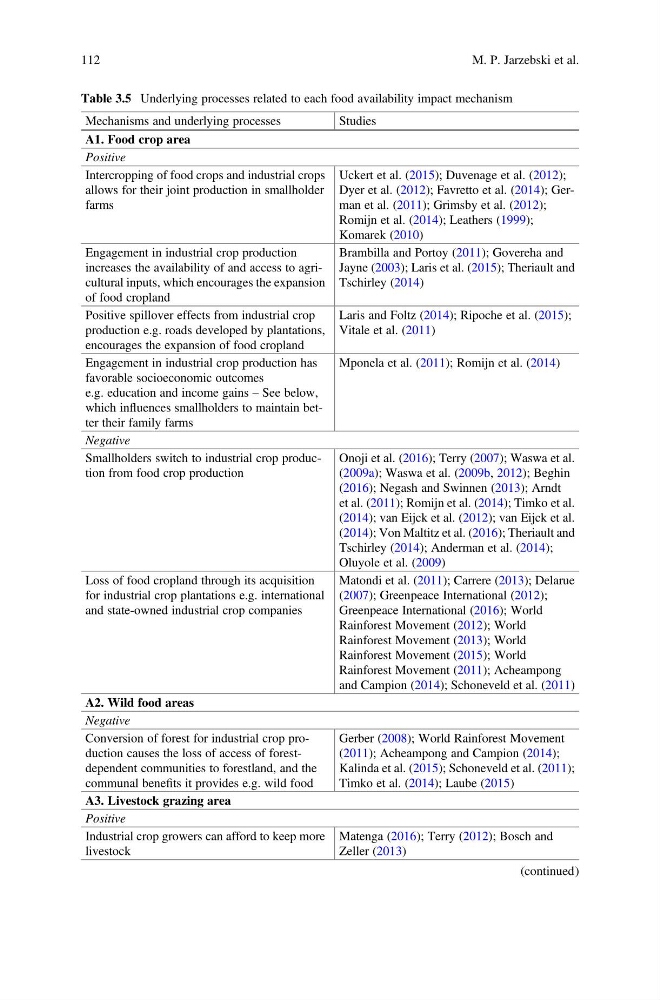
Table 3.5 Underlying processes related to each food availability impact mechanism
Mechanisms and underlying processes
Studies
A1. Food crop area
Positive
Intercropping of food crops and industrial crops
allows for their joint production in smallholder
farms
Uckert et al. (2015); Duvenage et al. (2012);
Dyer et al. (2012); Favretto et al. (2014); German et al. (2011); Grimsby et al. (2012);
Romijn et al. (2014); Leathers (1999);
Komarek (2010)
Engagement in industrial crop production
increases the availability of and access to agricultural inputs, which encourages the expansion
of food cropland
Brambilla and Portoy (2011); Govereha and
Jayne (2003); Laris et al. (2015); Theriault and
Tschirley (2014)
Positive spillover effects from industrial crop
production e.g. roads developed by plantations,
encourages the expansion of food cropland
Laris and Foltz (2014); Ripoche et al. (2015);
Vitale et al. (2011)
Engagement in industrial crop production has
favorable socioeconomic outcomes
e.g. education and income gains – See below,
which influences smallholders to maintain better their family farms
Mponela et al. (2011); Romijn et al. (2014)
Negative
Smallholders switch to industrial crop production from food crop production
Onoji et al. (2016); Terry (2007); Waswa et al.
(2009a); Waswa et al. (2009b, 2012); Beghin
(2016); Negash and Swinnen (2013); Arndt
et al. (2011); Romijn et al. (2014); Timko et al.
(2014); van Eijck et al. (2012); van Eijck et al.
(2014); Von Maltitz et al. (2016); Theriault and
Tschirley (2014); Anderman et al. (2014);
Oluyole et al. (2009)
Loss of food cropland through its acquisition
for industrial crop plantations e.g. international
and state-owned industrial crop companies
Matondi et al. (2011); Carrere (2013); Delarue
(2007); Greenpeace International (2012);
Greenpeace International (2016); World
Rainforest Movement (2012); World
Rainforest Movement (2013); World
Rainforest Movement (2015); World
Rainforest Movement (2011); Acheampong
and Campion (2014); Schoneveld et al. (2011)
A2. Wild food areas
Negative
Conversion of forest for industrial crop production causes the loss of access of forestdependent communities to forestland, and the
communal benefits it provides e.g. wild food
Gerber (2008); World Rainforest Movement
(2011); Acheampong and Campion (2014);
Kalinda et al. (2015); Schoneveld et al. (2011);
Timko et al. (2014); Laube (2015)
A3. Livestock grazing area
Positive
Industrial crop growers can afford to keep more
livestock
Matenga (2016); Terry (2012); Bosch and
Zeller (2013)
(continued)
112
M. P. Jarzebski et al.
Mechanisms and underlying processes
Studies
A1. Food crop area
Positive
Intercropping of food crops and industrial crops
allows for their joint production in smallholder
farms
Uckert et al. (2015); Duvenage et al. (2012);
Dyer et al. (2012); Favretto et al. (2014); German et al. (2011); Grimsby et al. (2012);
Romijn et al. (2014); Leathers (1999);
Komarek (2010)
Engagement in industrial crop production
increases the availability of and access to agricultural inputs, which encourages the expansion
of food cropland
Brambilla and Portoy (2011); Govereha and
Jayne (2003); Laris et al. (2015); Theriault and
Tschirley (2014)
Positive spillover effects from industrial crop
production e.g. roads developed by plantations,
encourages the expansion of food cropland
Laris and Foltz (2014); Ripoche et al. (2015);
Vitale et al. (2011)
Engagement in industrial crop production has
favorable socioeconomic outcomes
e.g. education and income gains – See below,
which influences smallholders to maintain better their family farms
Mponela et al. (2011); Romijn et al. (2014)
Negative
Smallholders switch to industrial crop production from food crop production
Onoji et al. (2016); Terry (2007); Waswa et al.
(2009a); Waswa et al. (2009b, 2012); Beghin
(2016); Negash and Swinnen (2013); Arndt
et al. (2011); Romijn et al. (2014); Timko et al.
(2014); van Eijck et al. (2012); van Eijck et al.
(2014); Von Maltitz et al. (2016); Theriault and
Tschirley (2014); Anderman et al. (2014);
Oluyole et al. (2009)
Loss of food cropland through its acquisition
for industrial crop plantations e.g. international
and state-owned industrial crop companies
Matondi et al. (2011); Carrere (2013); Delarue
(2007); Greenpeace International (2012);
Greenpeace International (2016); World
Rainforest Movement (2012); World
Rainforest Movement (2013); World
Rainforest Movement (2015); World
Rainforest Movement (2011); Acheampong
and Campion (2014); Schoneveld et al. (2011)
A2. Wild food areas
Negative
Conversion of forest for industrial crop production causes the loss of access of forestdependent communities to forestland, and the
communal benefits it provides e.g. wild food
Gerber (2008); World Rainforest Movement
(2011); Acheampong and Campion (2014);
Kalinda et al. (2015); Schoneveld et al. (2011);
Timko et al. (2014); Laube (2015)
A3. Livestock grazing area
Positive
Industrial crop growers can afford to keep more
livestock
Matenga (2016); Terry (2012); Bosch and
Zeller (2013)
(continued)
112
M. P. Jarzebski et al.