

Characterization of University Residential and Canteen …
203
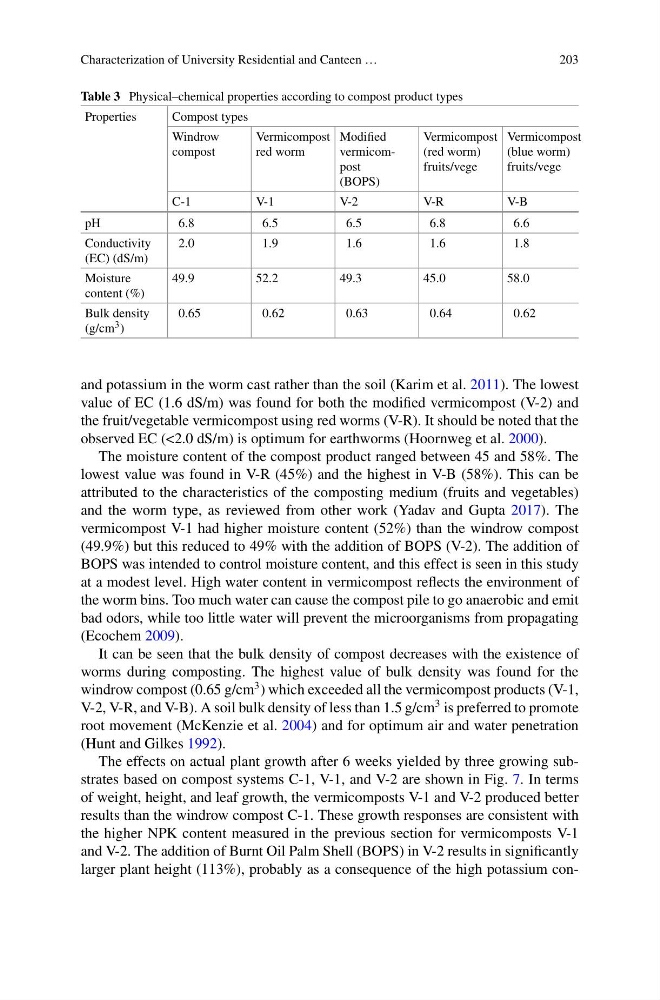
Table 3 Physical–chemical properties according to compost product types
Properties
Compost types
Windrow
compost
Vermicompost
red worm
Modified
vermicompost
(BOPS)
Vermicompost
(red worm)
fruits/vege
Vermicompost
(blue worm)
fruits/vege
C-1
V-1
V-2
V-R
V-B
pH
6.8
6.5
6.5
6.8
6.6
Conductivity
(EC) (dS/m)
2.0
1.9
1.6
1.6
1.8
Moisture
content (%)
49.9
52.2
49.3
45.0
58.0
Bulk density
(g/cm 3 )
0.65
0.62
0.63
0.64
0.62
and potassium in the worm cast rather than the soil (Karim et al. 2011). The lowest
value of EC (1.6 dS/m) was found for both the modified vermicompost (V-2) and
the fruit/vegetable vermicompost using red worms (V-R). It should be noted that the
observed EC (<2.0 dS/m) is optimum for earthworms (Hoornweg et al. 2000).
The moisture content of the compost product ranged between 45 and 58%. The
lowest value was found in V-R (45%) and the highest in V-B (58%). This can be
attributed to the characteristics of the composting medium (fruits and vegetables)
and the worm type, as reviewed from other work (Yadav and Gupta 2017). The
vermicompost V-1 had higher moisture content (52%) than the windrow compost
(49.9%) but this reduced to 49% with the addition of BOPS (V-2). The addition of
BOPS was intended to control moisture content, and this effect is seen in this study
at a modest level. High water content in vermicompost reflects the environment of
the worm bins. Too much water can cause the compost pile to go anaerobic and emit
bad odors, while too little water will prevent the microorganisms from propagating
(Ecochem 2009).
It can be seen that the bulk density of compost decreases with the existence of
worms during composting. The highest value of bulk density was found for the
windrow compost (0.65 g/cm
3 ) which exceeded all the vermicompost products (V-1,
V-2, V-R, and V-B). A soil bulk density of less than 1.5 g/cm
3 is preferred to promote
root movement (McKenzie et al. 2004) and for optimum air and water penetration
(Hunt and Gilkes 1992).
The effects on actual plant growth after 6 weeks yielded by three growing substrates based on compost systems C-1, V-1, and V-2 are shown in Fig. 7. In terms
of weight, height, and leaf growth, the vermicomposts V-1 and V-2 produced better
results than the windrow compost C-1. These growth responses are consistent with
the higher NPK content measured in the previous section for vermicomposts V-1
and V-2. The addition of Burnt Oil Palm Shell (BOPS) in V-2 results in significantly
larger plant height (113%), probably as a consequence of the high potassium con-
203
Table 3 Physical–chemical properties according to compost product types
Properties
Compost types
Windrow
compost
Vermicompost
red worm
Modified
vermicompost
(BOPS)
Vermicompost
(red worm)
fruits/vege
Vermicompost
(blue worm)
fruits/vege
C-1
V-1
V-2
V-R
V-B
pH
6.8
6.5
6.5
6.8
6.6
Conductivity
(EC) (dS/m)
2.0
1.9
1.6
1.6
1.8
Moisture
content (%)
49.9
52.2
49.3
45.0
58.0
Bulk density
(g/cm 3 )
0.65
0.62
0.63
0.64
0.62
and potassium in the worm cast rather than the soil (Karim et al. 2011). The lowest
value of EC (1.6 dS/m) was found for both the modified vermicompost (V-2) and
the fruit/vegetable vermicompost using red worms (V-R). It should be noted that the
observed EC (<2.0 dS/m) is optimum for earthworms (Hoornweg et al. 2000).
The moisture content of the compost product ranged between 45 and 58%. The
lowest value was found in V-R (45%) and the highest in V-B (58%). This can be
attributed to the characteristics of the composting medium (fruits and vegetables)
and the worm type, as reviewed from other work (Yadav and Gupta 2017). The
vermicompost V-1 had higher moisture content (52%) than the windrow compost
(49.9%) but this reduced to 49% with the addition of BOPS (V-2). The addition of
BOPS was intended to control moisture content, and this effect is seen in this study
at a modest level. High water content in vermicompost reflects the environment of
the worm bins. Too much water can cause the compost pile to go anaerobic and emit
bad odors, while too little water will prevent the microorganisms from propagating
(Ecochem 2009).
It can be seen that the bulk density of compost decreases with the existence of
worms during composting. The highest value of bulk density was found for the
windrow compost (0.65 g/cm
3 ) which exceeded all the vermicompost products (V-1,
V-2, V-R, and V-B). A soil bulk density of less than 1.5 g/cm
3 is preferred to promote
root movement (McKenzie et al. 2004) and for optimum air and water penetration
(Hunt and Gilkes 1992).
The effects on actual plant growth after 6 weeks yielded by three growing substrates based on compost systems C-1, V-1, and V-2 are shown in Fig. 7. In terms
of weight, height, and leaf growth, the vermicomposts V-1 and V-2 produced better
results than the windrow compost C-1. These growth responses are consistent with
the higher NPK content measured in the previous section for vermicomposts V-1
and V-2. The addition of Burnt Oil Palm Shell (BOPS) in V-2 results in significantly
larger plant height (113%), probably as a consequence of the high potassium con-