

124
M. Rajin et al.
0
1000
2000
3000
4000
5000
6000
7000
0
5
10
15
20
25
30
35
40
Volume of Gas, mL
Time, days
Food Waste
Food Waste and Lipase
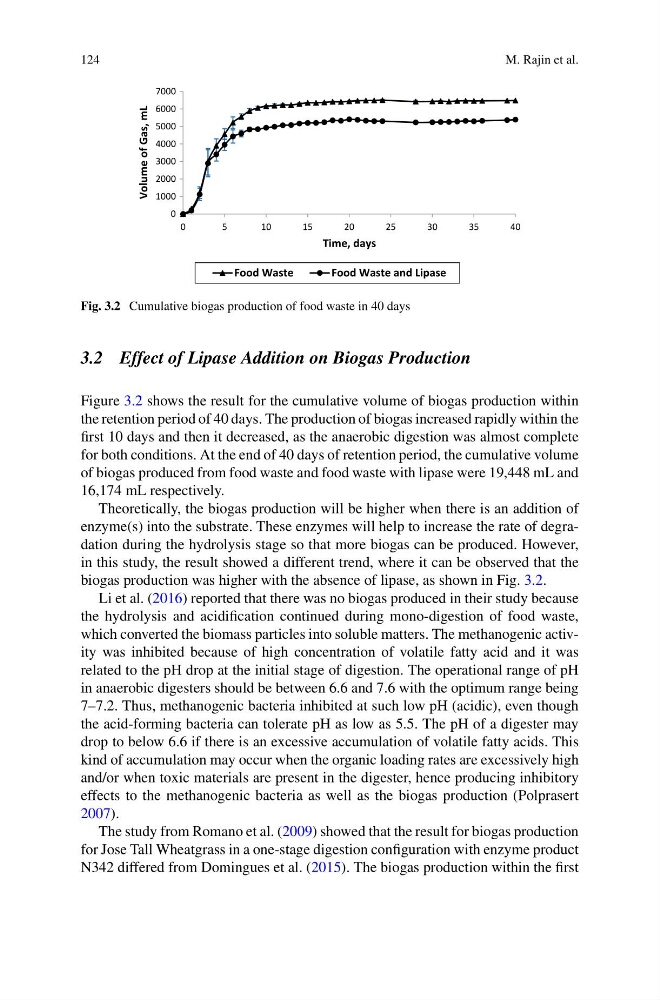
Fig. 3.2 Cumulative biogas production of food waste in 40 days
3.2 Effect of Lipase Addition on Biogas Production
Figure 3.2 shows the result for the cumulative volume of biogas production within
the retention period of 40 days. The production of biogas increased rapidly within the
first 10 days and then it decreased, as the anaerobic digestion was almost complete
for both conditions. At the end of 40 days of retention period, the cumulative volume
of biogas produced from food waste and food waste with lipase were 19,448 mL and
16,174 mL respectively.
Theoretically, the biogas production will be higher when there is an addition of
enzyme(s) into the substrate. These enzymes will help to increase the rate of degradation during the hydrolysis stage so that more biogas can be produced. However,
in this study, the result showed a different trend, where it can be observed that the
biogas production was higher with the absence of lipase, as shown in Fig. 3.2.
Li et al. (2016) reported that there was no biogas produced in their study because
the hydrolysis and acidification continued during mono-digestion of food waste,
which converted the biomass particles into soluble matters. The methanogenic activity was inhibited because of high concentration of volatile fatty acid and it was
related to the pH drop at the initial stage of digestion. The operational range of pH
in anaerobic digesters should be between 6.6 and 7.6 with the optimum range being
7–7.2. Thus, methanogenic bacteria inhibited at such low pH (acidic), even though
the acid-forming bacteria can tolerate pH as low as 5.5. The pH of a digester may
drop to below 6.6 if there is an excessive accumulation of volatile fatty acids. This
kind of accumulation may occur when the organic loading rates are excessively high
and/or when toxic materials are present in the digester, hence producing inhibitory
effects to the methanogenic bacteria as well as the biogas production (Polprasert
2007).
The study from Romano et al. (2009) showed that the result for biogas production
for Jose Tall Wheatgrass in a one-stage digestion configuration with enzyme product
N342 differed from Domingues et al. (2015). The biogas production within the first
M. Rajin et al.
0
1000
2000
3000
4000
5000
6000
7000
0
5
10
15
20
25
30
35
40
Volume of Gas, mL
Time, days
Food Waste
Food Waste and Lipase
Fig. 3.2 Cumulative biogas production of food waste in 40 days
3.2 Effect of Lipase Addition on Biogas Production
Figure 3.2 shows the result for the cumulative volume of biogas production within
the retention period of 40 days. The production of biogas increased rapidly within the
first 10 days and then it decreased, as the anaerobic digestion was almost complete
for both conditions. At the end of 40 days of retention period, the cumulative volume
of biogas produced from food waste and food waste with lipase were 19,448 mL and
16,174 mL respectively.
Theoretically, the biogas production will be higher when there is an addition of
enzyme(s) into the substrate. These enzymes will help to increase the rate of degradation during the hydrolysis stage so that more biogas can be produced. However,
in this study, the result showed a different trend, where it can be observed that the
biogas production was higher with the absence of lipase, as shown in Fig. 3.2.
Li et al. (2016) reported that there was no biogas produced in their study because
the hydrolysis and acidification continued during mono-digestion of food waste,
which converted the biomass particles into soluble matters. The methanogenic activity was inhibited because of high concentration of volatile fatty acid and it was
related to the pH drop at the initial stage of digestion. The operational range of pH
in anaerobic digesters should be between 6.6 and 7.6 with the optimum range being
7–7.2. Thus, methanogenic bacteria inhibited at such low pH (acidic), even though
the acid-forming bacteria can tolerate pH as low as 5.5. The pH of a digester may
drop to below 6.6 if there is an excessive accumulation of volatile fatty acids. This
kind of accumulation may occur when the organic loading rates are excessively high
and/or when toxic materials are present in the digester, hence producing inhibitory
effects to the methanogenic bacteria as well as the biogas production (Polprasert
2007).
The study from Romano et al. (2009) showed that the result for biogas production
for Jose Tall Wheatgrass in a one-stage digestion configuration with enzyme product
N342 differed from Domingues et al. (2015). The biogas production within the first