

326
Azalea and Rhododendron, Magnolia and Camelia; flowering plants, most notably
the enormous biodiversity of “Chrysanthemums, Asters, Carnations, Lilies,
Gentians, Irises, Jonquils, Lotuses, Peonies, Anemones [and] Orchids; and then the
Creeping Plant varieties, Large Leave Plants, bamboos, rushes, and grasses; and
finally, and most intrinsic to Ginkaku-ji, the extraordinary diversity of mosses.
6
Conder also describes, in as much minutiae, the varieties and purposes of every
stone placed in Japan’s gardens, which—in and of their time, deriving from a matrix
that involved Buddhism’s vast itinerary from northern India and Nepal to Tibet,
China, and Korea, before entering Japan—avowed a higher reality; a paradise in the
here and the now, an integration of forces ultimately conceiving of true harmony, “to
live without wrestling angels in the soul’s dark night” (Fig. 36.4).
7
6 Landscape Gardening in Japan, by Josiah Conder, Tokio (sic) Hokubunsha, Ginza, 1893, Volume
1, Chapter XI, pp. 106–137. Plates by Ogawa Kazumasa; Conder also had gone to great extremes
to elucidate the myriad kinds of stones employed in gardens like Ryoan-ji, including such “radical
stone shapes”: as “Recumbent Ox,” “Statue,” “Low Vertical,” “Propitious Cloud,” “Falling-Water
Stone,” “Flying Geese,” “Fish-diverting,” Sea-gull resting,” “Long Life,” “Tortoise Head Stone,”
and the like. Volume 1, Chapter II, pp. 41–58. See also, Sanctuary: Global Oases of Innocence, by
M. C. Tobias, and J. G. Morrison, Chapter on Moss Gardens of Japan, A Dancing Star Foundation
Book, Council Oak Books, Tulsa, OK, 2008. See also, Garden Plants of Japan, by Ran LevyYamamori and Gerard Taaffe, Foreword by E. Charles Nelson, Timber Press, Portland &
Cambridge, 2004.
7 See After Eden – History, Ecology and Conscience, by M. C. Tobias, Avant Books, San Diego,
1985, p. 70.
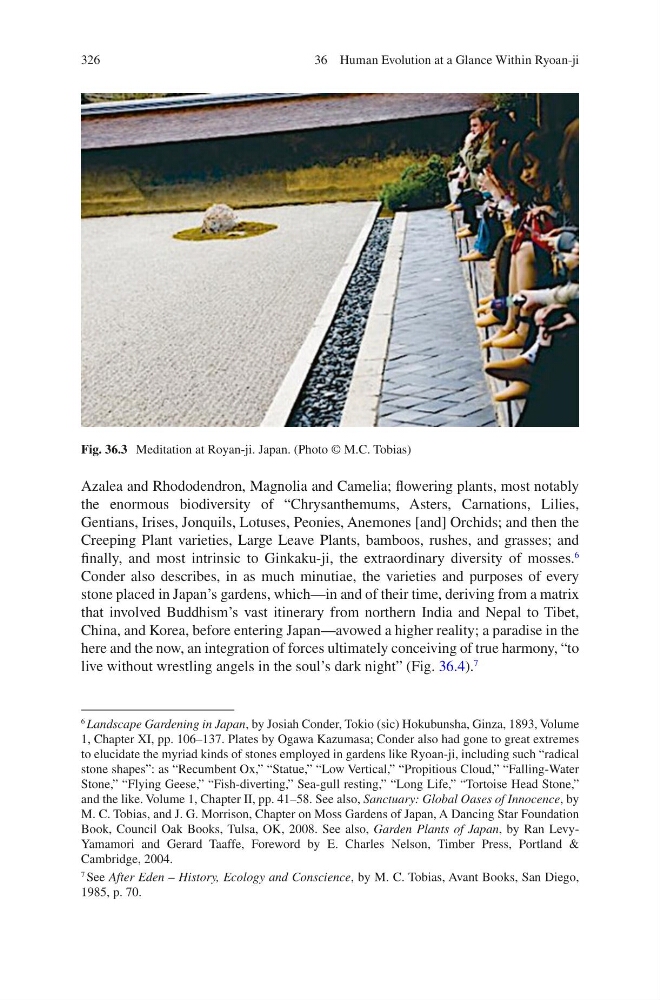
Fig. 36.3 Meditation at Royan-ji. Japan. (Photo © M.C. Tobias)
36 Human Evolution at a Glance Within Ryoan-ji
Azalea and Rhododendron, Magnolia and Camelia; flowering plants, most notably
the enormous biodiversity of “Chrysanthemums, Asters, Carnations, Lilies,
Gentians, Irises, Jonquils, Lotuses, Peonies, Anemones [and] Orchids; and then the
Creeping Plant varieties, Large Leave Plants, bamboos, rushes, and grasses; and
finally, and most intrinsic to Ginkaku-ji, the extraordinary diversity of mosses.
6
Conder also describes, in as much minutiae, the varieties and purposes of every
stone placed in Japan’s gardens, which—in and of their time, deriving from a matrix
that involved Buddhism’s vast itinerary from northern India and Nepal to Tibet,
China, and Korea, before entering Japan—avowed a higher reality; a paradise in the
here and the now, an integration of forces ultimately conceiving of true harmony, “to
live without wrestling angels in the soul’s dark night” (Fig. 36.4).
7
6 Landscape Gardening in Japan, by Josiah Conder, Tokio (sic) Hokubunsha, Ginza, 1893, Volume
1, Chapter XI, pp. 106–137. Plates by Ogawa Kazumasa; Conder also had gone to great extremes
to elucidate the myriad kinds of stones employed in gardens like Ryoan-ji, including such “radical
stone shapes”: as “Recumbent Ox,” “Statue,” “Low Vertical,” “Propitious Cloud,” “Falling-Water
Stone,” “Flying Geese,” “Fish-diverting,” Sea-gull resting,” “Long Life,” “Tortoise Head Stone,”
and the like. Volume 1, Chapter II, pp. 41–58. See also, Sanctuary: Global Oases of Innocence, by
M. C. Tobias, and J. G. Morrison, Chapter on Moss Gardens of Japan, A Dancing Star Foundation
Book, Council Oak Books, Tulsa, OK, 2008. See also, Garden Plants of Japan, by Ran LevyYamamori and Gerard Taaffe, Foreword by E. Charles Nelson, Timber Press, Portland &
Cambridge, 2004.
7 See After Eden – History, Ecology and Conscience, by M. C. Tobias, Avant Books, San Diego,
1985, p. 70.
Fig. 36.3 Meditation at Royan-ji. Japan. (Photo © M.C. Tobias)
36 Human Evolution at a Glance Within Ryoan-ji