

267
and castles, there is an undeniable urging to become something other than merely
human. The vast Chambord, or Vaux-le-Vicomte (whose contractor-finance minister, Nicolas Fouquet, Marquis de Belle-Île, would be scandalized and sentenced to
life imprisonment), institutionalizes what elsewhere across the landscape proliferate
more intimate, personable domains, like the Bagatelle in Picardie, La Dame
Blanche, noted for its rare soils and fecund grapes producing one of the great dry
white wines of the Bordeaux region.
From the Renaissance Montal in Aquitaine to the spectacular Anjony in the
mountains of Auvergne, or Château Rouffillac in the heart of the Perigord Noir, a
half-hour drive instructively from Lascaux, and once owned by the greatest French
zoologist of the twentieth century, Pierre-Paul Grassé and his family, these enormous edifices are no ziggurats or pyramids, but the spacious homes of people in
love with countryside. Whether in neoclassical villas outside Florence or Vicenza
(the latter city home to the sixteenth-century master architect Andrea Palladio), or
aboard rambling ensembles from Montecito (e.g., the 37-acre historic estate of
Madame Ganna Walska, known as Lotus Land) to Morocco, to northern Thailand,
the integrative facilities of our species have always sought to architecturally console
its spirit by palpably giving vent to combinatorial powers. What we think of as our
Nature, roaming her peripheral boundaries in hopes of appropriating them for our
own bedrooms, is a primal peregrination that has never dimmed (Fig. 28.4).
In its final gasp, a potted Bella Blue Prunella or August Grove Geranium, quietly
minding her business, showing off such miniature resplendence upon a lonely balcony over bustling Milan or strident Mumbai, still mirrors our desperate harkening.
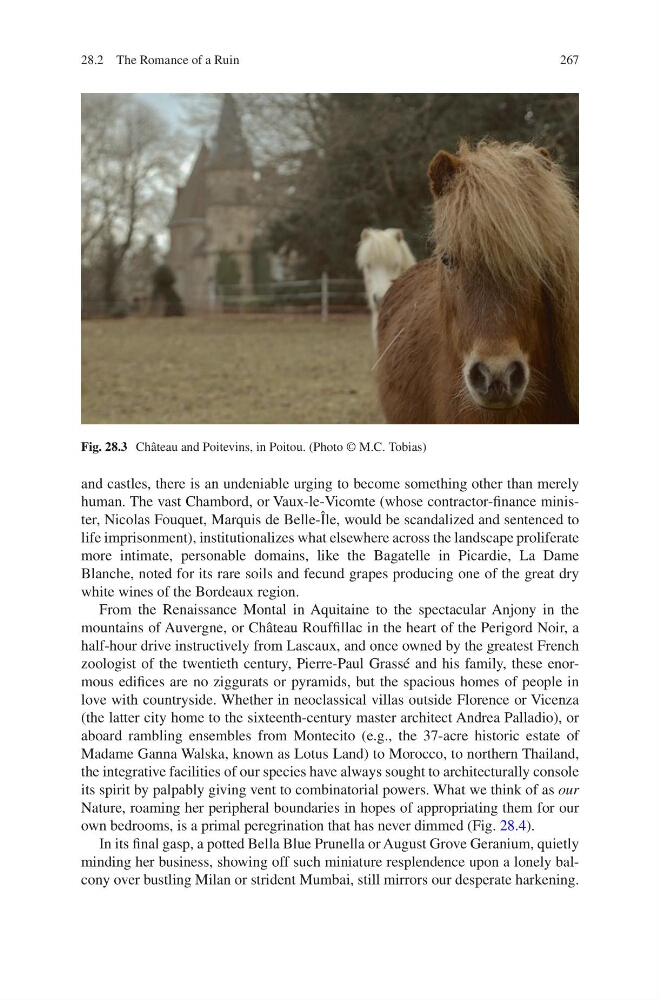
Fig. 28.3 Château and Poitevins, in Poitou. (Photo © M.C. Tobias)
28.2 The Romance of a Ruin
and castles, there is an undeniable urging to become something other than merely
human. The vast Chambord, or Vaux-le-Vicomte (whose contractor-finance minister, Nicolas Fouquet, Marquis de Belle-Île, would be scandalized and sentenced to
life imprisonment), institutionalizes what elsewhere across the landscape proliferate
more intimate, personable domains, like the Bagatelle in Picardie, La Dame
Blanche, noted for its rare soils and fecund grapes producing one of the great dry
white wines of the Bordeaux region.
From the Renaissance Montal in Aquitaine to the spectacular Anjony in the
mountains of Auvergne, or Château Rouffillac in the heart of the Perigord Noir, a
half-hour drive instructively from Lascaux, and once owned by the greatest French
zoologist of the twentieth century, Pierre-Paul Grassé and his family, these enormous edifices are no ziggurats or pyramids, but the spacious homes of people in
love with countryside. Whether in neoclassical villas outside Florence or Vicenza
(the latter city home to the sixteenth-century master architect Andrea Palladio), or
aboard rambling ensembles from Montecito (e.g., the 37-acre historic estate of
Madame Ganna Walska, known as Lotus Land) to Morocco, to northern Thailand,
the integrative facilities of our species have always sought to architecturally console
its spirit by palpably giving vent to combinatorial powers. What we think of as our
Nature, roaming her peripheral boundaries in hopes of appropriating them for our
own bedrooms, is a primal peregrination that has never dimmed (Fig. 28.4).
In its final gasp, a potted Bella Blue Prunella or August Grove Geranium, quietly
minding her business, showing off such miniature resplendence upon a lonely balcony over bustling Milan or strident Mumbai, still mirrors our desperate harkening.
Fig. 28.3 Château and Poitevins, in Poitou. (Photo © M.C. Tobias)
28.2 The Romance of a Ruin