

266
truth. As writes Ian Niall, “It might not have occurred to the farm labourer that when
the horse went he would be the next to be made redundant…”
11
(Fig. 28.3).
28.2 The Romance of a Ruin
But that obsolescence has not happened, not yet, not entirely. Ruins have remade
countryside, which, in turn, have granted wilderness a habitable domain for a constructive if unwieldy human wilderness of remnants and phantasms. From
Pontchartrain, in Yvelines (the municipality of Jouars-Pontchartrain), built in the
sixteenth century and described by one enthusiast as “a long, low silhouette of a
building so integrated with its environment as to seem a perfect abstraction of the
lake and the hillside forest on either side,”
12
to at least 6000 other French châteaux
11 English Country Traditions, Wood Engravings by Christopher Wormell, written by Ian Niall, The
Victoria and Albert Museum, The Hand Press, Kent, 1988, p. 56.
12 The Chateaux of France, by Editors of Réalités-Hachette and Daniel Wheeler, The Vendome
Press, New York, Paris, Lausanne, 1979, p. 120.
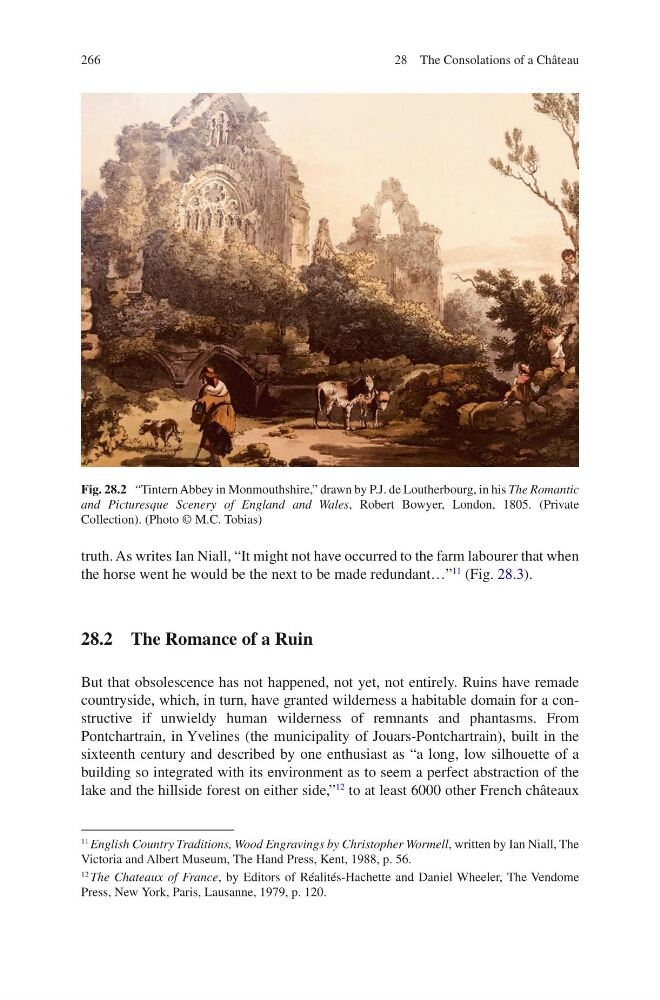
Fig. 28.2 “Tintern Abbey in Monmouthshire,” drawn by P.J. de Loutherbourg, in his The Romantic
and Picturesque Scenery of England and Wales, Robert Bowyer, London, 1805. (Private
Collection). (Photo © M.C. Tobias)
28 The Consolations of a Château
truth. As writes Ian Niall, “It might not have occurred to the farm labourer that when
the horse went he would be the next to be made redundant…”
11
(Fig. 28.3).
28.2 The Romance of a Ruin
But that obsolescence has not happened, not yet, not entirely. Ruins have remade
countryside, which, in turn, have granted wilderness a habitable domain for a constructive if unwieldy human wilderness of remnants and phantasms. From
Pontchartrain, in Yvelines (the municipality of Jouars-Pontchartrain), built in the
sixteenth century and described by one enthusiast as “a long, low silhouette of a
building so integrated with its environment as to seem a perfect abstraction of the
lake and the hillside forest on either side,”
12
to at least 6000 other French châteaux
11 English Country Traditions, Wood Engravings by Christopher Wormell, written by Ian Niall, The
Victoria and Albert Museum, The Hand Press, Kent, 1988, p. 56.
12 The Chateaux of France, by Editors of Réalités-Hachette and Daniel Wheeler, The Vendome
Press, New York, Paris, Lausanne, 1979, p. 120.
Fig. 28.2 “Tintern Abbey in Monmouthshire,” drawn by P.J. de Loutherbourg, in his The Romantic
and Picturesque Scenery of England and Wales, Robert Bowyer, London, 1805. (Private
Collection). (Photo © M.C. Tobias)
28 The Consolations of a Château