

of bacteroids in a root nodule on Glycine max. These bacteroids are symbiosomes in
which the nitrogen-fixing rhizobial microbes are surrounded by a host-derived
peribacteroid membrane.
George T. Moore (Moore 1905) noted that some strains of rhizobial bacteria
produced nodules but did not benefit nitrogen assimilation by leguminous crops and,
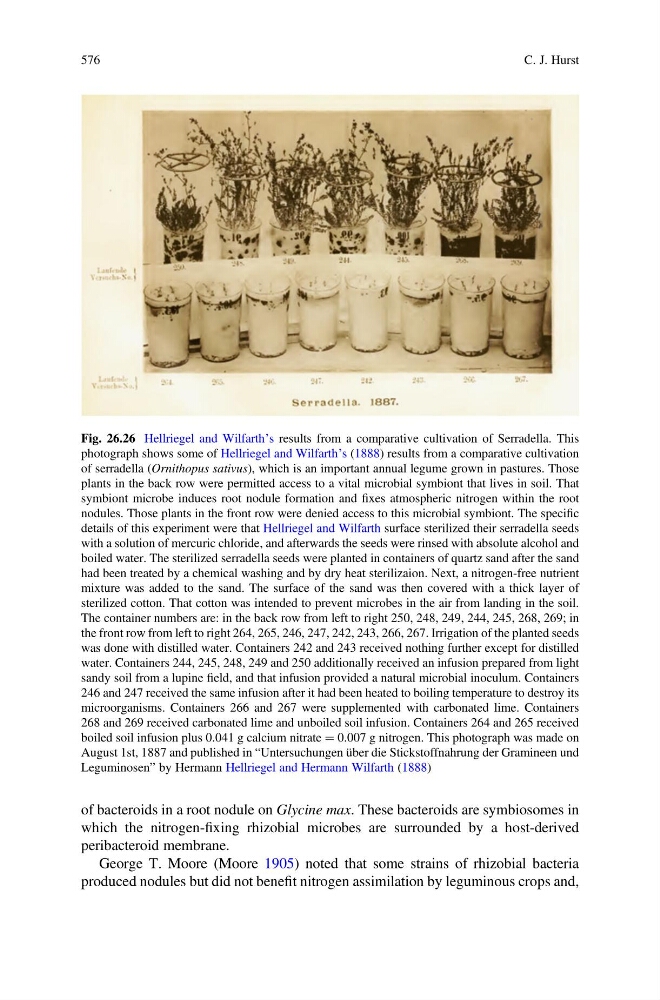
Fig. 26.26 Hellriegel and Wilfarth’s results from a comparative cultivation of Serradella. This
photograph shows some of Hellriegel and Wilfarth’s (1888) results from a comparative cultivation
of serradella (Ornithopus sativus), which is an important annual legume grown in pastures. Those
plants in the back row were permitted access to a vital microbial symbiont that lives in soil. That
symbiont microbe induces root nodule formation and fixes atmospheric nitrogen within the root
nodules. Those plants in the front row were denied access to this microbial symbiont. The specific
details of this experiment were that Hellriegel and Wilfarth surface sterilized their serradella seeds
with a solution of mercuric chloride, and afterwards the seeds were rinsed with absolute alcohol and
boiled water. The sterilized serradella seeds were planted in containers of quartz sand after the sand
had been treated by a chemical washing and by dry heat sterilizaion. Next, a nitrogen-free nutrient
mixture was added to the sand. The surface of the sand was then covered with a thick layer of
sterilized cotton. That cotton was intended to prevent microbes in the air from landing in the soil.
The container numbers are: in the back row from left to right 250, 248, 249, 244, 245, 268, 269; in
the front row from left to right 264, 265, 246, 247, 242, 243, 266, 267. Irrigation of the planted seeds
was done with distilled water. Containers 242 and 243 received nothing further except for distilled
water. Containers 244, 245, 248, 249 and 250 additionally received an infusion prepared from light
sandy soil from a lupine field, and that infusion provided a natural microbial inoculum. Containers
246 and 247 received the same infusion after it had been heated to boiling temperature to destroy its
microorganisms. Containers 266 and 267 were supplemented with carbonated lime. Containers
268 and 269 received carbonated lime and unboiled soil infusion. Containers 264 and 265 received
boiled soil infusion plus 0.041 g calcium nitrate ¼ 0.007 g nitrogen. This photograph was made on
August 1st, 1887 and published in “Untersuchungen über die Stickstoffnahrung der Gramineen und
Leguminosen” by Hermann Hellriegel and Hermann Wilfarth (1888)
576
C. J. Hurst
which the nitrogen-fixing rhizobial microbes are surrounded by a host-derived
peribacteroid membrane.
George T. Moore (Moore 1905) noted that some strains of rhizobial bacteria
produced nodules but did not benefit nitrogen assimilation by leguminous crops and,
Fig. 26.26 Hellriegel and Wilfarth’s results from a comparative cultivation of Serradella. This
photograph shows some of Hellriegel and Wilfarth’s (1888) results from a comparative cultivation
of serradella (Ornithopus sativus), which is an important annual legume grown in pastures. Those
plants in the back row were permitted access to a vital microbial symbiont that lives in soil. That
symbiont microbe induces root nodule formation and fixes atmospheric nitrogen within the root
nodules. Those plants in the front row were denied access to this microbial symbiont. The specific
details of this experiment were that Hellriegel and Wilfarth surface sterilized their serradella seeds
with a solution of mercuric chloride, and afterwards the seeds were rinsed with absolute alcohol and
boiled water. The sterilized serradella seeds were planted in containers of quartz sand after the sand
had been treated by a chemical washing and by dry heat sterilizaion. Next, a nitrogen-free nutrient
mixture was added to the sand. The surface of the sand was then covered with a thick layer of
sterilized cotton. That cotton was intended to prevent microbes in the air from landing in the soil.
The container numbers are: in the back row from left to right 250, 248, 249, 244, 245, 268, 269; in
the front row from left to right 264, 265, 246, 247, 242, 243, 266, 267. Irrigation of the planted seeds
was done with distilled water. Containers 242 and 243 received nothing further except for distilled
water. Containers 244, 245, 248, 249 and 250 additionally received an infusion prepared from light
sandy soil from a lupine field, and that infusion provided a natural microbial inoculum. Containers
246 and 247 received the same infusion after it had been heated to boiling temperature to destroy its
microorganisms. Containers 266 and 267 were supplemented with carbonated lime. Containers
268 and 269 received carbonated lime and unboiled soil infusion. Containers 264 and 265 received
boiled soil infusion plus 0.041 g calcium nitrate ¼ 0.007 g nitrogen. This photograph was made on
August 1st, 1887 and published in “Untersuchungen über die Stickstoffnahrung der Gramineen und
Leguminosen” by Hermann Hellriegel and Hermann Wilfarth (1888)
576
C. J. Hurst