

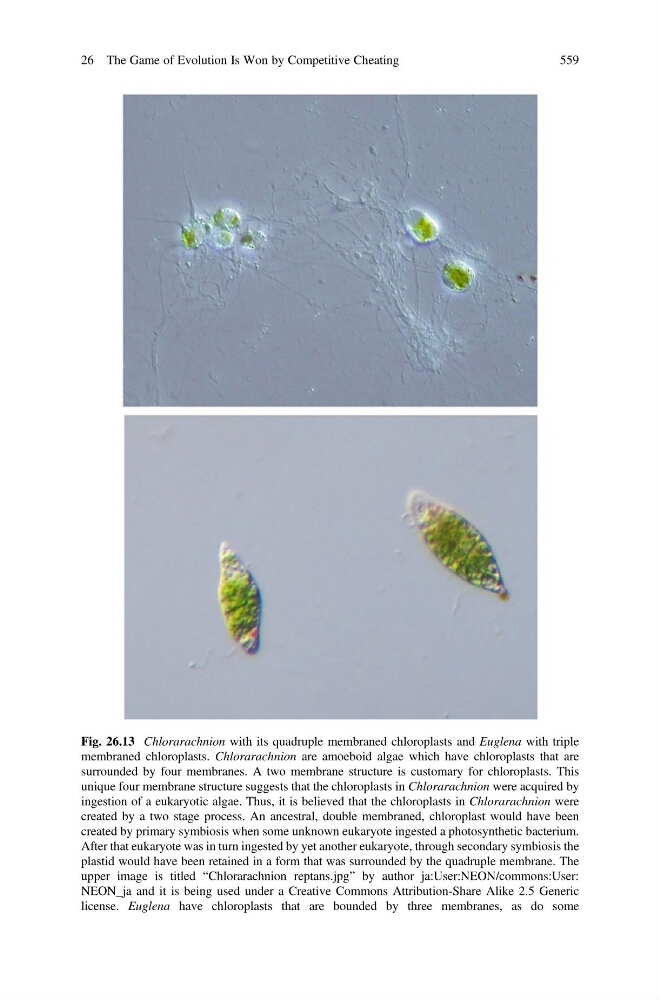
Fig. 26.13 Chlorarachnion with its quadruple membraned chloroplasts and Euglena with triple
membraned chloroplasts. Chlorarachnion are amoeboid algae which have chloroplasts that are
surrounded by four membranes. A two membrane structure is customary for chloroplasts. This
unique four membrane structure suggests that the chloroplasts in Chlorarachnion were acquired by
ingestion of a eukaryotic algae. Thus, it is believed that the chloroplasts in Chlorarachnion were
created by a two stage process. An ancestral, double membraned, chloroplast would have been
created by primary symbiosis when some unknown eukaryote ingested a photosynthetic bacterium.
After that eukaryote was in turn ingested by yet another eukaryote, through secondary symbiosis the
plastid would have been retained in a form that was surrounded by the quadruple membrane. The
upper image is titled “Chlorarachnion reptans.jpg” by author ja:User:NEON/commons:User:
NEON_ja and it is being used under a Creative Commons Attribution-Share Alike 2.5 Generic
license. Euglena have chloroplasts that are bounded by three membranes, as do some
26 The Game of Evolution Is Won by Competitive Cheating
559
membraned chloroplasts. Chlorarachnion are amoeboid algae which have chloroplasts that are
surrounded by four membranes. A two membrane structure is customary for chloroplasts. This
unique four membrane structure suggests that the chloroplasts in Chlorarachnion were acquired by
ingestion of a eukaryotic algae. Thus, it is believed that the chloroplasts in Chlorarachnion were
created by a two stage process. An ancestral, double membraned, chloroplast would have been
created by primary symbiosis when some unknown eukaryote ingested a photosynthetic bacterium.
After that eukaryote was in turn ingested by yet another eukaryote, through secondary symbiosis the
plastid would have been retained in a form that was surrounded by the quadruple membrane. The
upper image is titled “Chlorarachnion reptans.jpg” by author ja:User:NEON/commons:User:
NEON_ja and it is being used under a Creative Commons Attribution-Share Alike 2.5 Generic
license. Euglena have chloroplasts that are bounded by three membranes, as do some
26 The Game of Evolution Is Won by Competitive Cheating
559