

manifested as decreased plant biomass (Table 22.1). An exogenous application of
CoCl 2 was shown to decrease plant ethylene levels compared to controls (Pramanik
et al. 2017, 2018a). The number of phytotoxicity studies on chromium (Cr), copper
(Cu), mercury (Hg), manganese (Mn), nickel (Ni), lead (Pb) and zinc (Zn) on the
more common crop plants is also impressive, with reporting of various morphobiochemical malfunctions in plants.
22.3 Role of Heavy Metal(loid) Resistant Plant
Growth-Promoting Rhizobacteria in Crop
Improvement
Soil, being the sink of nutrients for plants, is also the chief source of contaminants.
The information summarised in Table 22.1 provides an idea of observed intensification of heavy metal contamination and consequences of the major HM contaminants on some common crops. Plants have developed their own natural mechanisms
to regulate the uptake, translocation and accumulation of HMs, which is known as
natural phytoremediation. In reality, plants are not the only warriors that are exposed
to and affected by soil HMs, and indeed there similarly exist some close neighbors
like the rhizospheric microbial community that also have direct or indirect influences
on plant growth. Phytoremediation is one of the safest, eco-friendly technologies and
is often triggered by plant growth-promoting bacteria (PGPB) as a response to
accelerated HM uptake and accumulation in the plant cells (Ullah et al. 2015).
This concept of designing and promoting bacteria-assisted phytoremediation
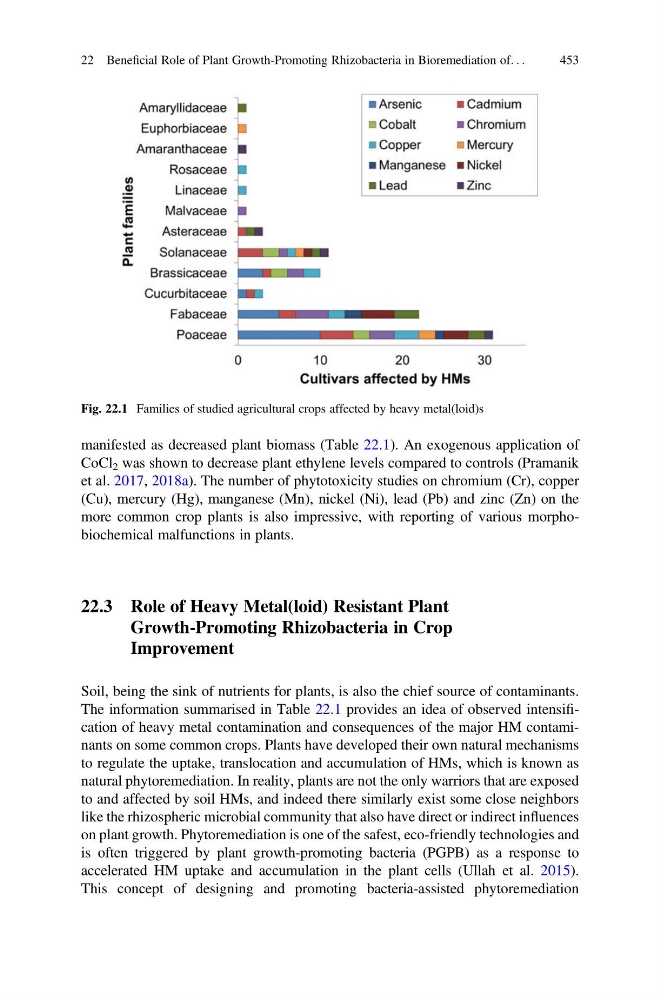
Fig. 22.1 Families of studied agricultural crops affected by heavy metal(loid)s
22 Beneficial Role of Plant Growth-Promoting Rhizobacteria in Bioremediation of. . .
453
CoCl 2 was shown to decrease plant ethylene levels compared to controls (Pramanik
et al. 2017, 2018a). The number of phytotoxicity studies on chromium (Cr), copper
(Cu), mercury (Hg), manganese (Mn), nickel (Ni), lead (Pb) and zinc (Zn) on the
more common crop plants is also impressive, with reporting of various morphobiochemical malfunctions in plants.
22.3 Role of Heavy Metal(loid) Resistant Plant
Growth-Promoting Rhizobacteria in Crop
Improvement
Soil, being the sink of nutrients for plants, is also the chief source of contaminants.
The information summarised in Table 22.1 provides an idea of observed intensification of heavy metal contamination and consequences of the major HM contaminants on some common crops. Plants have developed their own natural mechanisms
to regulate the uptake, translocation and accumulation of HMs, which is known as
natural phytoremediation. In reality, plants are not the only warriors that are exposed
to and affected by soil HMs, and indeed there similarly exist some close neighbors
like the rhizospheric microbial community that also have direct or indirect influences
on plant growth. Phytoremediation is one of the safest, eco-friendly technologies and
is often triggered by plant growth-promoting bacteria (PGPB) as a response to
accelerated HM uptake and accumulation in the plant cells (Ullah et al. 2015).
This concept of designing and promoting bacteria-assisted phytoremediation
Fig. 22.1 Families of studied agricultural crops affected by heavy metal(loid)s
22 Beneficial Role of Plant Growth-Promoting Rhizobacteria in Bioremediation of. . .
453