

those nests were approximately the same but the surface areas and surface complexities differed tremendously.
I was appreciative when I read Chap. 17, “Diversity-function relationships and
the underlying ecological mechanisms in host-associated microbial communities”,
which Catalina Cuellar-Gempeler authored for this book. She mentioned the niche
space of symbionts, and that mention was without any suggestion having been made
on my part. Catalina, I thank you!
How can we imagine the way in which a niche evolutionarily changes with time?
Perhaps one way is by noticing that the physical and physiogical attributes of a
species give a representation of its niche. When we see a depiction of how the
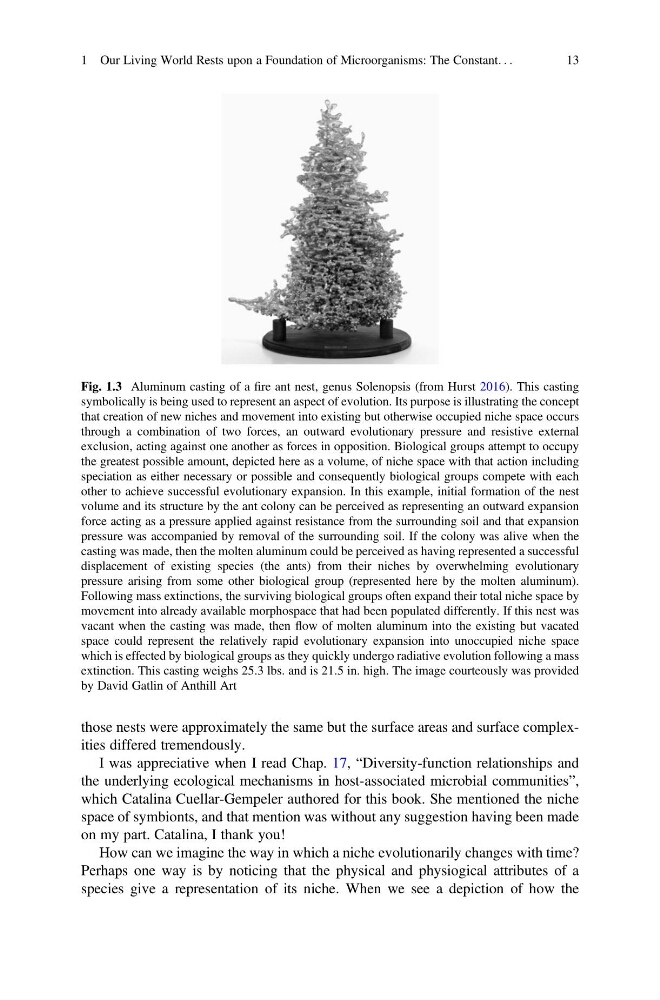
Fig. 1.3 Aluminum casting of a fire ant nest, genus Solenopsis (from Hurst 2016). This casting
symbolically is being used to represent an aspect of evolution. Its purpose is illustrating the concept
that creation of new niches and movement into existing but otherwise occupied niche space occurs
through a combination of two forces, an outward evolutionary pressure and resistive external
exclusion, acting against one another as forces in opposition. Biological groups attempt to occupy
the greatest possible amount, depicted here as a volume, of niche space with that action including
speciation as either necessary or possible and consequently biological groups compete with each
other to achieve successful evolutionary expansion. In this example, initial formation of the nest
volume and its structure by the ant colony can be perceived as representing an outward expansion
force acting as a pressure applied against resistance from the surrounding soil and that expansion
pressure was accompanied by removal of the surrounding soil. If the colony was alive when the
casting was made, then the molten aluminum could be perceived as having represented a successful
displacement of existing species (the ants) from their niches by overwhelming evolutionary
pressure arising from some other biological group (represented here by the molten aluminum).
Following mass extinctions, the surviving biological groups often expand their total niche space by
movement into already available morphospace that had been populated differently. If this nest was
vacant when the casting was made, then flow of molten aluminum into the existing but vacated
space could represent the relatively rapid evolutionary expansion into unoccupied niche space
which is effected by biological groups as they quickly undergo radiative evolution following a mass
extinction. This casting weighs 25.3 lbs. and is 21.5 in. high. The image courteously was provided
by David Gatlin of Anthill Art
1 Our Living World Rests upon a Foundation of Microorganisms: The Constant. . .
13
I was appreciative when I read Chap. 17, “Diversity-function relationships and
the underlying ecological mechanisms in host-associated microbial communities”,
which Catalina Cuellar-Gempeler authored for this book. She mentioned the niche
space of symbionts, and that mention was without any suggestion having been made
on my part. Catalina, I thank you!
How can we imagine the way in which a niche evolutionarily changes with time?
Perhaps one way is by noticing that the physical and physiogical attributes of a
species give a representation of its niche. When we see a depiction of how the
Fig. 1.3 Aluminum casting of a fire ant nest, genus Solenopsis (from Hurst 2016). This casting
symbolically is being used to represent an aspect of evolution. Its purpose is illustrating the concept
that creation of new niches and movement into existing but otherwise occupied niche space occurs
through a combination of two forces, an outward evolutionary pressure and resistive external
exclusion, acting against one another as forces in opposition. Biological groups attempt to occupy
the greatest possible amount, depicted here as a volume, of niche space with that action including
speciation as either necessary or possible and consequently biological groups compete with each
other to achieve successful evolutionary expansion. In this example, initial formation of the nest
volume and its structure by the ant colony can be perceived as representing an outward expansion
force acting as a pressure applied against resistance from the surrounding soil and that expansion
pressure was accompanied by removal of the surrounding soil. If the colony was alive when the
casting was made, then the molten aluminum could be perceived as having represented a successful
displacement of existing species (the ants) from their niches by overwhelming evolutionary
pressure arising from some other biological group (represented here by the molten aluminum).
Following mass extinctions, the surviving biological groups often expand their total niche space by
movement into already available morphospace that had been populated differently. If this nest was
vacant when the casting was made, then flow of molten aluminum into the existing but vacated
space could represent the relatively rapid evolutionary expansion into unoccupied niche space
which is effected by biological groups as they quickly undergo radiative evolution following a mass
extinction. This casting weighs 25.3 lbs. and is 21.5 in. high. The image courteously was provided
by David Gatlin of Anthill Art
1 Our Living World Rests upon a Foundation of Microorganisms: The Constant. . .
13