

In an LS detector, the scattered light of a laser beam passing through the detector
cell is measured at angles other than zero. The (excess) intensity R(θ) of the
scattered light at the angle θ is related to the weight average of molar mass, M w :
K * c = R Θ
ð Þ ¼ 1=M w P Θ
ð Þ
½
þ2A 2 c
ð3:1Þ
wherein c is the concentration of the polymer, A 2 is the second virial coefficient and
P(θ) describes the scattered light angular dependence. K* is an optical constant
containing Avogadro’s number N A , the wavelength λ 0 , the refractive index n 0 of the
solvent and the RI increment dn/dc of the sample:
K * ¼ 4π
2
n 0
2 dn=dc
ð
Þ
2 = λ
4
0 N A
À
Á
ð3:2Þ
M w is obtained from the intercept at θ ¼ 0 and the radius of gyration (R g ) from the
slope in a plot of K*c/R(θ) versus sin
2 (θ/2). Since the concentration of the injected
sample is kept rather low, A 2 can be neglected. Thus, the molar mass at each elution
volume increment can be determined if the optical properties (n 0 and dn/dc) of the
polymer solution are known.
M w, i ¼ R Θ
ð Þ i = K * P Θ
ð Þ i c i
ð3:3Þ
P(Θ) is close to unity and M w,i can be calculated directly if a low-angle LS
instrument is used. The mean square radius of gyration < R g
2
> at each elution
volume can also be obtained from P(Θ) in the case of a multi-angle LS instrument:
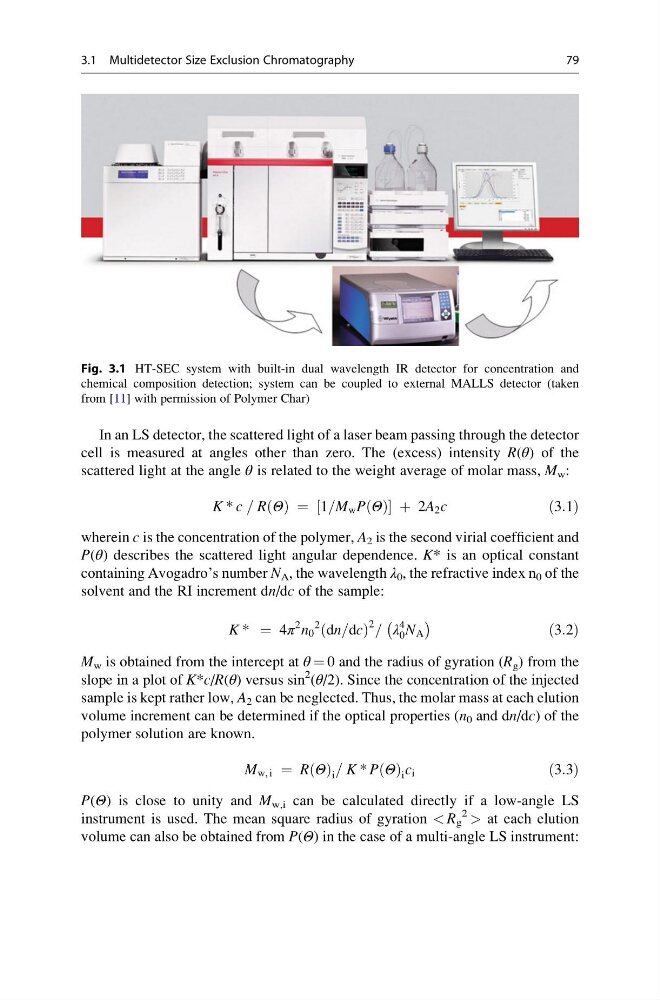
Fig. 3.1 HT-SEC system with built-in dual wavelength IR detector for concentration and
chemical composition detection; system can be coupled to external MALLS detector (taken
from [11] with permission of Polymer Char)
3.1 Multidetector Size Exclusion Chromatography
79
cell is measured at angles other than zero. The (excess) intensity R(θ) of the
scattered light at the angle θ is related to the weight average of molar mass, M w :
K * c = R Θ
ð Þ ¼ 1=M w P Θ
ð Þ
½
þ2A 2 c
ð3:1Þ
wherein c is the concentration of the polymer, A 2 is the second virial coefficient and
P(θ) describes the scattered light angular dependence. K* is an optical constant
containing Avogadro’s number N A , the wavelength λ 0 , the refractive index n 0 of the
solvent and the RI increment dn/dc of the sample:
K * ¼ 4π
2
n 0
2 dn=dc
ð
Þ
2 = λ
4
0 N A
À
Á
ð3:2Þ
M w is obtained from the intercept at θ ¼ 0 and the radius of gyration (R g ) from the
slope in a plot of K*c/R(θ) versus sin
2 (θ/2). Since the concentration of the injected
sample is kept rather low, A 2 can be neglected. Thus, the molar mass at each elution
volume increment can be determined if the optical properties (n 0 and dn/dc) of the
polymer solution are known.
M w, i ¼ R Θ
ð Þ i = K * P Θ
ð Þ i c i
ð3:3Þ
P(Θ) is close to unity and M w,i can be calculated directly if a low-angle LS
instrument is used. The mean square radius of gyration < R g
2
> at each elution
volume can also be obtained from P(Θ) in the case of a multi-angle LS instrument:
Fig. 3.1 HT-SEC system with built-in dual wavelength IR detector for concentration and
chemical composition detection; system can be coupled to external MALLS detector (taken
from [11] with permission of Polymer Char)
3.1 Multidetector Size Exclusion Chromatography
79