

6. Purify the PCR product using PCR clean-up columns following the instruction manual, elute bound DNA in 30 μL, and
determine the concentration of the extracted DNA
spectrophotometrically.
7. Set the second 50 μL PCR with 100–200 ng of the megaprimer, 20 ng of the recipient plasmid, and 0.8 μL of Phusion
polymerase (Thermo scientific™). Run the PCR in a thermocycler by using the conditions suggested by the polymerase
manufacturer. As a negative control, set up the same reaction
omitting DNA polymerase.
8. 1/10 of the second PCR can be loaded on an agarose gel with a
molecular weight marker to verify that the PCR amplification
resulted in a band of the expected size, but this step is optional
(see Note 9).
9. Add 1 μL of DpnI restriction enzyme directly to the second
PCR and incubate 1 h at 37
C. DpnI enzyme will digest and
destroy the plasmid template still present in the PCR.
10. Use 2 μL of the DpnI-treated PCR product from the second
reaction to transform 50 μL of E. coli competent cells (Pir1
cells for plasmids with an R6Kγ replication origin). Plate the
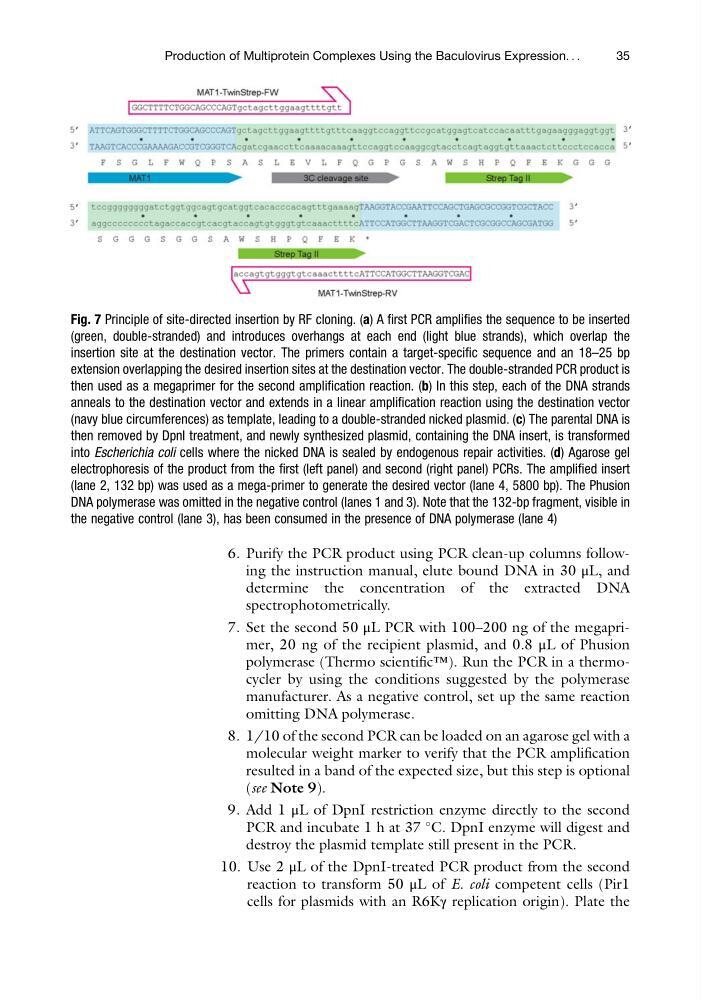
Fig. 7 Principle of site-directed insertion by RF cloning. (a) A first PCR amplifies the sequence to be inserted
(green, double-stranded) and introduces overhangs at each end (light blue strands), which overlap the
insertion site at the destination vector. The primers contain a target-specific sequence and an 18–25 bp
extension overlapping the desired insertion sites at the destination vector. The double-stranded PCR product is
then used as a megaprimer for the second amplification reaction. (b) In this step, each of the DNA strands
anneals to the destination vector and extends in a linear amplification reaction using the destination vector
(navy blue circumferences) as template, leading to a double-stranded nicked plasmid. (c) The parental DNA is
then removed by DpnI treatment, and newly synthesized plasmid, containing the DNA insert, is transformed
into Escherichia coli cells where the nicked DNA is sealed by endogenous repair activities. (d) Agarose gel
electrophoresis of the product from the first (left panel) and second (right panel) PCRs. The amplified insert
(lane 2, 132 bp) was used as a mega-primer to generate the desired vector (lane 4, 5800 bp). The Phusion
DNA polymerase was omitted in the negative control (lanes 1 and 3). Note that the 132-bp fragment, visible in
the negative control (lane 3), has been consumed in the presence of DNA polymerase (lane 4)
Production of Multiprotein Complexes Using the Baculovirus Expression. . .
35
determine the concentration of the extracted DNA
spectrophotometrically.
7. Set the second 50 μL PCR with 100–200 ng of the megaprimer, 20 ng of the recipient plasmid, and 0.8 μL of Phusion
polymerase (Thermo scientific™). Run the PCR in a thermocycler by using the conditions suggested by the polymerase
manufacturer. As a negative control, set up the same reaction
omitting DNA polymerase.
8. 1/10 of the second PCR can be loaded on an agarose gel with a
molecular weight marker to verify that the PCR amplification
resulted in a band of the expected size, but this step is optional
(see Note 9).
9. Add 1 μL of DpnI restriction enzyme directly to the second
PCR and incubate 1 h at 37
C. DpnI enzyme will digest and
destroy the plasmid template still present in the PCR.
10. Use 2 μL of the DpnI-treated PCR product from the second
reaction to transform 50 μL of E. coli competent cells (Pir1
cells for plasmids with an R6Kγ replication origin). Plate the
Fig. 7 Principle of site-directed insertion by RF cloning. (a) A first PCR amplifies the sequence to be inserted
(green, double-stranded) and introduces overhangs at each end (light blue strands), which overlap the
insertion site at the destination vector. The primers contain a target-specific sequence and an 18–25 bp
extension overlapping the desired insertion sites at the destination vector. The double-stranded PCR product is
then used as a megaprimer for the second amplification reaction. (b) In this step, each of the DNA strands
anneals to the destination vector and extends in a linear amplification reaction using the destination vector
(navy blue circumferences) as template, leading to a double-stranded nicked plasmid. (c) The parental DNA is
then removed by DpnI treatment, and newly synthesized plasmid, containing the DNA insert, is transformed
into Escherichia coli cells where the nicked DNA is sealed by endogenous repair activities. (d) Agarose gel
electrophoresis of the product from the first (left panel) and second (right panel) PCRs. The amplified insert
(lane 2, 132 bp) was used as a mega-primer to generate the desired vector (lane 4, 5800 bp). The Phusion
DNA polymerase was omitted in the negative control (lanes 1 and 3). Note that the 132-bp fragment, visible in
the negative control (lane 3), has been consumed in the presence of DNA polymerase (lane 4)
Production of Multiprotein Complexes Using the Baculovirus Expression. . .
35