

4. Run the PCR in a thermocycler by using the conditions suggested by the polymerase manufacturer. We typically denature
the template DNA at 98
C for 30 s, perform 25 cycles of
amplification (denaturation at 98
C for 30 s, annealing at the
calculated Tm for 15 s and elongation at 72
C for 60 s in the
case of a 1 kb gene) followed by a final incubation at 72
C for
10 min.
5. Load 1/10 of the PCR volume on a 1% agarose gel in parallel
with a molecular weight marker to verify that the PCR amplification resulted in a single band of the expected size.
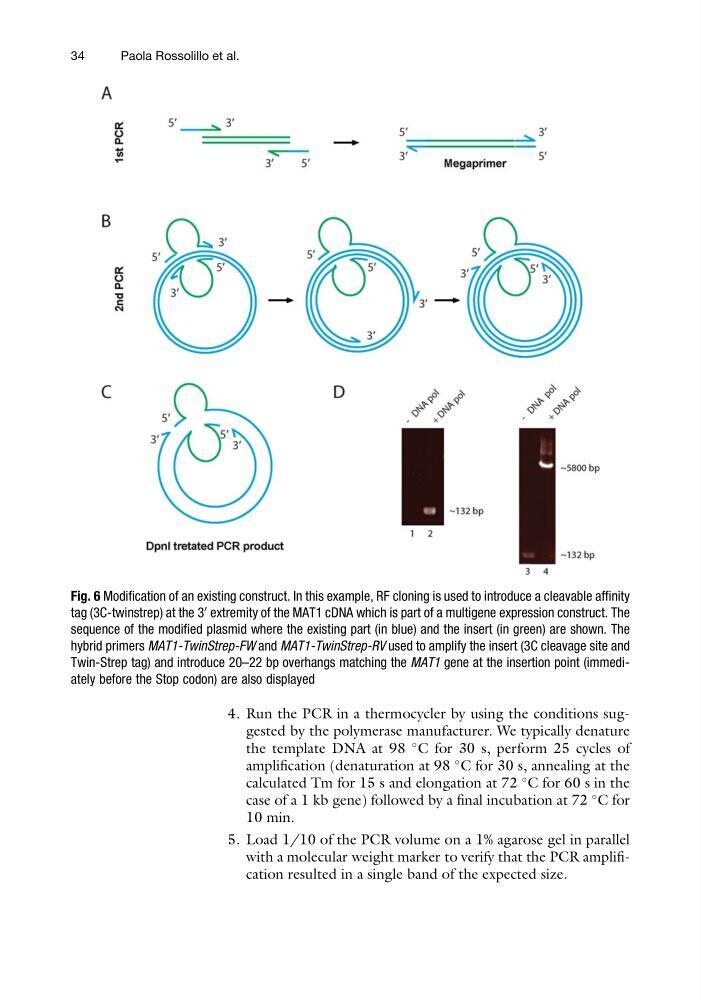
Fig. 6 Modification of an existing construct. In this example, RF cloning is used to introduce a cleavable affinity
tag (3C-twinstrep) at the 3
0
extremity of the MAT1 cDNA which is part of a multigene expression construct. The
sequence of the modified plasmid where the existing part (in blue) and the insert (in green) are shown. The
hybrid primers MAT1-TwinStrep-FW and MAT1-TwinStrep-RV used to amplify the insert (3C cleavage site and
Twin-Strep tag) and introduce 20–22 bp overhangs matching the MAT1 gene at the insertion point (immediately before the Stop codon) are also displayed
34
Paola Rossolillo et al.
the template DNA at 98
C for 30 s, perform 25 cycles of
amplification (denaturation at 98
C for 30 s, annealing at the
calculated Tm for 15 s and elongation at 72
C for 60 s in the
case of a 1 kb gene) followed by a final incubation at 72
C for
10 min.
5. Load 1/10 of the PCR volume on a 1% agarose gel in parallel
with a molecular weight marker to verify that the PCR amplification resulted in a single band of the expected size.
Fig. 6 Modification of an existing construct. In this example, RF cloning is used to introduce a cleavable affinity
tag (3C-twinstrep) at the 3
0
extremity of the MAT1 cDNA which is part of a multigene expression construct. The
sequence of the modified plasmid where the existing part (in blue) and the insert (in green) are shown. The
hybrid primers MAT1-TwinStrep-FW and MAT1-TwinStrep-RV used to amplify the insert (3C cleavage site and
Twin-Strep tag) and introduce 20–22 bp overhangs matching the MAT1 gene at the insertion point (immediately before the Stop codon) are also displayed
34
Paola Rossolillo et al.