

plant of Ranunculus macranthus was attempted,
yielding sufficient purity and amount to run
genomic sequencing (Jansen et al. 2005). However, the method is highly species dependent,
resulting in very limited success in plants. The
combination of high salt wash buffers with the
sucrose/Percoll gradient technique improved the
extraction of conifer cpDNA (Vieira Ldo et al.
2014). It was very cost-effective in terms of the
balance between the quality and yield of cpDNA.
The gradient allowed the increased chloroplast
isolation, along with decreased the contamination
of nuclear DNA and secondary metabolites in
cpDNA by using high salt buffer.
10.2.2 DNA Amplification
10.2.2.1 Whole Genome Amplification
The mentioned protocols are not suitable to isolate pure cpDNA from all plants. Enough yield
and sufficient purity are still restricted the
downstream genome sequence and analysis.
A bacteriophage Phi29 polymerase, which has
the ability of amplifying more than 70 Kb
without disassociating from the DNA template
(Dean et al. 2002), provides a great opportunity
to enrich the whole chloroplast genome using
rolling circle amplification (RCA) (Table 10.1).
It was found that the RCA approach worked
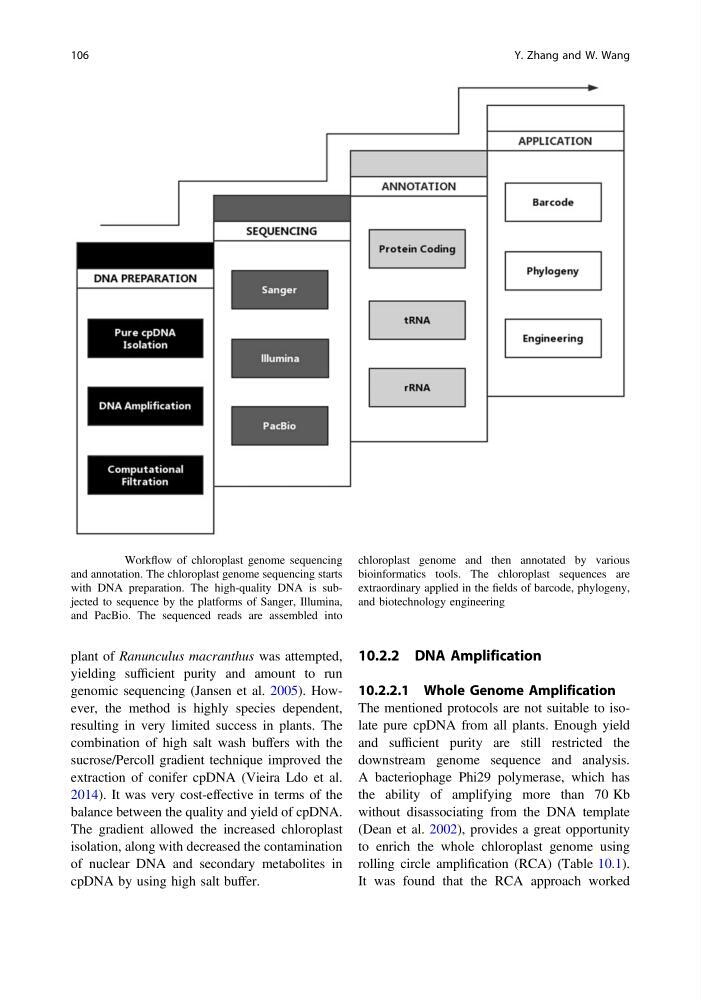
Fig. 10.2 Workflow of chloroplast genome sequencing
and annotation. The chloroplast genome sequencing starts
with DNA preparation. The high-quality DNA is subjected to sequence by the platforms of Sanger, Illumina,
and PacBio. The sequenced reads are assembled into
chloroplast genome and then annotated by various
bioinformatics tools. The chloroplast sequences are
extraordinary applied in the fields of barcode, phylogeny,
and biotechnology engineering
106
Y. Zhang and W. Wang
yielding sufficient purity and amount to run
genomic sequencing (Jansen et al. 2005). However, the method is highly species dependent,
resulting in very limited success in plants. The
combination of high salt wash buffers with the
sucrose/Percoll gradient technique improved the
extraction of conifer cpDNA (Vieira Ldo et al.
2014). It was very cost-effective in terms of the
balance between the quality and yield of cpDNA.
The gradient allowed the increased chloroplast
isolation, along with decreased the contamination
of nuclear DNA and secondary metabolites in
cpDNA by using high salt buffer.
10.2.2 DNA Amplification
10.2.2.1 Whole Genome Amplification
The mentioned protocols are not suitable to isolate pure cpDNA from all plants. Enough yield
and sufficient purity are still restricted the
downstream genome sequence and analysis.
A bacteriophage Phi29 polymerase, which has
the ability of amplifying more than 70 Kb
without disassociating from the DNA template
(Dean et al. 2002), provides a great opportunity
to enrich the whole chloroplast genome using
rolling circle amplification (RCA) (Table 10.1).
It was found that the RCA approach worked
Fig. 10.2 Workflow of chloroplast genome sequencing
and annotation. The chloroplast genome sequencing starts
with DNA preparation. The high-quality DNA is subjected to sequence by the platforms of Sanger, Illumina,
and PacBio. The sequenced reads are assembled into
chloroplast genome and then annotated by various
bioinformatics tools. The chloroplast sequences are
extraordinary applied in the fields of barcode, phylogeny,
and biotechnology engineering
106
Y. Zhang and W. Wang