

gravitropic responses in the form of the reorientation of the growth direction in
rhizoids and protonemata. We discuss the role of actomyosin forces, actin-binding
proteins and calcium as major key players in gravitropic signalling pathways. Since
characean algae are thought to be the algae most closely related to land plants (Lewis
and McCourt 2004), disclosing the mysteries of gravitropic signalling in rhizoids and
protonemata is also a promising approach to provide clues for unravelling the more
complex processes of gravity sensing and gravity-oriented growth in higher plants.
4.2 The Cytoskeletal Basis of Gravitropic Tip Growth
Tip growth is an extreme form of polarized growth, one of the most widespread
phenomena found in algae, mosses, fungi and higher plant pollen tubes and root
hairs; it is also found in tracheids, mesenchyma and endodermal cells. This mode
of cell expansion exclusively at the very tip is the preferred growth mode when
penetration of the surrounding medium or tissue is required (for review see Heath
1990). Many tip-growing cell types like pollen tubes respond to chemical clues
for orienting their growth direction (Hepler et al. 2001). Gravitropic tip growth,
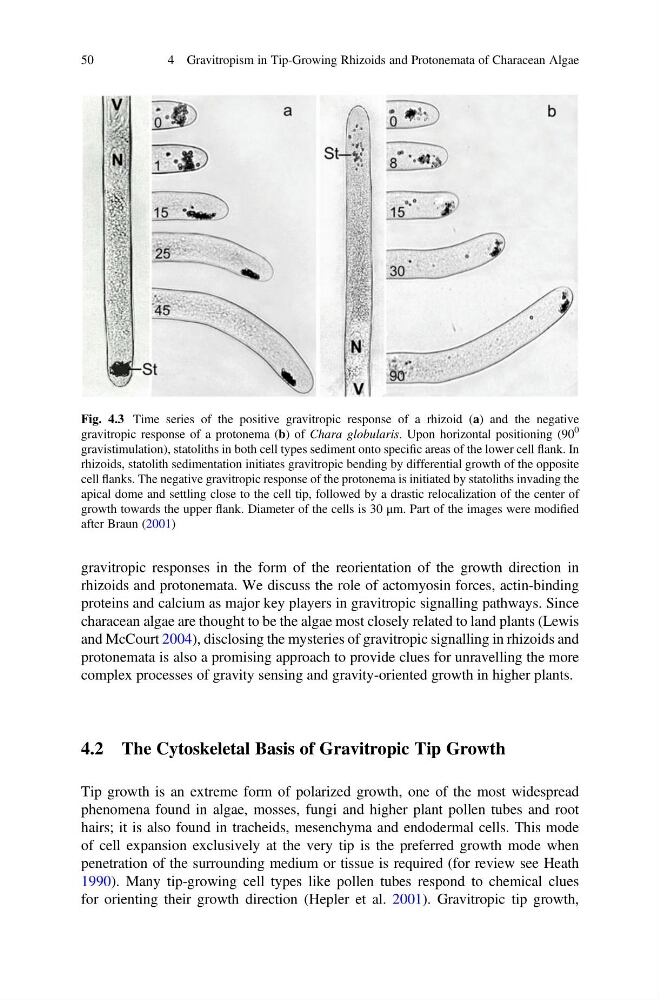
Fig. 4.3 Time series of the positive gravitropic response of a rhizoid (a) and the negative
gravitropic response of a protonema (b) of Chara globularis. Upon horizontal positioning (90
0
gravistimulation), statoliths in both cell types sediment onto specific areas of the lower cell flank. In
rhizoids, statolith sedimentation initiates gravitropic bending by differential growth of the opposite
cell flanks. The negative gravitropic response of the protonema is initiated by statoliths invading the
apical dome and settling close to the cell tip, followed by a drastic relocalization of the center of
growth towards the upper flank. Diameter of the cells is 30 μm. Part of the images were modified
after Braun (2001)
50
4 Gravitropism in Tip-Growing Rhizoids and Protonemata of Characean Algae
rhizoids and protonemata. We discuss the role of actomyosin forces, actin-binding
proteins and calcium as major key players in gravitropic signalling pathways. Since
characean algae are thought to be the algae most closely related to land plants (Lewis
and McCourt 2004), disclosing the mysteries of gravitropic signalling in rhizoids and
protonemata is also a promising approach to provide clues for unravelling the more
complex processes of gravity sensing and gravity-oriented growth in higher plants.
4.2 The Cytoskeletal Basis of Gravitropic Tip Growth
Tip growth is an extreme form of polarized growth, one of the most widespread
phenomena found in algae, mosses, fungi and higher plant pollen tubes and root
hairs; it is also found in tracheids, mesenchyma and endodermal cells. This mode
of cell expansion exclusively at the very tip is the preferred growth mode when
penetration of the surrounding medium or tissue is required (for review see Heath
1990). Many tip-growing cell types like pollen tubes respond to chemical clues
for orienting their growth direction (Hepler et al. 2001). Gravitropic tip growth,
Fig. 4.3 Time series of the positive gravitropic response of a rhizoid (a) and the negative
gravitropic response of a protonema (b) of Chara globularis. Upon horizontal positioning (90
0
gravistimulation), statoliths in both cell types sediment onto specific areas of the lower cell flank. In
rhizoids, statolith sedimentation initiates gravitropic bending by differential growth of the opposite
cell flanks. The negative gravitropic response of the protonema is initiated by statoliths invading the
apical dome and settling close to the cell tip, followed by a drastic relocalization of the center of
growth towards the upper flank. Diameter of the cells is 30 μm. Part of the images were modified
after Braun (2001)
50
4 Gravitropism in Tip-Growing Rhizoids and Protonemata of Characean Algae