

statocytes in roots and shoots, in higher plants. Both gravitropic pathways are
initiated by a microscopically easy to observe gravity-mediated sedimentation of
statoliths, 1–2 μm-sized vacuoles filled with BaSO 4 crystals (for review see Sievers
et al. 1996; Braun 1997). However, how and where statoliths sediment in the apical
dome upon gravitropic stimulation and the subsequent gravitropic response mechanisms are very different in both cell types (Braun 2002).
This chapter summarizes the results that have been collected over the last decades
by studying gravity sensing and graviorientation in characean rhizoids and protonemata by means of various molecular, physiological and immunological methods,
with innovative advanced microscopic technologies and laser-optical micromanipulation, but most importantly, also by altering gravity conditions by using centrifugation and microgravity-simulation facilities as well as by doing experiments in the
almost stimulus-free microgravity environment of spaceflight missions like parabolic
flights, sounding rocket flights and Space Shuttle missions. Especially the microgravity experiments provided fascinating new insights and breakthroughs in our
understanding of plant gravity sensing and of the processes that underlie the opposite
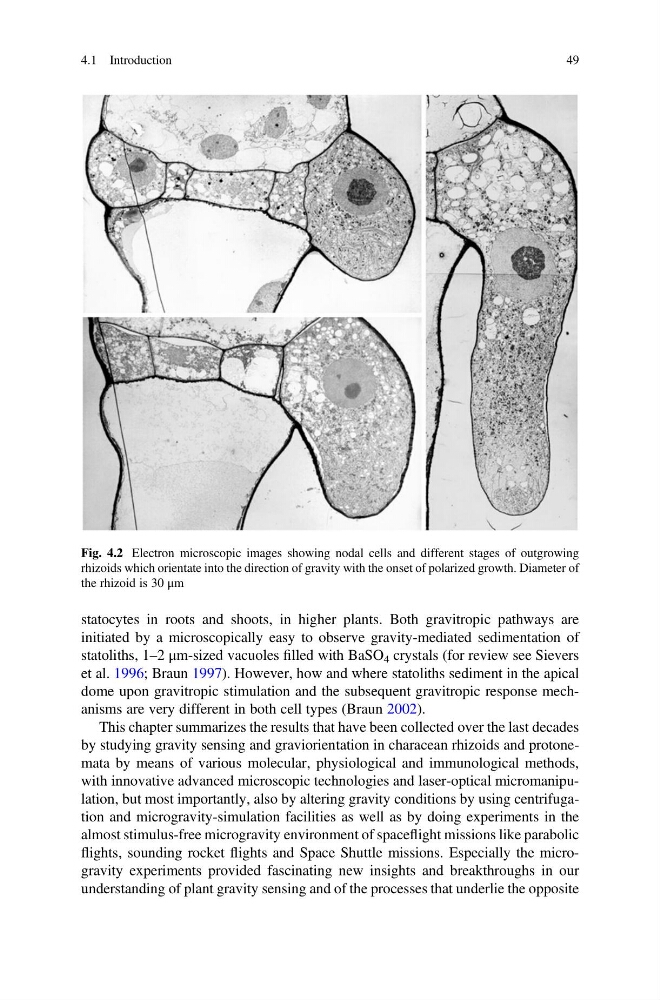
Fig. 4.2 Electron microscopic images showing nodal cells and different stages of outgrowing
rhizoids which orientate into the direction of gravity with the onset of polarized growth. Diameter of
the rhizoid is 30 μm
4.1 Introduction
49
initiated by a microscopically easy to observe gravity-mediated sedimentation of
statoliths, 1–2 μm-sized vacuoles filled with BaSO 4 crystals (for review see Sievers
et al. 1996; Braun 1997). However, how and where statoliths sediment in the apical
dome upon gravitropic stimulation and the subsequent gravitropic response mechanisms are very different in both cell types (Braun 2002).
This chapter summarizes the results that have been collected over the last decades
by studying gravity sensing and graviorientation in characean rhizoids and protonemata by means of various molecular, physiological and immunological methods,
with innovative advanced microscopic technologies and laser-optical micromanipulation, but most importantly, also by altering gravity conditions by using centrifugation and microgravity-simulation facilities as well as by doing experiments in the
almost stimulus-free microgravity environment of spaceflight missions like parabolic
flights, sounding rocket flights and Space Shuttle missions. Especially the microgravity experiments provided fascinating new insights and breakthroughs in our
understanding of plant gravity sensing and of the processes that underlie the opposite
Fig. 4.2 Electron microscopic images showing nodal cells and different stages of outgrowing
rhizoids which orientate into the direction of gravity with the onset of polarized growth. Diameter of
the rhizoid is 30 μm
4.1 Introduction
49