

constantly changing environment of lakes and rivers. Positively gravitropic—downward growing—characean rhizoids have a root-like function (Braun and Limbach
2006). When pieces of the thallus are ripped off by the water streaming, rhizoids
grow out from nodal cells and anchor the thallus segments in the sediment (Fig. 4.1).
Characean protonemata are morphologically almost identical but respond negatively
gravitropically (Hodick 1993); they develop and grow upward only in darkness
(in the absence of blue light) e.g. when the green thallus got buried in the sediment
(Fig. 4.1). As soon as they grow out of the soil back into the light, these cells
terminate tip growth, divide into nodes and internodes restoring the complexly
organized green alga thallus (Braun and Wasteneys 1998a; see Fig. 4.1).
In gravitropism research, unicellular systems like the tip-growing and
graviresponding characeen rhizoids and protonemata have been intensively used to
study cellular and molecular mechanisms of gravity perception, signalling pathways
and the gravitropic responses (Sievers et al. 1996; Braun 1997; Braun and
Wasteneys 1998b; Kiss 2000; Braun and Limbach 2006). The tube-like cells with
diameters of up to 30 μm are produced by nodal cells of the green thallus and rapidly
expand into the surrounding medium by tip growth (Fig. 4.2). Gravity is the most
reliable environmental cue and the only one both cell types use for orientation.
Although rhizoids and protonemata morphologically look the same they respond
oppositely to gravitropic stimulation (Fig. 4.3). In both cell types, the complete
gravitropic perception, transduction and response pathways are very short and
limited to the apical region of a single cell. That makes them more easily accessible
for a variety of experimental approaches than other gravity-sensing cells, e.g. the
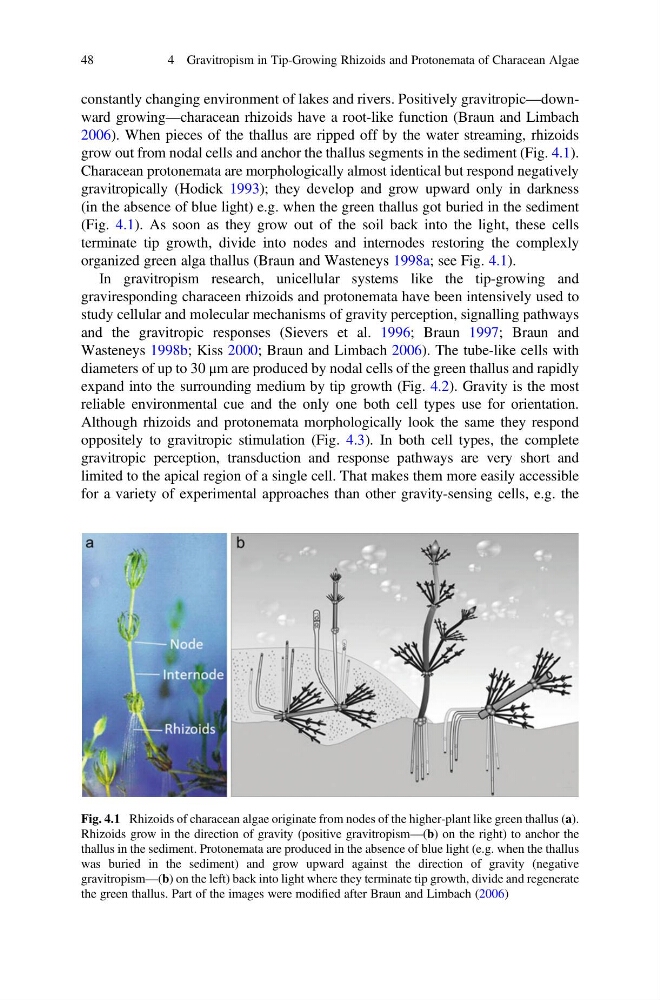
Fig. 4.1 Rhizoids of characean algae originate from nodes of the higher-plant like green thallus (a).
Rhizoids grow in the direction of gravity (positive gravitropism—(b) on the right) to anchor the
thallus in the sediment. Protonemata are produced in the absence of blue light (e.g. when the thallus
was buried in the sediment) and grow upward against the direction of gravity (negative
gravitropism—(b) on the left) back into light where they terminate tip growth, divide and regenerate
the green thallus. Part of the images were modified after Braun and Limbach (2006)
48
4 Gravitropism in Tip-Growing Rhizoids and Protonemata of Characean Algae
2006). When pieces of the thallus are ripped off by the water streaming, rhizoids
grow out from nodal cells and anchor the thallus segments in the sediment (Fig. 4.1).
Characean protonemata are morphologically almost identical but respond negatively
gravitropically (Hodick 1993); they develop and grow upward only in darkness
(in the absence of blue light) e.g. when the green thallus got buried in the sediment
(Fig. 4.1). As soon as they grow out of the soil back into the light, these cells
terminate tip growth, divide into nodes and internodes restoring the complexly
organized green alga thallus (Braun and Wasteneys 1998a; see Fig. 4.1).
In gravitropism research, unicellular systems like the tip-growing and
graviresponding characeen rhizoids and protonemata have been intensively used to
study cellular and molecular mechanisms of gravity perception, signalling pathways
and the gravitropic responses (Sievers et al. 1996; Braun 1997; Braun and
Wasteneys 1998b; Kiss 2000; Braun and Limbach 2006). The tube-like cells with
diameters of up to 30 μm are produced by nodal cells of the green thallus and rapidly
expand into the surrounding medium by tip growth (Fig. 4.2). Gravity is the most
reliable environmental cue and the only one both cell types use for orientation.
Although rhizoids and protonemata morphologically look the same they respond
oppositely to gravitropic stimulation (Fig. 4.3). In both cell types, the complete
gravitropic perception, transduction and response pathways are very short and
limited to the apical region of a single cell. That makes them more easily accessible
for a variety of experimental approaches than other gravity-sensing cells, e.g. the
Fig. 4.1 Rhizoids of characean algae originate from nodes of the higher-plant like green thallus (a).
Rhizoids grow in the direction of gravity (positive gravitropism—(b) on the right) to anchor the
thallus in the sediment. Protonemata are produced in the absence of blue light (e.g. when the thallus
was buried in the sediment) and grow upward against the direction of gravity (negative
gravitropism—(b) on the left) back into light where they terminate tip growth, divide and regenerate
the green thallus. Part of the images were modified after Braun and Limbach (2006)
48
4 Gravitropism in Tip-Growing Rhizoids and Protonemata of Characean Algae