

Correlations between images separated by small tilts (1°–3°) are still good
approximations to the hypothesis that the images being compared are the “same”
simply related by an in-plane operation.
Combining all these strategies, we may safely calculate vector displacements
between any two images i and j, D i;j (i\j and j À i
j
jDh\e, for a user selected e).
Then, we can solve the overdetermined system of equations
D i;j ¼
X jÀ1
k¼i
D k;k þ 1
as was done for Direct Detector frame alignment [8].
7.2.2 Determining the Orientation of the Tilt Axis
Once projection images on a tilt series are prealigned, they share a common orientation of the tilt axis. Thus the orientation of the tilt axis along the tilt series
should not change and each projection in the tilt series should correspond to a
different projection of the specimen at a given tilt angle. Therefore it is now
possible to estimate the direction of this tilt axis used to generate the projections
(see Fig. 7.7). Once identified, it is usually aligned with the vertical axis. Although
this is not absolutely required to perform 3D reconstruction, it is convenient since it
converts the 3D reconstruction problem into a 2D reconstruction problem conveying a speed-up of the reconstruction process by more than 1 order of magnitude.
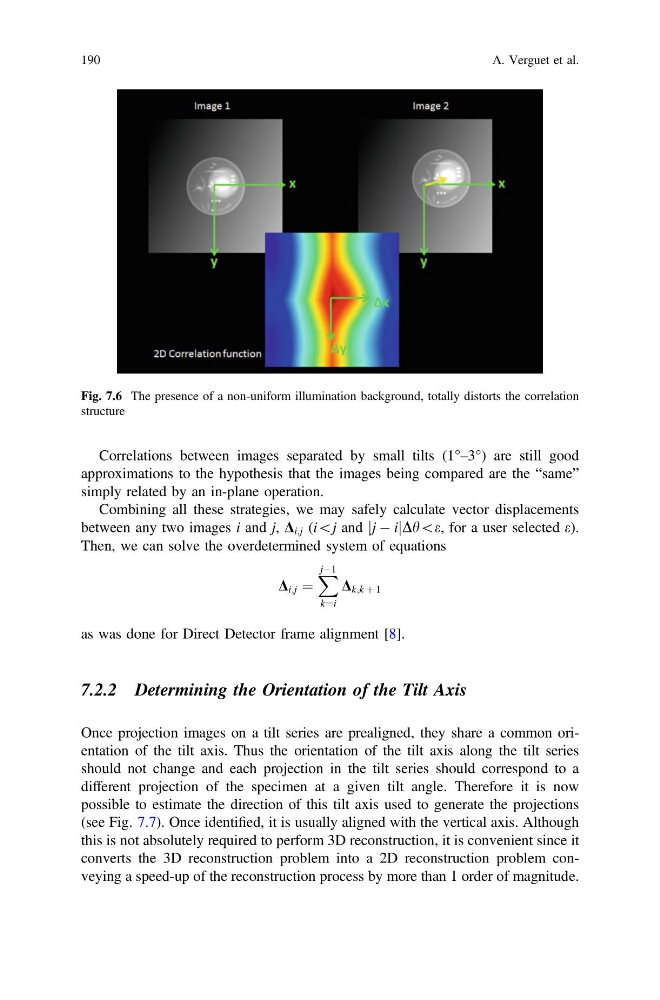
Fig. 7.6 The presence of a non-uniform illumination background, totally distorts the correlation
structure
190
A. Verguet et al.
approximations to the hypothesis that the images being compared are the “same”
simply related by an in-plane operation.
Combining all these strategies, we may safely calculate vector displacements
between any two images i and j, D i;j (i\j and j À i
j
jDh\e, for a user selected e).
Then, we can solve the overdetermined system of equations
D i;j ¼
X jÀ1
k¼i
D k;k þ 1
as was done for Direct Detector frame alignment [8].
7.2.2 Determining the Orientation of the Tilt Axis
Once projection images on a tilt series are prealigned, they share a common orientation of the tilt axis. Thus the orientation of the tilt axis along the tilt series
should not change and each projection in the tilt series should correspond to a
different projection of the specimen at a given tilt angle. Therefore it is now
possible to estimate the direction of this tilt axis used to generate the projections
(see Fig. 7.7). Once identified, it is usually aligned with the vertical axis. Although
this is not absolutely required to perform 3D reconstruction, it is convenient since it
converts the 3D reconstruction problem into a 2D reconstruction problem conveying a speed-up of the reconstruction process by more than 1 order of magnitude.
Fig. 7.6 The presence of a non-uniform illumination background, totally distorts the correlation
structure
190
A. Verguet et al.