

The angles between molecular axes of the following porphyrin derivatives, pTMPyP, trans-DMPyP, and cis-DMPyP (Scheme 4), and the silicate layer of SA
were estimated by polarized visible light attenuated total reflection (polarized
vis-ATR) spectra [290]. Figure 12 shows that the absorbance of p-TMPyP of
s-polarized light was larger than that of the p-polarized light. A similar difference
in the polarized absorption spectra was observed in trans-DMPyP and cis-DMPyP.
The angles between the molecular axes of the three porphyrins and the surface of the
silicate layer were estimated to be less than 5
.
Fluorescent dyes adsorbed in layered materials showed linearly polarized emission, suggesting the alignment of the dye dipole in the interlayer space [291–293]. A
laponite film was prepared by spin-coating an aqueous suspension and was used to
accommodate rhodamine 6G (R6G, in Scheme 2) by cation exchange by immersing
the film in an R6G solution [206, 294, 295]. Fluorescence intensity excited by
horizontally polarized light depended on the direction of the polarizer. The angle
between the long axis of R6G and the silicate layer was estimated to be 28
from the
difference of the fluorescence intensities observed with horizontal or vertical axes of
the film.
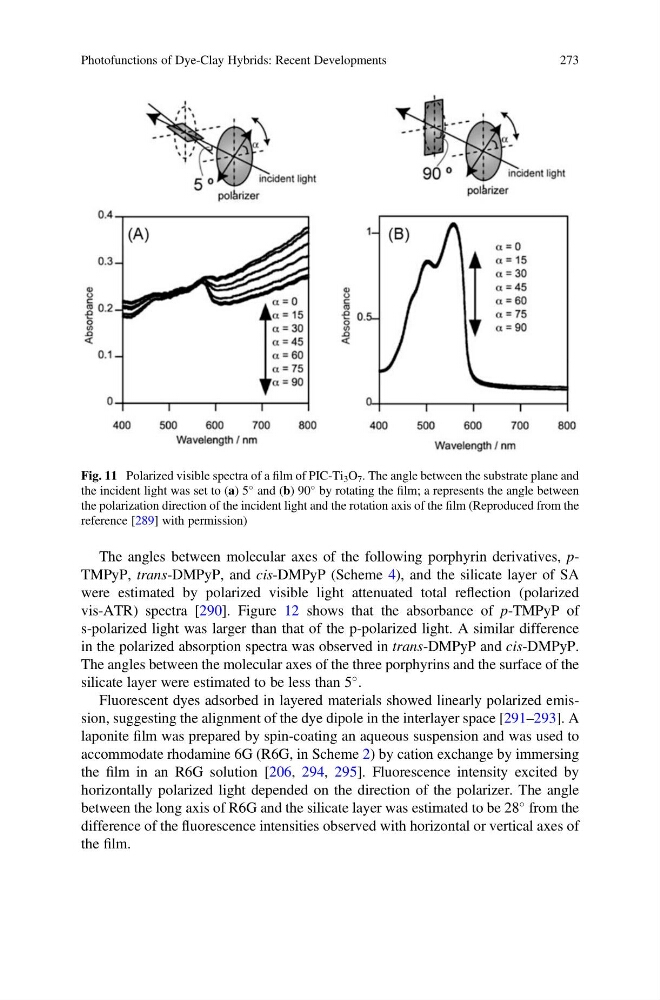
Fig. 11 Polarized visible spectra of a film of PIC-Ti 3 O 7 . The angle between the substrate plane and
the incident light was set to (a) 5
and (b) 90
by rotating the film; a represents the angle between
the polarization direction of the incident light and the rotation axis of the film (Reproduced from the
reference [289] with permission)
Photofunctions of Dye-Clay Hybrids: Recent Developments
273
were estimated by polarized visible light attenuated total reflection (polarized
vis-ATR) spectra [290]. Figure 12 shows that the absorbance of p-TMPyP of
s-polarized light was larger than that of the p-polarized light. A similar difference
in the polarized absorption spectra was observed in trans-DMPyP and cis-DMPyP.
The angles between the molecular axes of the three porphyrins and the surface of the
silicate layer were estimated to be less than 5
.
Fluorescent dyes adsorbed in layered materials showed linearly polarized emission, suggesting the alignment of the dye dipole in the interlayer space [291–293]. A
laponite film was prepared by spin-coating an aqueous suspension and was used to
accommodate rhodamine 6G (R6G, in Scheme 2) by cation exchange by immersing
the film in an R6G solution [206, 294, 295]. Fluorescence intensity excited by
horizontally polarized light depended on the direction of the polarizer. The angle
between the long axis of R6G and the silicate layer was estimated to be 28
from the
difference of the fluorescence intensities observed with horizontal or vertical axes of
the film.
Fig. 11 Polarized visible spectra of a film of PIC-Ti 3 O 7 . The angle between the substrate plane and
the incident light was set to (a) 5
and (b) 90
by rotating the film; a represents the angle between
the polarization direction of the incident light and the rotation axis of the film (Reproduced from the
reference [289] with permission)
Photofunctions of Dye-Clay Hybrids: Recent Developments
273