

f r, Γ
ð Þ ¼ 2πΓre
ÀΓπr
2
ð15Þ
where r represents the intermolecular distance and Γ is the surface concentration of
the molecules [m
À2 ]. If we neglect the particle edges as minor sites for the adsorption
of the molecules, the basal surface of two-dimensional layered particles essentially
has two opposite planes of the surfaces on which the adsorption of the molecules
occurs. Ordinary R 0 reaches far higher values than the distances between opposite
surfaces. When calculating the energy transfer efficiency, it is possible to neglect the
distances of opposite surfaces (~1 nm) of an individual layered particle and evaluate
the energy transfer as if it was realized on the one plane created by merging the two
planes of opposing surfaces. In such a case, the dye concentration is essentially
doubled compared to the real concentration on one of the surface planes of a particle.
A further increase in the dye concentration in such hybrid systems may also occur
with the flocculation of the particles. The simplest example is the association of two
particles. An agglomerate can be formed by joining two individual particles with
already adsorbed dye molecules. In the agglomerate, two sides of the particles share
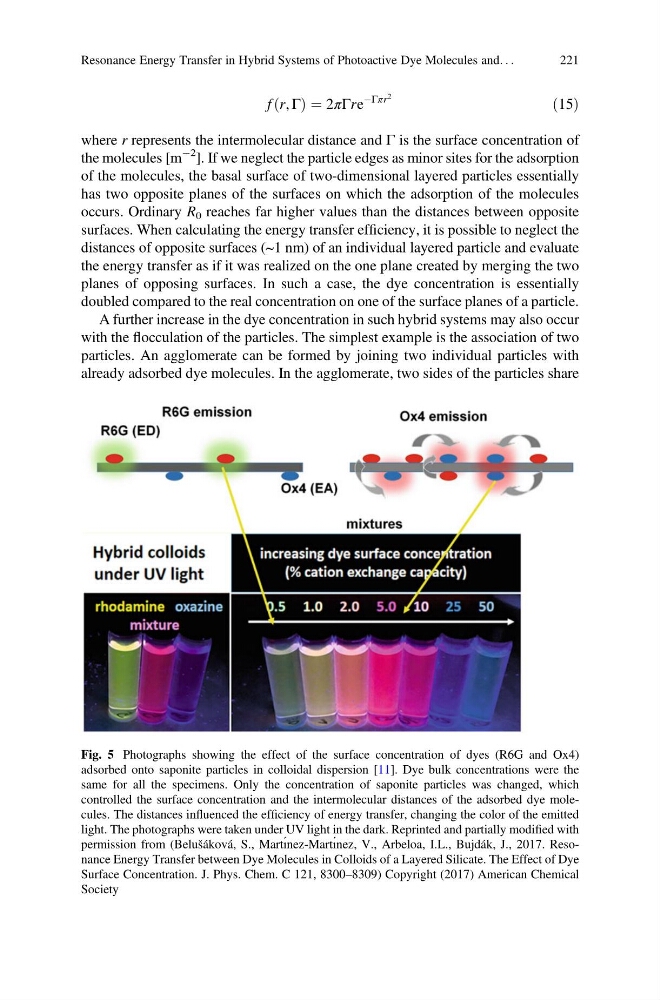
Fig. 5 Photographs showing the effect of the surface concentration of dyes (R6G and Ox4)
adsorbed onto saponite particles in colloidal dispersion [11]. Dye bulk concentrations were the
same for all the specimens. Only the concentration of saponite particles was changed, which
controlled the surface concentration and the intermolecular distances of the adsorbed dye molecules. The distances influenced the efficiency of energy transfer, changing the color of the emitted
light. The photographs were taken under UV light in the dark. Reprinted and partially modified with
permission from (Belušáková, S., Martı nez-Martı nez, V., Arbeloa, I.L., Bujdák, J., 2017. Resonance Energy Transfer between Dye Molecules in Colloids of a Layered Silicate. The Effect of Dye
Surface Concentration. J. Phys. Chem. C 121, 8300–8309) Copyright (2017) American Chemical
Society
Resonance Energy Transfer in Hybrid Systems of Photoactive Dye Molecules and. . .
221
ð Þ ¼ 2πΓre
ÀΓπr
2
ð15Þ
where r represents the intermolecular distance and Γ is the surface concentration of
the molecules [m
À2 ]. If we neglect the particle edges as minor sites for the adsorption
of the molecules, the basal surface of two-dimensional layered particles essentially
has two opposite planes of the surfaces on which the adsorption of the molecules
occurs. Ordinary R 0 reaches far higher values than the distances between opposite
surfaces. When calculating the energy transfer efficiency, it is possible to neglect the
distances of opposite surfaces (~1 nm) of an individual layered particle and evaluate
the energy transfer as if it was realized on the one plane created by merging the two
planes of opposing surfaces. In such a case, the dye concentration is essentially
doubled compared to the real concentration on one of the surface planes of a particle.
A further increase in the dye concentration in such hybrid systems may also occur
with the flocculation of the particles. The simplest example is the association of two
particles. An agglomerate can be formed by joining two individual particles with
already adsorbed dye molecules. In the agglomerate, two sides of the particles share
Fig. 5 Photographs showing the effect of the surface concentration of dyes (R6G and Ox4)
adsorbed onto saponite particles in colloidal dispersion [11]. Dye bulk concentrations were the
same for all the specimens. Only the concentration of saponite particles was changed, which
controlled the surface concentration and the intermolecular distances of the adsorbed dye molecules. The distances influenced the efficiency of energy transfer, changing the color of the emitted
light. The photographs were taken under UV light in the dark. Reprinted and partially modified with
permission from (Belušáková, S., Martı nez-Martı nez, V., Arbeloa, I.L., Bujdák, J., 2017. Resonance Energy Transfer between Dye Molecules in Colloids of a Layered Silicate. The Effect of Dye
Surface Concentration. J. Phys. Chem. C 121, 8300–8309) Copyright (2017) American Chemical
Society
Resonance Energy Transfer in Hybrid Systems of Photoactive Dye Molecules and. . .
221