

providing oxygen and natural substances to other living things. Chlorella vulgaris is
a significant species because it adsorb an assortment of natural pollutants (Kong
et al. 2010), so the development of microalgae in wastewater treatment is spreading
widely for the disposal of supplements, control of physical substance parameters, as
feedstock for the generation of biofuel, and expulsion of phenol and polycyclic
aromatic compounds, because of its high adsorption limit, bioaccumulation, biotransformation, and biodegradation (He et al. 2016). For this reason, it was proposed
here to determine the capability of biodegradation of unrefined petroleum by the
microalgae Chlorella sp. (Deimer et al. 2018). Data are shown in Table 10.3.
10.2.4 Biodegradation of Oil and Hydrocarbons by
Actinomycetes
The tragic history of soil and water pollution by way of oil spillage from the oil
industry, tankers, offshore systems, related pipelines, garage tanks and wells, and
unlawful oil bunkering has caused essential environmental and fitness defects in
oil-structured countries (Ordinioha and Brisibe 2013). Pollution through crude oil,
inclusive of oil spills and toxic wastes, is a persistent struggle that has prompted
serious threats to human fitness with issues regarding the viability and productiveness of ecosystems (Okoh and Trejo-Hernandez 2006). Mechanical and chemical
techniques for the remediation of hydrocarbon-polluted surroundings are frequently
costly and technologically complex. Increasing attention has been paid to the
growing innovative era for cleaning up this contaminant, with bioremediation
being a completely useful method (Vidali 2001). There are many herbal and natural
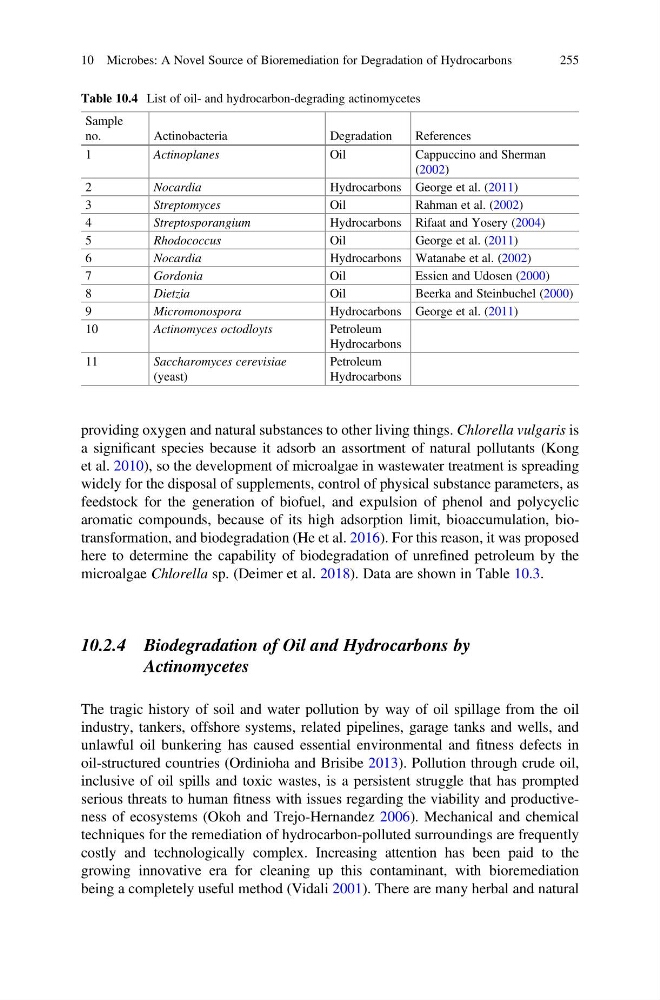
Table 10.4 List of oil- and hydrocarbon-degrading actinomycetes
Sample
no.
Actinobacteria
Degradation
References
1
Actinoplanes
Oil
Cappuccino and Sherman
(2002)
2
Nocardia
Hydrocarbons George et al. (2011)
3
Streptomyces
Oil
Rahman et al. (2002)
4
Streptosporangium
Hydrocarbons Rifaat and Yosery (2004)
5
Rhodococcus
Oil
George et al. (2011)
6
Nocardia
Hydrocarbons Watanabe et al. (2002)
7
Gordonia
Oil
Essien and Udosen (2000)
8
Dietzia
Oil
Beerka and Steinbuchel (2000)
9
Micromonospora
Hydrocarbons George et al. (2011)
10
Actinomyces octodloyts
Petroleum
Hydrocarbons
11
Saccharomyces cerevisiae
(yeast)
Petroleum
Hydrocarbons
10 Microbes: A Novel Source of Bioremediation for Degradation of Hydrocarbons
255
a significant species because it adsorb an assortment of natural pollutants (Kong
et al. 2010), so the development of microalgae in wastewater treatment is spreading
widely for the disposal of supplements, control of physical substance parameters, as
feedstock for the generation of biofuel, and expulsion of phenol and polycyclic
aromatic compounds, because of its high adsorption limit, bioaccumulation, biotransformation, and biodegradation (He et al. 2016). For this reason, it was proposed
here to determine the capability of biodegradation of unrefined petroleum by the
microalgae Chlorella sp. (Deimer et al. 2018). Data are shown in Table 10.3.
10.2.4 Biodegradation of Oil and Hydrocarbons by
Actinomycetes
The tragic history of soil and water pollution by way of oil spillage from the oil
industry, tankers, offshore systems, related pipelines, garage tanks and wells, and
unlawful oil bunkering has caused essential environmental and fitness defects in
oil-structured countries (Ordinioha and Brisibe 2013). Pollution through crude oil,
inclusive of oil spills and toxic wastes, is a persistent struggle that has prompted
serious threats to human fitness with issues regarding the viability and productiveness of ecosystems (Okoh and Trejo-Hernandez 2006). Mechanical and chemical
techniques for the remediation of hydrocarbon-polluted surroundings are frequently
costly and technologically complex. Increasing attention has been paid to the
growing innovative era for cleaning up this contaminant, with bioremediation
being a completely useful method (Vidali 2001). There are many herbal and natural
Table 10.4 List of oil- and hydrocarbon-degrading actinomycetes
Sample
no.
Actinobacteria
Degradation
References
1
Actinoplanes
Oil
Cappuccino and Sherman
(2002)
2
Nocardia
Hydrocarbons George et al. (2011)
3
Streptomyces
Oil
Rahman et al. (2002)
4
Streptosporangium
Hydrocarbons Rifaat and Yosery (2004)
5
Rhodococcus
Oil
George et al. (2011)
6
Nocardia
Hydrocarbons Watanabe et al. (2002)
7
Gordonia
Oil
Essien and Udosen (2000)
8
Dietzia
Oil
Beerka and Steinbuchel (2000)
9
Micromonospora
Hydrocarbons George et al. (2011)
10
Actinomyces octodloyts
Petroleum
Hydrocarbons
11
Saccharomyces cerevisiae
(yeast)
Petroleum
Hydrocarbons
10 Microbes: A Novel Source of Bioremediation for Degradation of Hydrocarbons
255