

photosynthesis. Additionally, total petroleum hydrocarbon (TPH), a natural toxin in
the Earth, is poisonous for all human beings and numerous other organisms (Lee
et al. 2015). Polycyclic aromatic hydrocarbons (PAHs) are the most lethal components of unrefined petroleum and are related to cancer-causing agents (Duran and
Cravo 2016). Bioremediation suggests the utilization of living organisms and their
biochemical apparatus to debase or change poisons into less dangerous forms, which
has been demonstrated to be a powerful, confined, and more affordable technique
(Sharma et al. 2018). In any case, a limitation of the bioremediation procedure with
microorganisms is the accessibility of supplements, for example, nitrogen and
phosphorus, which influences the speed of oil degradation (Ron and Rosenberg
2014), although advances in atomic innovations on recombinant DNA have permitted the hereditary improvement of numerous organisms and support the speed of
remediation. The fundamental segments of raw petroleum are naphthenes,
asphaltenes, waxes, pavements, aromatic hydrocarbons, tars, and other unstable
mixes, for example, benzene, toluene, ethylbenzene, and xylene. Many mixes, for
example, pyrene, benzo(a)pyrene and chrysene, are cancer causing, mutagenic, and
teratogenic (Sammarco et al. 2013). Numerous microorganisms, including a few
types of microalgae (Monoraphidium braunii, Chlamydomonas reinhardtii, Chlorella sp.), parasites (Trametes versicolor, Pleurotus eryngii, Phanerochaete
chrysosporium), and bacteria (Pseudomonas aeruginosa, Rhodococcus
erythropolis), have catabolic pathways for the debasement of contaminants (Sharma
et al. 2018). Algal growth is fundamental in seagoing biological systems and in light
of the fact that they are essential markers, are important in the trophic chain,
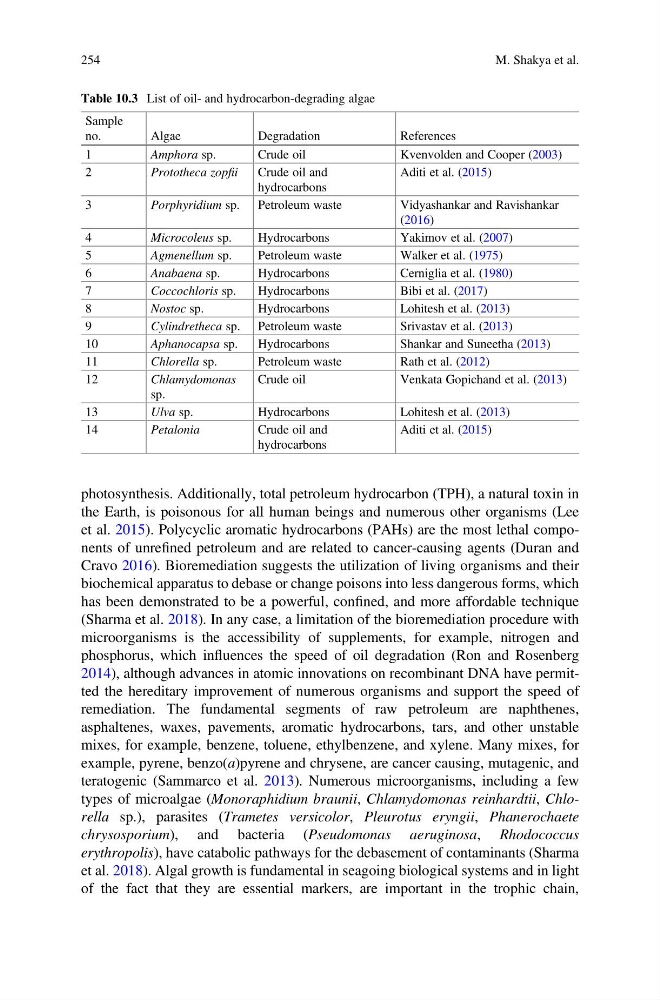
Table 10.3 List of oil- and hydrocarbon-degrading algae
Sample
no.
Algae
Degradation
References
1
Amphora sp.
Crude oil
Kvenvolden and Cooper (2003)
2
Prototheca zopfii
Crude oil and
hydrocarbons
Aditi et al. (2015)
3
Porphyridium sp. Petroleum waste
Vidyashankar and Ravishankar
(2016)
4
Microcoleus sp.
Hydrocarbons
Yakimov et al. (2007)
5
Agmenellum sp.
Petroleum waste
Walker et al. (1975)
6
Anabaena sp.
Hydrocarbons
Cerniglia et al. (1980)
7
Coccochloris sp.
Hydrocarbons
Bibi et al. (2017)
8
Nostoc sp.
Hydrocarbons
Lohitesh et al. (2013)
9
Cylindretheca sp. Petroleum waste
Srivastav et al. (2013)
10
Aphanocapsa sp.
Hydrocarbons
Shankar and Suneetha (2013)
11
Chlorella sp.
Petroleum waste
Rath et al. (2012)
12
Chlamydomonas
sp.
Crude oil
Venkata Gopichand et al. (2013)
13
Ulva sp.
Hydrocarbons
Lohitesh et al. (2013)
14
Petalonia
Crude oil and
hydrocarbons
Aditi et al. (2015)
254
M. Shakya et al.
the Earth, is poisonous for all human beings and numerous other organisms (Lee
et al. 2015). Polycyclic aromatic hydrocarbons (PAHs) are the most lethal components of unrefined petroleum and are related to cancer-causing agents (Duran and
Cravo 2016). Bioremediation suggests the utilization of living organisms and their
biochemical apparatus to debase or change poisons into less dangerous forms, which
has been demonstrated to be a powerful, confined, and more affordable technique
(Sharma et al. 2018). In any case, a limitation of the bioremediation procedure with
microorganisms is the accessibility of supplements, for example, nitrogen and
phosphorus, which influences the speed of oil degradation (Ron and Rosenberg
2014), although advances in atomic innovations on recombinant DNA have permitted the hereditary improvement of numerous organisms and support the speed of
remediation. The fundamental segments of raw petroleum are naphthenes,
asphaltenes, waxes, pavements, aromatic hydrocarbons, tars, and other unstable
mixes, for example, benzene, toluene, ethylbenzene, and xylene. Many mixes, for
example, pyrene, benzo(a)pyrene and chrysene, are cancer causing, mutagenic, and
teratogenic (Sammarco et al. 2013). Numerous microorganisms, including a few
types of microalgae (Monoraphidium braunii, Chlamydomonas reinhardtii, Chlorella sp.), parasites (Trametes versicolor, Pleurotus eryngii, Phanerochaete
chrysosporium), and bacteria (Pseudomonas aeruginosa, Rhodococcus
erythropolis), have catabolic pathways for the debasement of contaminants (Sharma
et al. 2018). Algal growth is fundamental in seagoing biological systems and in light
of the fact that they are essential markers, are important in the trophic chain,
Table 10.3 List of oil- and hydrocarbon-degrading algae
Sample
no.
Algae
Degradation
References
1
Amphora sp.
Crude oil
Kvenvolden and Cooper (2003)
2
Prototheca zopfii
Crude oil and
hydrocarbons
Aditi et al. (2015)
3
Porphyridium sp. Petroleum waste
Vidyashankar and Ravishankar
(2016)
4
Microcoleus sp.
Hydrocarbons
Yakimov et al. (2007)
5
Agmenellum sp.
Petroleum waste
Walker et al. (1975)
6
Anabaena sp.
Hydrocarbons
Cerniglia et al. (1980)
7
Coccochloris sp.
Hydrocarbons
Bibi et al. (2017)
8
Nostoc sp.
Hydrocarbons
Lohitesh et al. (2013)
9
Cylindretheca sp. Petroleum waste
Srivastav et al. (2013)
10
Aphanocapsa sp.
Hydrocarbons
Shankar and Suneetha (2013)
11
Chlorella sp.
Petroleum waste
Rath et al. (2012)
12
Chlamydomonas
sp.
Crude oil
Venkata Gopichand et al. (2013)
13
Ulva sp.
Hydrocarbons
Lohitesh et al. (2013)
14
Petalonia
Crude oil and
hydrocarbons
Aditi et al. (2015)
254
M. Shakya et al.