

Therefore, the preferred method for degradation of hydrocarbons is biological
treatment because of reliability, feasibility, and the high potential for eco-friendly
degradation. The biological methods are very simple to use and require low energy
for operation. A variety of microorganisms can be used for the process in in vitro as
well as in in vivo conditions (Fig. 10.1). Different types of microorganisms—
bacteria, fungi, algae, and yeasts—degrade the hydrocarbons in a green revolution
for removing hazardous contaminants from the environment (Zhang et al. 2013;
Rahman et al. 2003). Native microorganisms have great potential for degradation as
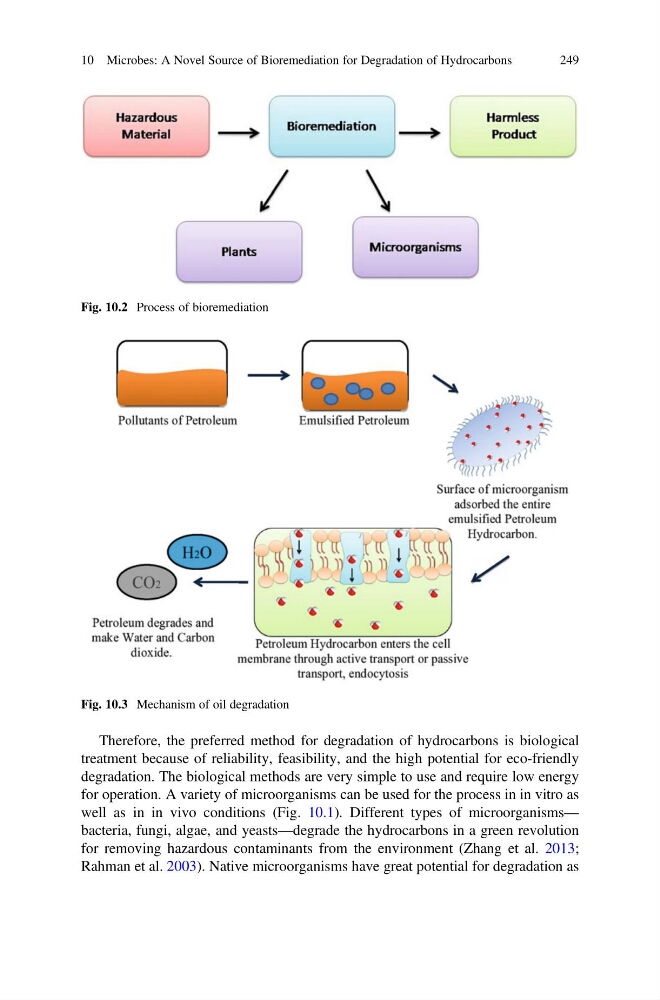
Fig. 10.2 Process of bioremediation
Fig. 10.3 Mechanism of oil degradation
10 Microbes: A Novel Source of Bioremediation for Degradation of Hydrocarbons
249
treatment because of reliability, feasibility, and the high potential for eco-friendly
degradation. The biological methods are very simple to use and require low energy
for operation. A variety of microorganisms can be used for the process in in vitro as
well as in in vivo conditions (Fig. 10.1). Different types of microorganisms—
bacteria, fungi, algae, and yeasts—degrade the hydrocarbons in a green revolution
for removing hazardous contaminants from the environment (Zhang et al. 2013;
Rahman et al. 2003). Native microorganisms have great potential for degradation as
Fig. 10.2 Process of bioremediation
Fig. 10.3 Mechanism of oil degradation
10 Microbes: A Novel Source of Bioremediation for Degradation of Hydrocarbons
249