

that ought to be accrued for disposal or remedy. In soil electrokinetic remediation
processor, electric field gradient of appropriate intensity is established on two facets
of the electrolytic tank containing saturated infected soil. Combinations of electrokinetic remediation techniques were also used:
1. Combined remediation by electrokinetic microbe method (Yu et al. 2009)
2. Electrokinetic-chemical dual remediation techniques (Vocciante et al. 2016)
3. Joint remediation by electrokinetic oxidation/reduction (Yang et al. 2015)
4. Phytoremediation coupled with electrokinetic (Mao et al. 2016)
5. Electrospun polyacrylonitrile nanofiber membrane with electrokinetics (Peng
et al. 2015)
6. Electrokinetic remediation coupled with permeable reactive barrier (Rosestolato
et al. 2015).
6.3.2.2 Chemical Method
Oxidation, reduction, and neutralization techniques are used for remediation of
pollutant. The oxidation state of the metal can change through the loss of electrons
called chemical oxidation reaction (Collins et al. 2009; Roach et al. 2009). Examples
of commercially available oxidizing agents for chemical reaction are potassium
permanganate, hydrogen peroxide, hypochlorite, lime, apatite chlorine gas, and
Fenton’s reagent (Masten and Davies 1997; Scanferla et al. 2009; Collins et al.
2009; Venalainen 2011). By adding electrons, the oxidation state of metals is
changed and the reaction is called reduction reactions (Evanko and Dzombak
1997). Chemical remediation is rather a costly process, and some chemicals may
react with soil and altered the soil capacity to promote plant growth.
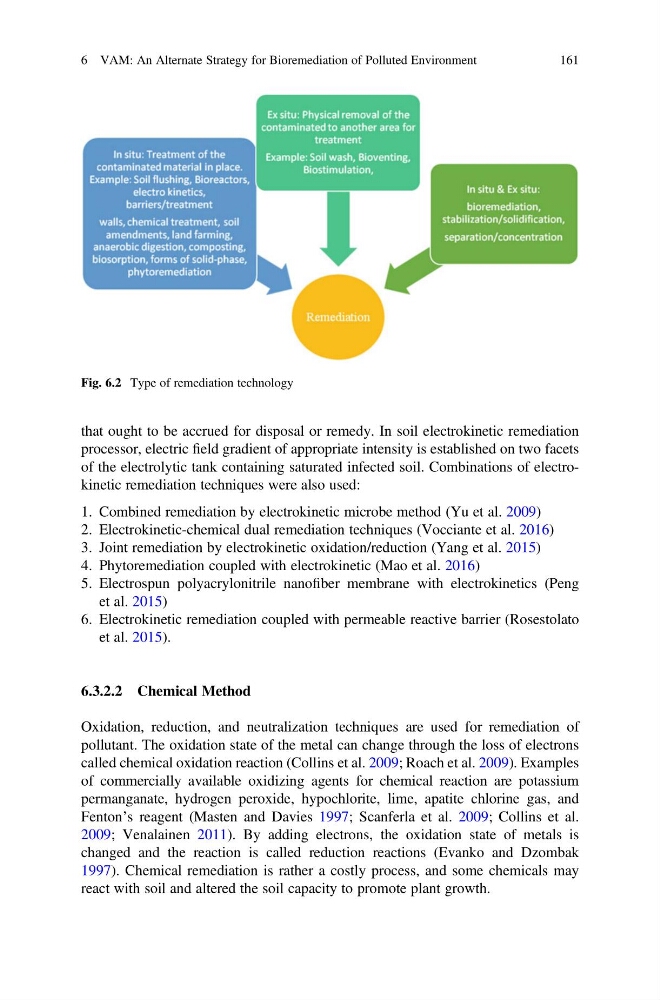
Fig. 6.2 Type of remediation technology
6 VAM: An Alternate Strategy for Bioremediation of Polluted Environment
161
processor, electric field gradient of appropriate intensity is established on two facets
of the electrolytic tank containing saturated infected soil. Combinations of electrokinetic remediation techniques were also used:
1. Combined remediation by electrokinetic microbe method (Yu et al. 2009)
2. Electrokinetic-chemical dual remediation techniques (Vocciante et al. 2016)
3. Joint remediation by electrokinetic oxidation/reduction (Yang et al. 2015)
4. Phytoremediation coupled with electrokinetic (Mao et al. 2016)
5. Electrospun polyacrylonitrile nanofiber membrane with electrokinetics (Peng
et al. 2015)
6. Electrokinetic remediation coupled with permeable reactive barrier (Rosestolato
et al. 2015).
6.3.2.2 Chemical Method
Oxidation, reduction, and neutralization techniques are used for remediation of
pollutant. The oxidation state of the metal can change through the loss of electrons
called chemical oxidation reaction (Collins et al. 2009; Roach et al. 2009). Examples
of commercially available oxidizing agents for chemical reaction are potassium
permanganate, hydrogen peroxide, hypochlorite, lime, apatite chlorine gas, and
Fenton’s reagent (Masten and Davies 1997; Scanferla et al. 2009; Collins et al.
2009; Venalainen 2011). By adding electrons, the oxidation state of metals is
changed and the reaction is called reduction reactions (Evanko and Dzombak
1997). Chemical remediation is rather a costly process, and some chemicals may
react with soil and altered the soil capacity to promote plant growth.
Fig. 6.2 Type of remediation technology
6 VAM: An Alternate Strategy for Bioremediation of Polluted Environment
161