

124 Ground improvement by deep vibratory methods
As column bulging is followed by lateral support, triggering soil deformation which in response further increases the horizontal stresses, the
overall load-carrying mechanism is controlled by the interaction of the load
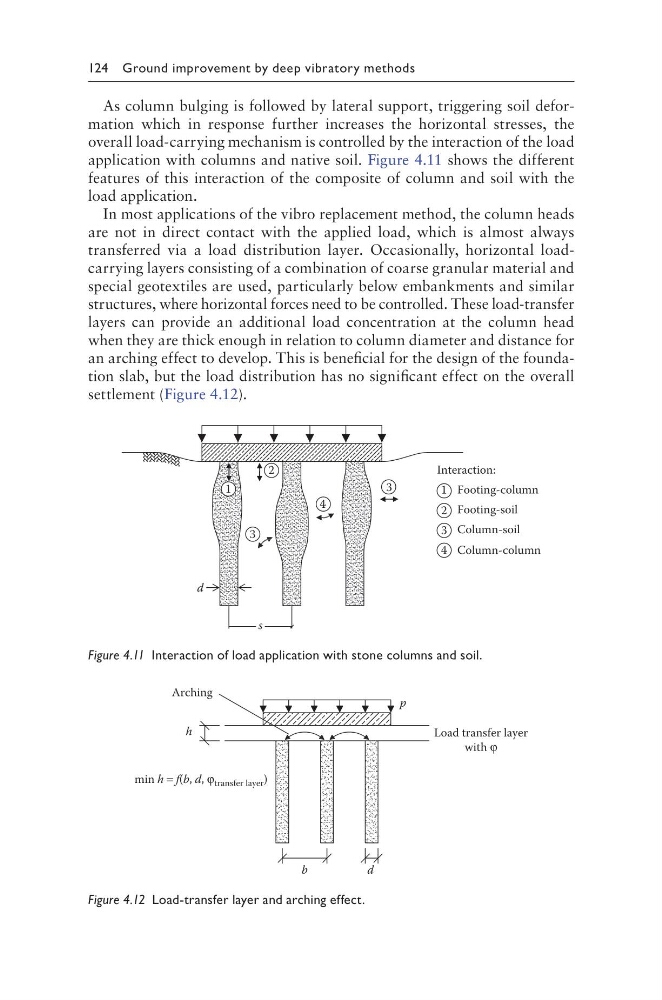
application with columns and native soil. Figure 4.11 shows the different
features of this interaction of the composite of column and soil with the
load application.
In most applications of the vibro replacement method, the column heads
are not in direct contact with the applied load, which is almost always
transferred via a load distribution layer. Occasionally, horizontal loadcarrying layers consisting of a combination of coarse granular material and
special geotextiles are used, particularly below embankments and similar
structures, where horizontal forces need to be controlled. These load-transfer
layers can provide an additional load concentration at the column head
when they are thick enough in relation to column diameter and distance for
an arching effect to develop. This is beneficial for the design of the foundation slab, but the load distribution has no significant effect on the overall
settlement (Figure 4.12).
Interaction:
1
2
3
4
1
2
3
3
4
Footing-column
Column-soil
Column-column
Footing-soil
d
s
Figure 4.11 Interaction of load application with stone columns and soil.
Load transfer layer
with φ
p
d
b
h
Arching
min h = f(b, d, φ transfer layer )
Figure 4.12 Load-transfer layer and arching effect.
As column bulging is followed by lateral support, triggering soil deformation which in response further increases the horizontal stresses, the
overall load-carrying mechanism is controlled by the interaction of the load
application with columns and native soil. Figure 4.11 shows the different
features of this interaction of the composite of column and soil with the
load application.
In most applications of the vibro replacement method, the column heads
are not in direct contact with the applied load, which is almost always
transferred via a load distribution layer. Occasionally, horizontal loadcarrying layers consisting of a combination of coarse granular material and
special geotextiles are used, particularly below embankments and similar
structures, where horizontal forces need to be controlled. These load-transfer
layers can provide an additional load concentration at the column head
when they are thick enough in relation to column diameter and distance for
an arching effect to develop. This is beneficial for the design of the foundation slab, but the load distribution has no significant effect on the overall
settlement (Figure 4.12).
Interaction:
1
2
3
4
1
2
3
3
4
Footing-column
Column-soil
Column-column
Footing-soil
d
s
Figure 4.11 Interaction of load application with stone columns and soil.
Load transfer layer
with φ
p
d
b
h
Arching
min h = f(b, d, φ transfer layer )
Figure 4.12 Load-transfer layer and arching effect.