

86 Ground improvement by deep vibratory methods
4 MPa between 0 and 2 m depth, of 6 MPa between 2 and 8 m, and of 8 MPa
below. Vibro compaction had to be carried out up to a maximum depth of
35 m.
The chosen compaction grid pattern, an equilateral triangular grid
of 4 m, was established together with other operational details, such as
the amount of water used and compaction time, in a field trial. In total,
22.4 million m 3 of sand were finally compacted, 67% on the dry from the
land side, 33% offshore as a marine operation. Two heavy crawler cranes
were used on land each carrying a single S300 Keller depth vibrator with
characteristics according to Table 3.1. For the marine work, a 200-ton
crane with twin S300 vibrators was mounted on a barge to carry out the
compaction work. In such a configuration, work was conducted in day and
night shifts for six days a week, compacting approximately 1 million m 3 of
sand per month. To locate the compaction points with sufficient accuracy
over water, the GPS was used with antennas mounted directly on top of the
vibrator extension tubes.
Quality control was by CPT carried out seven days after the completion of a specific section of the works. Figure 3.37 shows typical pre and
postcompaction test results. Surface settlement measured after vibro compaction averaged around 1.5 m, which is equivalent to 6% of the average
compaction depth of 25 m.
3.6.2 Ground improvement treatment by vibro
compaction for new port facilities
The versatility of the vibro compaction process in solving special foundation problems is particularly appreciated where harbor construction is
concerned. The need to increase the density of dredged sand fill behind or
80
60
40
20
0
0.1
Grain size (mm)
1
Percentage passing
70
50
30
10
90
10
100
Min dry density
Max dry density
Max void ratio
Min void ratio
In-situ density
Moisture content
In-situ dry density
Relative density
Summary
Average
1429.30
1777.10
0.86
0.49
1648.50
7.30
1534.30
35.00
Unit
kg/m
3
kg/m
3
kg/m
3
–
–
%
kg/m
3
%
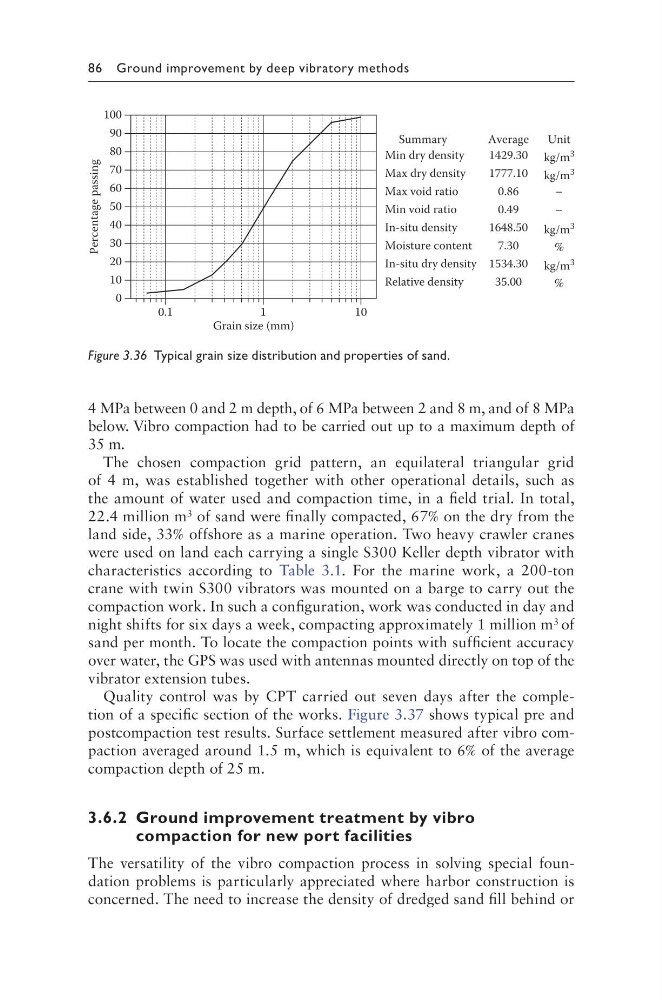
Figure 3.36 Typical grain size distribution and properties of sand.
4 MPa between 0 and 2 m depth, of 6 MPa between 2 and 8 m, and of 8 MPa
below. Vibro compaction had to be carried out up to a maximum depth of
35 m.
The chosen compaction grid pattern, an equilateral triangular grid
of 4 m, was established together with other operational details, such as
the amount of water used and compaction time, in a field trial. In total,
22.4 million m 3 of sand were finally compacted, 67% on the dry from the
land side, 33% offshore as a marine operation. Two heavy crawler cranes
were used on land each carrying a single S300 Keller depth vibrator with
characteristics according to Table 3.1. For the marine work, a 200-ton
crane with twin S300 vibrators was mounted on a barge to carry out the
compaction work. In such a configuration, work was conducted in day and
night shifts for six days a week, compacting approximately 1 million m 3 of
sand per month. To locate the compaction points with sufficient accuracy
over water, the GPS was used with antennas mounted directly on top of the
vibrator extension tubes.
Quality control was by CPT carried out seven days after the completion of a specific section of the works. Figure 3.37 shows typical pre and
postcompaction test results. Surface settlement measured after vibro compaction averaged around 1.5 m, which is equivalent to 6% of the average
compaction depth of 25 m.
3.6.2 Ground improvement treatment by vibro
compaction for new port facilities
The versatility of the vibro compaction process in solving special foundation problems is particularly appreciated where harbor construction is
concerned. The need to increase the density of dredged sand fill behind or
80
60
40
20
0
0.1
Grain size (mm)
1
Percentage passing
70
50
30
10
90
10
100
Min dry density
Max dry density
Max void ratio
Min void ratio
In-situ density
Moisture content
In-situ dry density
Relative density
Summary
Average
1429.30
1777.10
0.86
0.49
1648.50
7.30
1534.30
35.00
Unit
kg/m
3
kg/m
3
kg/m
3
–
–
%
kg/m
3
%
Figure 3.36 Typical grain size distribution and properties of sand.