

446
In a review of promissory native forest tree species to be planted in Brazil,
Carvalho (1998) reported for A. colubrina var. cebil a mean annual increment in
solid volume with bark from 5 to 25 m
3
/ha/year
−1
. There is evidence that native
people from South America established small plantations of the species taking
advantage of its simple reproduction by seeds (Viglione and Vallejo 2011). In the
Province of Chaco, a 17-year-old experimental plantation located in Presidencia de
la Plaza Forest Station of INTA (26° 55′ 30.0″ S; 59° 47′ 51.5″ W) showed 16 m
height and 28 cm diameter in average. In addition, the species seems not to be
attacked by ants and locusts, two common threats for forest plantations in the region
(Tortorelli 2009). Another small plantation of 10 years of age located in a private
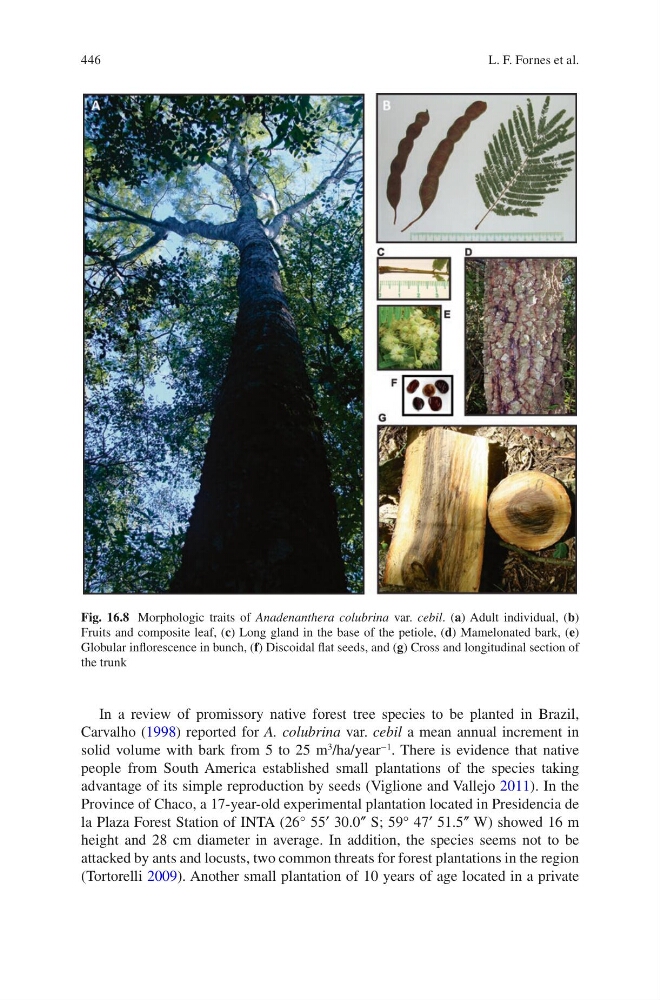
Fig. 16.8 Morphologic traits of Anadenanthera colubrina var. cebil. (a) Adult individual, (b)
Fruits and composite leaf, (c) Long gland in the base of the petiole, (d) Mamelonated bark, (e)
Globular inflorescence in bunch, (f) Discoidal flat seeds, and (g) Cross and longitudinal section of
the trunk
L. F. Fornes et al.
In a review of promissory native forest tree species to be planted in Brazil,
Carvalho (1998) reported for A. colubrina var. cebil a mean annual increment in
solid volume with bark from 5 to 25 m
3
/ha/year
−1
. There is evidence that native
people from South America established small plantations of the species taking
advantage of its simple reproduction by seeds (Viglione and Vallejo 2011). In the
Province of Chaco, a 17-year-old experimental plantation located in Presidencia de
la Plaza Forest Station of INTA (26° 55′ 30.0″ S; 59° 47′ 51.5″ W) showed 16 m
height and 28 cm diameter in average. In addition, the species seems not to be
attacked by ants and locusts, two common threats for forest plantations in the region
(Tortorelli 2009). Another small plantation of 10 years of age located in a private
Fig. 16.8 Morphologic traits of Anadenanthera colubrina var. cebil. (a) Adult individual, (b)
Fruits and composite leaf, (c) Long gland in the base of the petiole, (d) Mamelonated bark, (e)
Globular inflorescence in bunch, (f) Discoidal flat seeds, and (g) Cross and longitudinal section of
the trunk
L. F. Fornes et al.