

249
adaptive evolution in situ, differences in colonization success, and phylogenetic
constraints. However, studies that control for phylogeny or focus on single lineages
often (but not always) find that morphological differences predominantly reflect
adaptive rather than non-adaptive divergence (Carlson et al. 2016 and references
therein). The study of local adaptation in plants is of fundamental importance in
evolutionary, population, conservation, and global-change biology. For example,
understanding the association of quantitative traits to particular environmental conditions is key to evaluate the probability of success of selected phenotypes to grow
in different regions.
In P. alba, the joint analysis of morphological characters and neutral genetic
markers, revealed that the patterns of morphological differentiation respond to differential selection pressures (Bessega et al. 2015). Prosopis alba is one of the primary components of the dry forests in the Gran Chaco Region with a large
geographical distribution, being found in areas ranging from 500 to 1200 mm of
annual precipitation, with extreme temperatures between 48 °C absolute maximum
and −10 °C absolute minimum. Throughout its distribution, at least three morphological types of P. alba have been described that can be differentiated by their foliar
traits and that occupy areas with significantly different bioclimatic environments:
P. alba “chaqueño,” P. alba “santiagueño,” and P. alba “salteño” (Verga et al. 2009;
Verga et al. 2014). Interestingly, heritability of these foliar characters in P. alba
ranges from 0.11 to 0.89, with total leaf area and the relation between the length and
width of folioles (LEL/LEW) showing the highest heritability (Teich et al. in prep).
Bessega et al. (2009) also reported high heritability for LEL/LEW.
Within the group of White algarrobos, the complex of P. alba, P. hassleri,
P. chilensis, and P. fiebrigii shows the largest distribution in the Great American
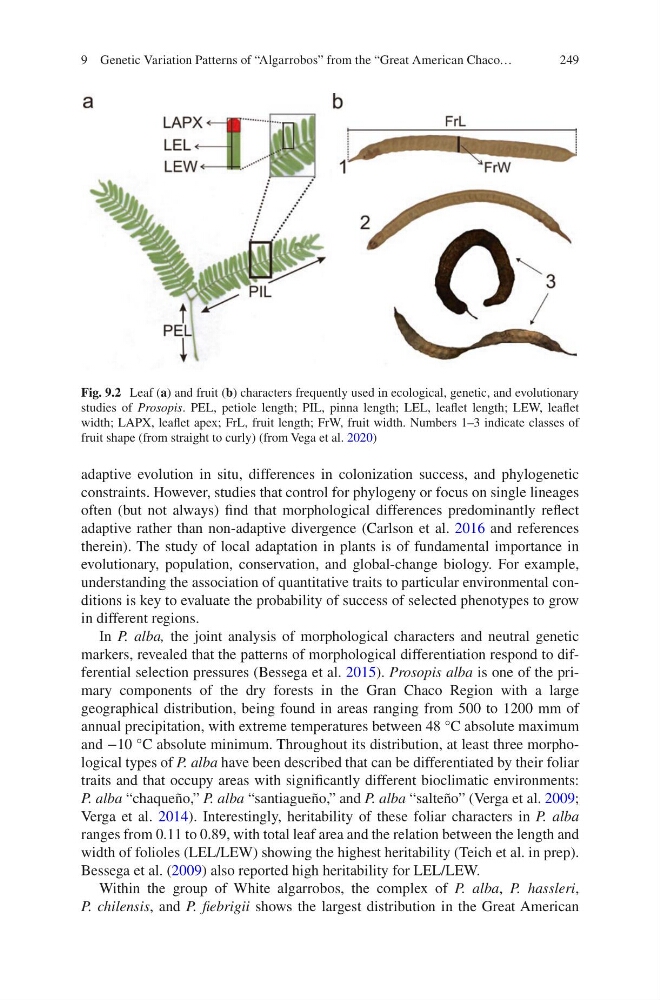
Fig. 9.2 Leaf (a) and fruit (b) characters frequently used in ecological, genetic, and evolutionary
studies of Prosopis. PEL, petiole length; PIL, pinna length; LEL, leaflet length; LEW, leaflet
width; LAPX, leaflet apex; FrL, fruit length; FrW, fruit width. Numbers 1–3 indicate classes of
fruit shape (from straight to curly) (from Vega et al. 2020)
9 Genetic Variation Patterns of “Algarrobos” from the “Great American Chaco…
adaptive evolution in situ, differences in colonization success, and phylogenetic
constraints. However, studies that control for phylogeny or focus on single lineages
often (but not always) find that morphological differences predominantly reflect
adaptive rather than non-adaptive divergence (Carlson et al. 2016 and references
therein). The study of local adaptation in plants is of fundamental importance in
evolutionary, population, conservation, and global-change biology. For example,
understanding the association of quantitative traits to particular environmental conditions is key to evaluate the probability of success of selected phenotypes to grow
in different regions.
In P. alba, the joint analysis of morphological characters and neutral genetic
markers, revealed that the patterns of morphological differentiation respond to differential selection pressures (Bessega et al. 2015). Prosopis alba is one of the primary components of the dry forests in the Gran Chaco Region with a large
geographical distribution, being found in areas ranging from 500 to 1200 mm of
annual precipitation, with extreme temperatures between 48 °C absolute maximum
and −10 °C absolute minimum. Throughout its distribution, at least three morphological types of P. alba have been described that can be differentiated by their foliar
traits and that occupy areas with significantly different bioclimatic environments:
P. alba “chaqueño,” P. alba “santiagueño,” and P. alba “salteño” (Verga et al. 2009;
Verga et al. 2014). Interestingly, heritability of these foliar characters in P. alba
ranges from 0.11 to 0.89, with total leaf area and the relation between the length and
width of folioles (LEL/LEW) showing the highest heritability (Teich et al. in prep).
Bessega et al. (2009) also reported high heritability for LEL/LEW.
Within the group of White algarrobos, the complex of P. alba, P. hassleri,
P. chilensis, and P. fiebrigii shows the largest distribution in the Great American
Fig. 9.2 Leaf (a) and fruit (b) characters frequently used in ecological, genetic, and evolutionary
studies of Prosopis. PEL, petiole length; PIL, pinna length; LEL, leaflet length; LEW, leaflet
width; LAPX, leaflet apex; FrL, fruit length; FrW, fruit width. Numbers 1–3 indicate classes of
fruit shape (from straight to curly) (from Vega et al. 2020)
9 Genetic Variation Patterns of “Algarrobos” from the “Great American Chaco…