

Air Pollution and Global Change 179
CFCs have an exclusively anthropogenic origin; they did not exist in the
atmosphere before 1930. They are considered responsible for chemical reactions in the stratosphere that cause depletion of the ozone layer (Section 9.3)
but they also act in the troposphere as potent greenhouse gases (Figure 9.3).
The concentration of CH 4 in the atmosphere began to increase at the outset
of the industrial era and today it has more than doubled. Its main sources are
considered to be every kind of anaerobic process (Chapter 2, Section 2.5),
especially from cattle raising, rice cultivation and landfills (Chapters 6
and 10) as well as mining and use of fossil fuels, mainly natural gas.
Nitrogen oxides (especially N 2 O) as well as tropospheric O 3 are considered to be greenhouse gases of secondary importance. The increase of N 2 O
is mainly attributed to the nitrogenous fertilizers and perhaps to the use of
fossil fuels. The increase of tropospheric ozone is due to the air pollution of
the cities, forest fires, increased UV radiation due to depletion of the ozone
layer and possibly other causes.
The relationship between the greenhouse effect and the depletion of the
O 3 layer is not limited to the action of CFCs that aggravates both these
problems. The large-scale perturbations of the physicochemical conditions
of the stratosphere are connected in various ways, and relevant knowledge
is still insufficient. For example, the intensity increase of UV radiation near
360
Carbon dioxide concentration (by volume)
350
340
330
320
310 1960
1965 1970
1975
Year
1980 1985
1990
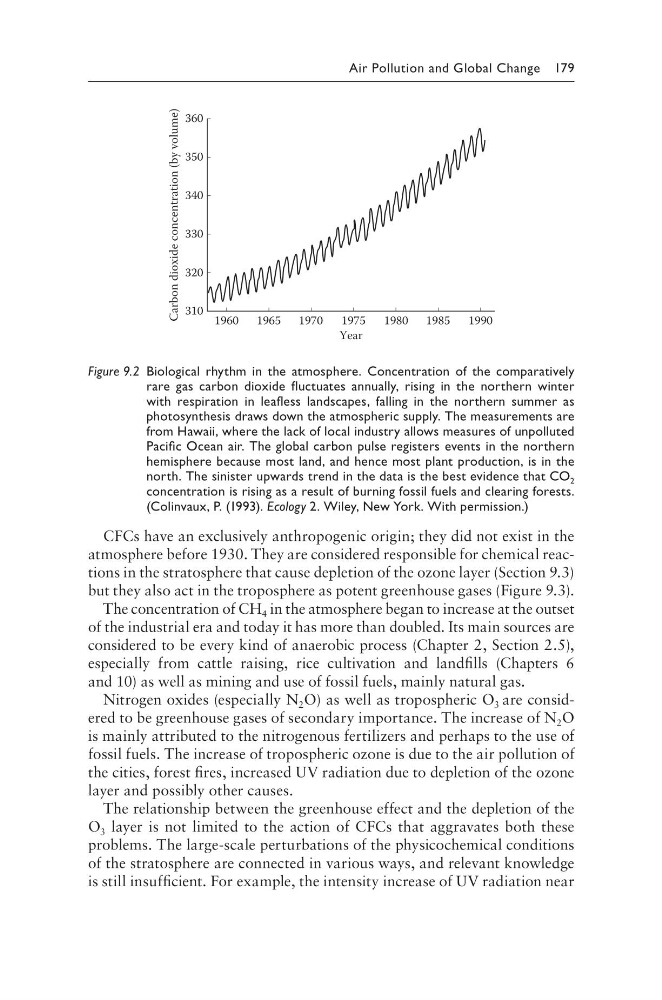
Figure 9.2 Biological rhythm in the atmosphere. Concentration of the comparatively
rare gas carbon dioxide fluctuates annually, rising in the northern winter
with respiration in leafless landscapes, falling in the northern summer as
photosynthesis draws down the atmospheric supply. The measurements are
from Hawaii, where the lack of local industry allows measures of unpolluted
Pacific Ocean air. The global carbon pulse registers events in the northern
hemisphere because most land, and hence most plant production, is in the
north. The sinister upwards trend in the data is the best evidence that CO 2
concentration is rising as a result of burning fossil fuels and clearing forests.
(Colinvaux, P. (1993). Ecology 2. Wiley, New York. With permission.)
CFCs have an exclusively anthropogenic origin; they did not exist in the
atmosphere before 1930. They are considered responsible for chemical reactions in the stratosphere that cause depletion of the ozone layer (Section 9.3)
but they also act in the troposphere as potent greenhouse gases (Figure 9.3).
The concentration of CH 4 in the atmosphere began to increase at the outset
of the industrial era and today it has more than doubled. Its main sources are
considered to be every kind of anaerobic process (Chapter 2, Section 2.5),
especially from cattle raising, rice cultivation and landfills (Chapters 6
and 10) as well as mining and use of fossil fuels, mainly natural gas.
Nitrogen oxides (especially N 2 O) as well as tropospheric O 3 are considered to be greenhouse gases of secondary importance. The increase of N 2 O
is mainly attributed to the nitrogenous fertilizers and perhaps to the use of
fossil fuels. The increase of tropospheric ozone is due to the air pollution of
the cities, forest fires, increased UV radiation due to depletion of the ozone
layer and possibly other causes.
The relationship between the greenhouse effect and the depletion of the
O 3 layer is not limited to the action of CFCs that aggravates both these
problems. The large-scale perturbations of the physicochemical conditions
of the stratosphere are connected in various ways, and relevant knowledge
is still insufficient. For example, the intensity increase of UV radiation near
360
Carbon dioxide concentration (by volume)
350
340
330
320
310 1960
1965 1970
1975
Year
1980 1985
1990
Figure 9.2 Biological rhythm in the atmosphere. Concentration of the comparatively
rare gas carbon dioxide fluctuates annually, rising in the northern winter
with respiration in leafless landscapes, falling in the northern summer as
photosynthesis draws down the atmospheric supply. The measurements are
from Hawaii, where the lack of local industry allows measures of unpolluted
Pacific Ocean air. The global carbon pulse registers events in the northern
hemisphere because most land, and hence most plant production, is in the
north. The sinister upwards trend in the data is the best evidence that CO 2
concentration is rising as a result of burning fossil fuels and clearing forests.
(Colinvaux, P. (1993). Ecology 2. Wiley, New York. With permission.)