

applied in biological control of Hyalomma anatolicum anatolicum and
H. marginatum adult stages (Abdigoudarzi et al. 2009). Several native isolates of
M. anisopliae show great potential in control of H. anatolicum anatolicum,
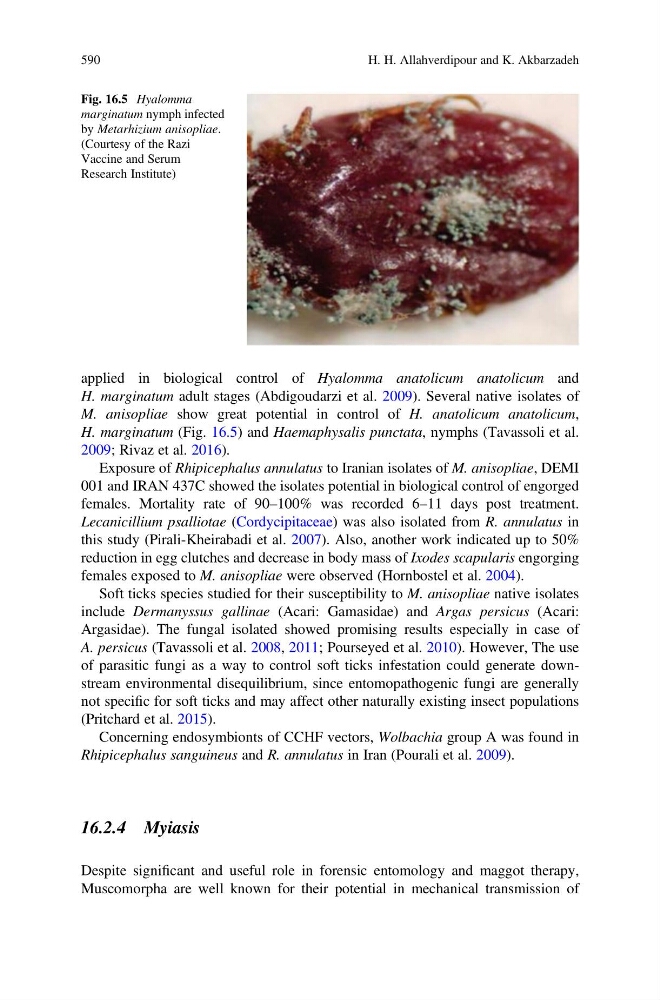
H. marginatum (Fig. 16.5) and Haemaphysalis punctata, nymphs (Tavassoli et al.
2009; Rivaz et al. 2016).
Exposure of Rhipicephalus annulatus to Iranian isolates of M. anisopliae, DEMI
001 and IRAN 437C showed the isolates potential in biological control of engorged
females. Mortality rate of 90–100% was recorded 6–11 days post treatment.
Lecanicillium psalliotae (Cordycipitaceae) was also isolated from R. annulatus in
this study (Pirali-Kheirabadi et al. 2007). Also, another work indicated up to 50%
reduction in egg clutches and decrease in body mass of Ixodes scapularis engorging
females exposed to M. anisopliae were observed (Hornbostel et al. 2004).
Soft ticks species studied for their susceptibility to M. anisopliae native isolates
include Dermanyssus gallinae (Acari: Gamasidae) and Argas persicus (Acari:
Argasidae). The fungal isolated showed promising results especially in case of
A. persicus (Tavassoli et al. 2008, 2011; Pourseyed et al. 2010). However, The use
of parasitic fungi as a way to control soft ticks infestation could generate downstream environmental disequilibrium, since entomopathogenic fungi are generally
not specific for soft ticks and may affect other naturally existing insect populations
(Pritchard et al. 2015).
Concerning endosymbionts of CCHF vectors, Wolbachia group A was found in
Rhipicephalus sanguineus and R. annulatus in Iran (Pourali et al. 2009).
16.2.4 Myiasis
Despite significant and useful role in forensic entomology and maggot therapy,
Muscomorpha are well known for their potential in mechanical transmission of
Fig. 16.5 Hyalomma
marginatum nymph infected
by Metarhizium anisopliae.
(Courtesy of the Razi
Vaccine and Serum
Research Institute)
590
H. H. Allahverdipour and K. Akbarzadeh
H. marginatum adult stages (Abdigoudarzi et al. 2009). Several native isolates of
M. anisopliae show great potential in control of H. anatolicum anatolicum,
H. marginatum (Fig. 16.5) and Haemaphysalis punctata, nymphs (Tavassoli et al.
2009; Rivaz et al. 2016).
Exposure of Rhipicephalus annulatus to Iranian isolates of M. anisopliae, DEMI
001 and IRAN 437C showed the isolates potential in biological control of engorged
females. Mortality rate of 90–100% was recorded 6–11 days post treatment.
Lecanicillium psalliotae (Cordycipitaceae) was also isolated from R. annulatus in
this study (Pirali-Kheirabadi et al. 2007). Also, another work indicated up to 50%
reduction in egg clutches and decrease in body mass of Ixodes scapularis engorging
females exposed to M. anisopliae were observed (Hornbostel et al. 2004).
Soft ticks species studied for their susceptibility to M. anisopliae native isolates
include Dermanyssus gallinae (Acari: Gamasidae) and Argas persicus (Acari:
Argasidae). The fungal isolated showed promising results especially in case of
A. persicus (Tavassoli et al. 2008, 2011; Pourseyed et al. 2010). However, The use
of parasitic fungi as a way to control soft ticks infestation could generate downstream environmental disequilibrium, since entomopathogenic fungi are generally
not specific for soft ticks and may affect other naturally existing insect populations
(Pritchard et al. 2015).
Concerning endosymbionts of CCHF vectors, Wolbachia group A was found in
Rhipicephalus sanguineus and R. annulatus in Iran (Pourali et al. 2009).
16.2.4 Myiasis
Despite significant and useful role in forensic entomology and maggot therapy,
Muscomorpha are well known for their potential in mechanical transmission of
Fig. 16.5 Hyalomma
marginatum nymph infected
by Metarhizium anisopliae.
(Courtesy of the Razi
Vaccine and Serum
Research Institute)
590
H. H. Allahverdipour and K. Akbarzadeh