

1994), behavior (Völkl and Kranz 1995; Hübner and Völkl 1996; Völkl and Sullivan
2000) and taxonomy (Ferrer-Suay et al. 2013a, b, c, 2014a, b, 2015) of the aphid
hyperparasitoids, worldwide. The relevant classification of the aphid
hyperparasitoids, as well as their general ecology can be found in Sullivan (1987)
and in Sullivan and Völkl (1999). Aphid hyperparasitism is evolved within three
superfamily of hymenoptera including Chalcidoidea, Ceraphronoidea and
Cynipoidea. Few genera of the large families within Chalcidoidea are the aphid
hyperparasitoids including Asaphes Walker, Coruna Walker, Euneura Walker and
Pachyneuron Walker (Pteromalidae), among them the Pachyneuron aphidis
(Bouché) is rather common in association with many aphid parasitoid complexes
(González et al. 1978; Talebi et al. 2009; Rakhshani et al. 2004b, 2005b, 2009; Farsi
et al. 2010; Darsoei et al. 2011; Amini et al. 2012; Jahan et al. 2013; Nematollahi
et al. 2014). Pachyneuron solitarium (Hartig) has recently been recorded as
hyperparasitoid of Monoctonia vesicarii Tremblay, a parasitoid of the gall making
aphid, Pemphigus spirothecae Passerini on Populus nigra (Ghafouri-Moghaddam
et al. 2014). Asaphes suspensus (Nees) is another common aphid hyperparasitoid in
Iran (Lotfalizadeh and Gharali 2008; Mitroiu et al. 2011), known to occurs across the
entire Holarctic region (Noyes 2019). There is no record of the genus Conura in Iran
and no host data is also documented for Euneura lachni (Ashmead), except in
association with Pauesia antennata/Pterochloroides persicae (Rakhshani et al.
2005b). A single record of aphid hyperparasitism within the genus Tetrastichus
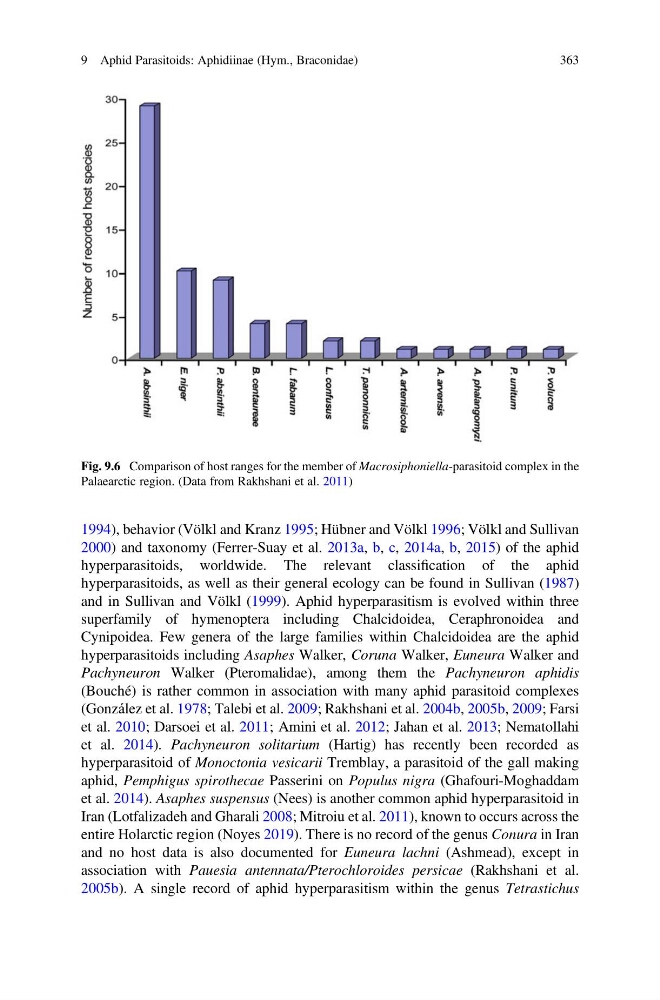
Fig. 9.6 Comparison of host ranges for the member of Macrosiphoniella-parasitoid complex in the
Palaearctic region. (Data from Rakhshani et al. 2011)
9 Aphid Parasitoids: Aphidiinae (Hym., Braconidae)
363
2000) and taxonomy (Ferrer-Suay et al. 2013a, b, c, 2014a, b, 2015) of the aphid
hyperparasitoids, worldwide. The relevant classification of the aphid
hyperparasitoids, as well as their general ecology can be found in Sullivan (1987)
and in Sullivan and Völkl (1999). Aphid hyperparasitism is evolved within three
superfamily of hymenoptera including Chalcidoidea, Ceraphronoidea and
Cynipoidea. Few genera of the large families within Chalcidoidea are the aphid
hyperparasitoids including Asaphes Walker, Coruna Walker, Euneura Walker and
Pachyneuron Walker (Pteromalidae), among them the Pachyneuron aphidis
(Bouché) is rather common in association with many aphid parasitoid complexes
(González et al. 1978; Talebi et al. 2009; Rakhshani et al. 2004b, 2005b, 2009; Farsi
et al. 2010; Darsoei et al. 2011; Amini et al. 2012; Jahan et al. 2013; Nematollahi
et al. 2014). Pachyneuron solitarium (Hartig) has recently been recorded as
hyperparasitoid of Monoctonia vesicarii Tremblay, a parasitoid of the gall making
aphid, Pemphigus spirothecae Passerini on Populus nigra (Ghafouri-Moghaddam
et al. 2014). Asaphes suspensus (Nees) is another common aphid hyperparasitoid in
Iran (Lotfalizadeh and Gharali 2008; Mitroiu et al. 2011), known to occurs across the
entire Holarctic region (Noyes 2019). There is no record of the genus Conura in Iran
and no host data is also documented for Euneura lachni (Ashmead), except in
association with Pauesia antennata/Pterochloroides persicae (Rakhshani et al.
2005b). A single record of aphid hyperparasitism within the genus Tetrastichus
Fig. 9.6 Comparison of host ranges for the member of Macrosiphoniella-parasitoid complex in the
Palaearctic region. (Data from Rakhshani et al. 2011)
9 Aphid Parasitoids: Aphidiinae (Hym., Braconidae)
363