

97
the synthesis of pectinase by microorganism was highly affected by the growth
medium components which include sources from carbon, nitrogen, and other elements like mineral. Based on the idea of Papagianni (2004), there are at least 13
elements for essential growth including oxygen, manganese, iron, zinc, copper, and
molybdenum. Lacking one of those sources may retard the growth condition of
microorganisms and will decrease the production of the enzyme. Hence, the sufficiency of the elements in the cultivation medium was crucially important. From the
previous study by Suhaimi et al. (2016), they found that every component such as
carbon and nitrogen sources gives positive influences towards the cultivation
medium and with correct type and concentration of carbon and nitrogen sources
enhanced the production of pectinase enzyme.
Carbon compounds can range from simple small molecules like sugars, organic
acids, alcohol, polysaccharides, and lipids. Usually, the industrial enzyme such as
pectinases will use the complex media with a solid substrate for cultivation
(Papagianni 2004). It is because the complex media with the solid substrate highly
influenced the morphology and growth kinetics of the microorganism. Fungi are
organisms that cannot fix nitrogen (Kavanagh 2005). Thus, a compound containing
nitrogen needs to be supplied either in organics such as amino acid or inorganic
form such as ammonium sulfate. The microbial cell utilized the nitrogenous compounds for the synthesis of nucleotides, amino acid, protein, enzyme, and other
metabolite (Arijit et al. 2013).
As explained by Said et al. (1991), there are various carbon compounds examined as an inducer for pectinase production on Penicillium frequentans which
include pectin, polygalacturonic acid, and citrus pulp pellets, and it is proved that
pectin is a good substrate/inducer for enzyme production (Table 6.6). These results
are in a good agreement with other studies (Aguilar and Huitrón 1990; Arotupin
2007) which have shown the importance of the presence of pectin in culture medium
for better enzyme production.
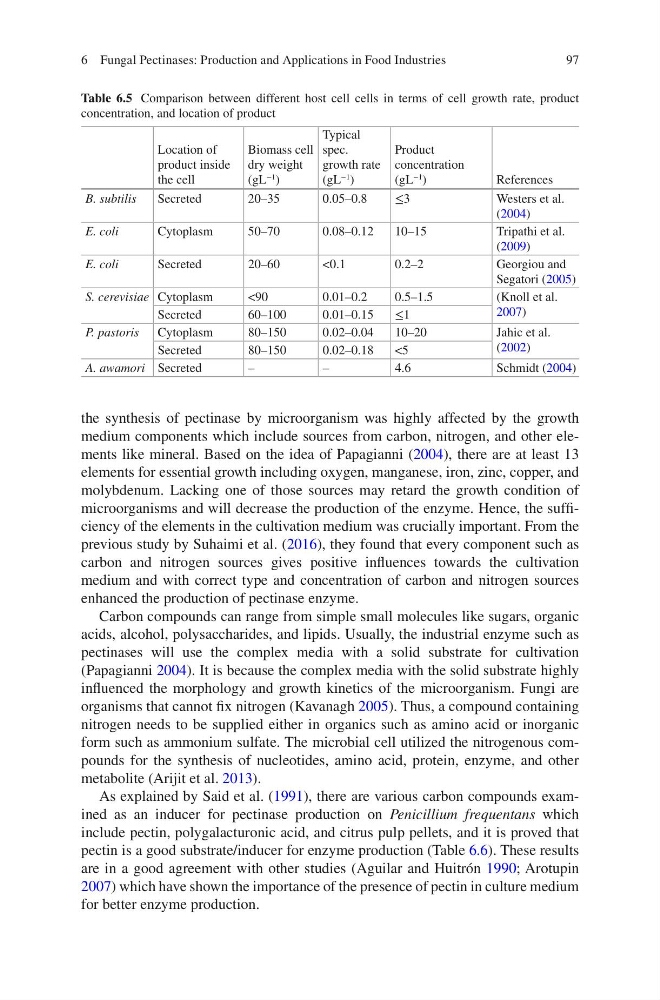
Table 6.5 Comparison between different host cell cells in terms of cell growth rate, product
concentration, and location of product
Location of
product inside
the cell
Biomass cell
dry weight
(gL
−1
)
Typical
spec.
growth rate
(gL
−1 )
Product
concentration
(gL
−1
)
References
B. subtilis
Secreted
20–35
0.05–0.8
≤3
Westers et al.
(2004)
E. coli
Cytoplasm
50–70
0.08–0.12
10–15
Tripathi et al.
(2009)
E. coli
Secreted
20–60
<0.1
0.2–2
Georgiou and
Segatori (2005)
S. cerevisiae Cytoplasm
<90
0.01–0.2
0.5–1.5
(Knoll et al.
2007)
Secreted
60–100
0.01–0.15
≤1
P. pastoris Cytoplasm
80–150
0.02–0.04
10–20
Jahic et al.
(2002)
Secreted
80–150
0.02–0.18
<5
A. awamori Secreted
–
–
4.6
Schmidt (2004)
6 Fungal Pectinases: Production and Applications in Food Industries
the synthesis of pectinase by microorganism was highly affected by the growth
medium components which include sources from carbon, nitrogen, and other elements like mineral. Based on the idea of Papagianni (2004), there are at least 13
elements for essential growth including oxygen, manganese, iron, zinc, copper, and
molybdenum. Lacking one of those sources may retard the growth condition of
microorganisms and will decrease the production of the enzyme. Hence, the sufficiency of the elements in the cultivation medium was crucially important. From the
previous study by Suhaimi et al. (2016), they found that every component such as
carbon and nitrogen sources gives positive influences towards the cultivation
medium and with correct type and concentration of carbon and nitrogen sources
enhanced the production of pectinase enzyme.
Carbon compounds can range from simple small molecules like sugars, organic
acids, alcohol, polysaccharides, and lipids. Usually, the industrial enzyme such as
pectinases will use the complex media with a solid substrate for cultivation
(Papagianni 2004). It is because the complex media with the solid substrate highly
influenced the morphology and growth kinetics of the microorganism. Fungi are
organisms that cannot fix nitrogen (Kavanagh 2005). Thus, a compound containing
nitrogen needs to be supplied either in organics such as amino acid or inorganic
form such as ammonium sulfate. The microbial cell utilized the nitrogenous compounds for the synthesis of nucleotides, amino acid, protein, enzyme, and other
metabolite (Arijit et al. 2013).
As explained by Said et al. (1991), there are various carbon compounds examined as an inducer for pectinase production on Penicillium frequentans which
include pectin, polygalacturonic acid, and citrus pulp pellets, and it is proved that
pectin is a good substrate/inducer for enzyme production (Table 6.6). These results
are in a good agreement with other studies (Aguilar and Huitrón 1990; Arotupin
2007) which have shown the importance of the presence of pectin in culture medium
for better enzyme production.
Table 6.5 Comparison between different host cell cells in terms of cell growth rate, product
concentration, and location of product
Location of
product inside
the cell
Biomass cell
dry weight
(gL
−1
)
Typical
spec.
growth rate
(gL
−1 )
Product
concentration
(gL
−1
)
References
B. subtilis
Secreted
20–35
0.05–0.8
≤3
Westers et al.
(2004)
E. coli
Cytoplasm
50–70
0.08–0.12
10–15
Tripathi et al.
(2009)
E. coli
Secreted
20–60
<0.1
0.2–2
Georgiou and
Segatori (2005)
S. cerevisiae Cytoplasm
<90
0.01–0.2
0.5–1.5
(Knoll et al.
2007)
Secreted
60–100
0.01–0.15
≤1
P. pastoris Cytoplasm
80–150
0.02–0.04
10–20
Jahic et al.
(2002)
Secreted
80–150
0.02–0.18
<5
A. awamori Secreted
–
–
4.6
Schmidt (2004)
6 Fungal Pectinases: Production and Applications in Food Industries