

by two electrodes generates an ion flow from one chamber, through the pore and into the
other chamber.
This way, ions and charged biomolecules like the nucleic acid molecules with their
negative charge can be driven through the pore. The ions act as a motor, allowing the
molecules to be passed through the channel. Consequently, structural features, such as the
bases or the epigenetic modification of the sequences, can be identified by tracing the ionic
current, which is partially blocked by the molecule. Compared to other sequencing
technologies, Oxford Nanopore with its fascinating simple biophysical approach has
resulted in overwhelming academic, industrial, and national interest (Fig. 4.4, [6]).
Historically, the pioneer technology giving rise to the Oxford Nanopore was invented by
Wallace H. Coulter in the late 1940s. Coulter’s technology was using essentially the same
basic chemo-physical principle as Oxford Nanopore, but was used for counting and sizing
blood cells. An automated version of Coulter’s counters is still used in hospitals today.
However, the true reincarnation of the Coulter’s counters was in the 1990s, when the pore
was not of millimeter but of nanometer dimensions, allowing the analysis of ions and
biomolecules instead of whole cells [7].
Properties that an analyte should have: Every analyte molecule consists of multiple ions
that allow it to pass the pore. Furthermore, the pore has to be wide enough (i.e., around
2 nm) and must permit the transport of ions. Ultimately, the flow of ions across the pore
should be able to report on subtle differences between the analytes.
There are two types of pores that are currently being used: protein and solid-state
channels.
Examples of protein channels are toxin α-hemolysin, which is secreted by Staphylococcus aureus, and MspA from Mycobacterium smegmatis. A promising approach for solidstate channels is the use of TEM (Transmission electron microscopy), combined with a
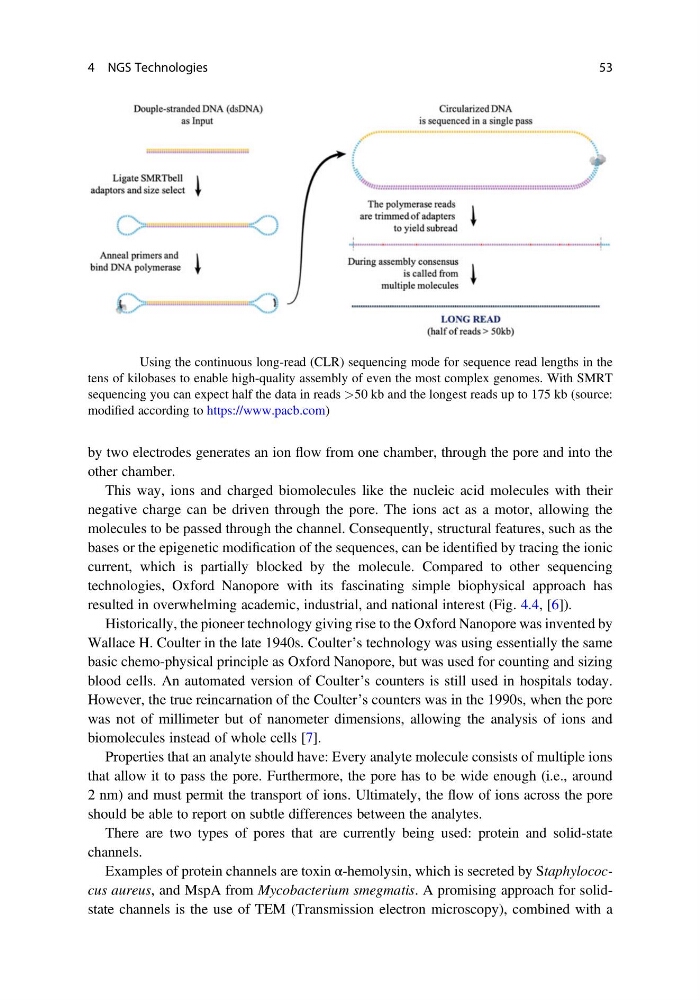
Fig. 4.3 Using the continuous long-read (CLR) sequencing mode for sequence read lengths in the
tens of kilobases to enable high-quality assembly of even the most complex genomes. With SMRT
sequencing you can expect half the data in reads >50 kb and the longest reads up to 175 kb (source:
modified according to https://www.pacb.com)
4 NGS Technologies
53
other chamber.
This way, ions and charged biomolecules like the nucleic acid molecules with their
negative charge can be driven through the pore. The ions act as a motor, allowing the
molecules to be passed through the channel. Consequently, structural features, such as the
bases or the epigenetic modification of the sequences, can be identified by tracing the ionic
current, which is partially blocked by the molecule. Compared to other sequencing
technologies, Oxford Nanopore with its fascinating simple biophysical approach has
resulted in overwhelming academic, industrial, and national interest (Fig. 4.4, [6]).
Historically, the pioneer technology giving rise to the Oxford Nanopore was invented by
Wallace H. Coulter in the late 1940s. Coulter’s technology was using essentially the same
basic chemo-physical principle as Oxford Nanopore, but was used for counting and sizing
blood cells. An automated version of Coulter’s counters is still used in hospitals today.
However, the true reincarnation of the Coulter’s counters was in the 1990s, when the pore
was not of millimeter but of nanometer dimensions, allowing the analysis of ions and
biomolecules instead of whole cells [7].
Properties that an analyte should have: Every analyte molecule consists of multiple ions
that allow it to pass the pore. Furthermore, the pore has to be wide enough (i.e., around
2 nm) and must permit the transport of ions. Ultimately, the flow of ions across the pore
should be able to report on subtle differences between the analytes.
There are two types of pores that are currently being used: protein and solid-state
channels.
Examples of protein channels are toxin α-hemolysin, which is secreted by Staphylococcus aureus, and MspA from Mycobacterium smegmatis. A promising approach for solidstate channels is the use of TEM (Transmission electron microscopy), combined with a
Fig. 4.3 Using the continuous long-read (CLR) sequencing mode for sequence read lengths in the
tens of kilobases to enable high-quality assembly of even the most complex genomes. With SMRT
sequencing you can expect half the data in reads >50 kb and the longest reads up to 175 kb (source:
modified according to https://www.pacb.com)
4 NGS Technologies
53