

30
C (the gel phase) it is mainly unfolded and surface bound
until it destroys the liposomes (see Note 14).
4. Often the system is being studied because of some element of
membrane bioactivity which occurs as a function of time. In
such a case (e.g., Fig. 7), one considers the overall change as a
function of time and may also analyze individual wavelength
traces.
4 Notes
1. The drying process usually involves drying the solution under
reduced pressure using a rotary evaporator and then under high
vacuum for at least 2 h.
32°
Probable orientation axis
Assumed 280 nm
polarization
Effective 210 nm
polarization
O
O
Cl
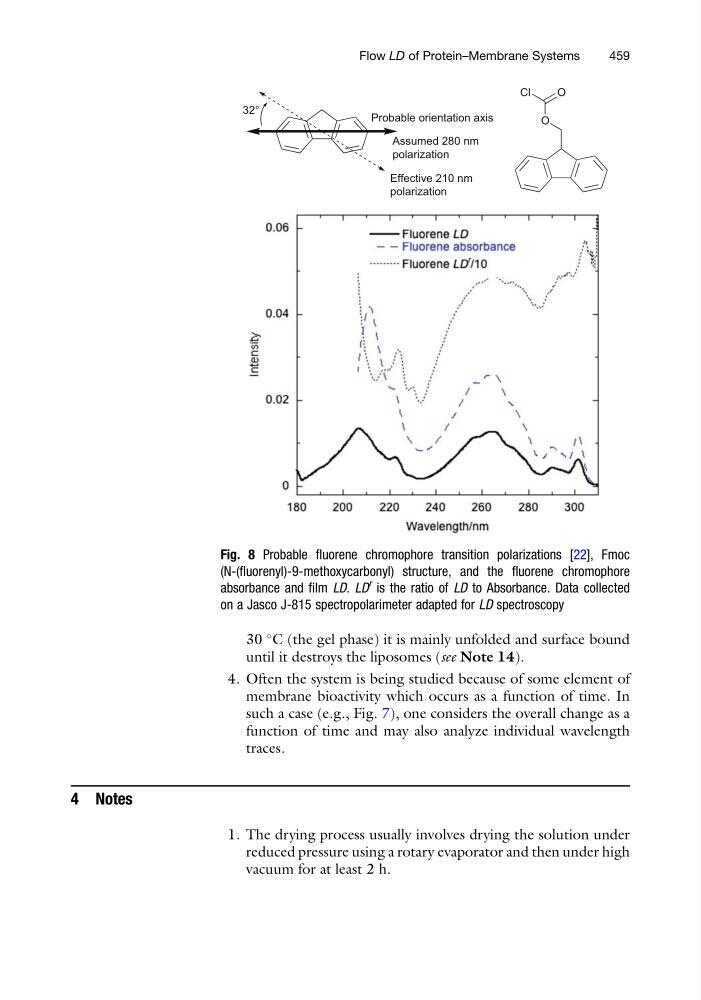
Fig. 8 Probable fluorene chromophore transition polarizations [22], Fmoc
(N-(fluorenyl)-9-methoxycarbonyl) structure, and the fluorene chromophore
absorbance and film LD. LD
r
is the ratio of LD to Absorbance. Data collected
on a Jasco J-815 spectropolarimeter adapted for LD spectroscopy
Flow LD of Protein–Membrane Systems
459
C (the gel phase) it is mainly unfolded and surface bound
until it destroys the liposomes (see Note 14).
4. Often the system is being studied because of some element of
membrane bioactivity which occurs as a function of time. In
such a case (e.g., Fig. 7), one considers the overall change as a
function of time and may also analyze individual wavelength
traces.
4 Notes
1. The drying process usually involves drying the solution under
reduced pressure using a rotary evaporator and then under high
vacuum for at least 2 h.
32°
Probable orientation axis
Assumed 280 nm
polarization
Effective 210 nm
polarization
O
O
Cl
Fig. 8 Probable fluorene chromophore transition polarizations [22], Fmoc
(N-(fluorenyl)-9-methoxycarbonyl) structure, and the fluorene chromophore
absorbance and film LD. LD
r
is the ratio of LD to Absorbance. Data collected
on a Jasco J-815 spectropolarimeter adapted for LD spectroscopy
Flow LD of Protein–Membrane Systems
459