

(Surowka et al. 2019), which suggests the increasing of polyphenol extraction in
saline conditions. In addition, Surowka et al. (2019) reported that T. aphylla
flavonoids direct scavenger H 2 O 2 , O 2, and OH
À in plant vacuole and reduced the
activity of polyphenol oxidase. Despite, it was recently proven that divers’ phenolic
compounds are efficient protectors against the oxidative cytotoxicity of hydrogen
peroxide by the regulation of the endogenous antioxidant defense system and the
modulation of signaling pathways (Bettaib et al. 2017).
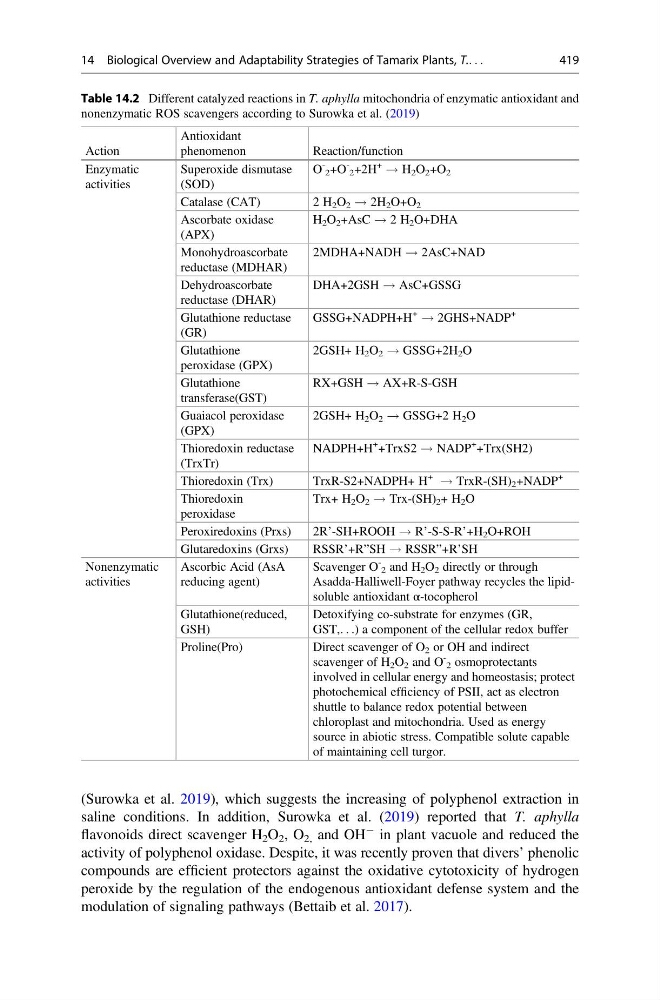
Table 14.2 Different catalyzed reactions in T. aphylla mitochondria of enzymatic antioxidant and
nonenzymatic ROS scavengers according to Surowka et al. (2019)
Action
Antioxidant
phenomenon
Reaction/function
Enzymatic
activities
Superoxide dismutase
(SOD)
O
-
2 +O
-
2 +2H
+ ! H 2 O 2 +O 2
Catalase (CAT)
2 H 2 O 2 ! 2H 2 O+O 2
Ascorbate oxidase
(APX)
H 2 O 2 +AsC ! 2 H 2 O+DHA
Monohydroascorbate
reductase (MDHAR)
2MDHA+NADH ! 2AsC+NAD
Dehydroascorbate
reductase (DHAR)
DHA+2GSH ! AsC+GSSG
Glutathione reductase
(GR)
GSSG+NADPH+H
+ ! 2GHS+NADP
+
Glutathione
peroxidase (GPX)
2GSH+ H 2 O 2 ! GSSG+2H 2 O
Glutathione
transferase(GST)
RX+GSH ! AX+R-S-GSH
Guaiacol peroxidase
(GPX)
2GSH+ H 2 O 2 ! GSSG+2 H 2 O
Thioredoxin reductase
(TrxTr)
NADPH+H
+ +TrxS2 ! NADP
+ +Trx(SH2)
Thioredoxin (Trx)
TrxR-S2+NADPH+ H
+ ! TrxR-(SH) 2 +NADP
+
Thioredoxin
peroxidase
Trx+ H 2 O 2 ! Trx-(SH) 2 + H 2 O
Peroxiredoxins (Prxs)
2R’-SH+ROOH ! R’-S-S-R’+H 2 O+ROH
Glutaredoxins (Grxs)
RSSR’+R”SH ! RSSR”+R’SH
Nonenzymatic
activities
Ascorbic Acid (AsA
reducing agent)
Scavenger O
-
2 and H 2 O 2 directly or through
Asadda-Halliwell-Foyer pathway recycles the lipidsoluble antioxidant α-tocopherol
Glutathione(reduced,
GSH)
Detoxifying co-substrate for enzymes (GR,
GST,. . .) a component of the cellular redox buffer
Proline(Pro)
Direct scavenger of O 2 or OH and indirect
scavenger of H 2 O 2 and O
-
2 osmoprotectants
involved in cellular energy and homeostasis; protect
photochemical efficiency of PSII, act as electron
shuttle to balance redox potential between
chloroplast and mitochondria. Used as energy
source in abiotic stress. Compatible solute capable
of maintaining cell turgor.
14 Biological Overview and Adaptability Strategies of Tamarix Plants, T.. . .
419
saline conditions. In addition, Surowka et al. (2019) reported that T. aphylla
flavonoids direct scavenger H 2 O 2 , O 2, and OH
À in plant vacuole and reduced the
activity of polyphenol oxidase. Despite, it was recently proven that divers’ phenolic
compounds are efficient protectors against the oxidative cytotoxicity of hydrogen
peroxide by the regulation of the endogenous antioxidant defense system and the
modulation of signaling pathways (Bettaib et al. 2017).
Table 14.2 Different catalyzed reactions in T. aphylla mitochondria of enzymatic antioxidant and
nonenzymatic ROS scavengers according to Surowka et al. (2019)
Action
Antioxidant
phenomenon
Reaction/function
Enzymatic
activities
Superoxide dismutase
(SOD)
O
-
2 +O
-
2 +2H
+ ! H 2 O 2 +O 2
Catalase (CAT)
2 H 2 O 2 ! 2H 2 O+O 2
Ascorbate oxidase
(APX)
H 2 O 2 +AsC ! 2 H 2 O+DHA
Monohydroascorbate
reductase (MDHAR)
2MDHA+NADH ! 2AsC+NAD
Dehydroascorbate
reductase (DHAR)
DHA+2GSH ! AsC+GSSG
Glutathione reductase
(GR)
GSSG+NADPH+H
+ ! 2GHS+NADP
+
Glutathione
peroxidase (GPX)
2GSH+ H 2 O 2 ! GSSG+2H 2 O
Glutathione
transferase(GST)
RX+GSH ! AX+R-S-GSH
Guaiacol peroxidase
(GPX)
2GSH+ H 2 O 2 ! GSSG+2 H 2 O
Thioredoxin reductase
(TrxTr)
NADPH+H
+ +TrxS2 ! NADP
+ +Trx(SH2)
Thioredoxin (Trx)
TrxR-S2+NADPH+ H
+ ! TrxR-(SH) 2 +NADP
+
Thioredoxin
peroxidase
Trx+ H 2 O 2 ! Trx-(SH) 2 + H 2 O
Peroxiredoxins (Prxs)
2R’-SH+ROOH ! R’-S-S-R’+H 2 O+ROH
Glutaredoxins (Grxs)
RSSR’+R”SH ! RSSR”+R’SH
Nonenzymatic
activities
Ascorbic Acid (AsA
reducing agent)
Scavenger O
-
2 and H 2 O 2 directly or through
Asadda-Halliwell-Foyer pathway recycles the lipidsoluble antioxidant α-tocopherol
Glutathione(reduced,
GSH)
Detoxifying co-substrate for enzymes (GR,
GST,. . .) a component of the cellular redox buffer
Proline(Pro)
Direct scavenger of O 2 or OH and indirect
scavenger of H 2 O 2 and O
-
2 osmoprotectants
involved in cellular energy and homeostasis; protect
photochemical efficiency of PSII, act as electron
shuttle to balance redox potential between
chloroplast and mitochondria. Used as energy
source in abiotic stress. Compatible solute capable
of maintaining cell turgor.
14 Biological Overview and Adaptability Strategies of Tamarix Plants, T.. . .
419