

9.3.2 Jasmonic Acid
Jasmonic acid and its conjugates are collectively known as jasmonates and the most
widely used are jasmonoyl isoleucine (JA-Ile) and methyl jasmonate (MeJA).
Jasmonates are small lipid-derived carotenoid molecules (Fig. 9.4). In plants, JA is
found to play role in the growth and developmental processes like seed germination,
callus growth, primary root growth, flowering, formation of gum and bulb and
senescence (Huang et al. 2017). MeJA is reported to enhance abiotic stress tolerance
in plants at optimum levels by regulation of the antioxidant system and by regulation
of secondary metabolism (Maserti et al. 2014). Several studies have indicated the
role of JA in conferring abiotic stress tolerance in plants, although the exact
mechanism is not clearly understood (Wasternack 2014; Wasternack and Strnad
2016; Sharma and Laxmi 2016) (Fig. 9.4).
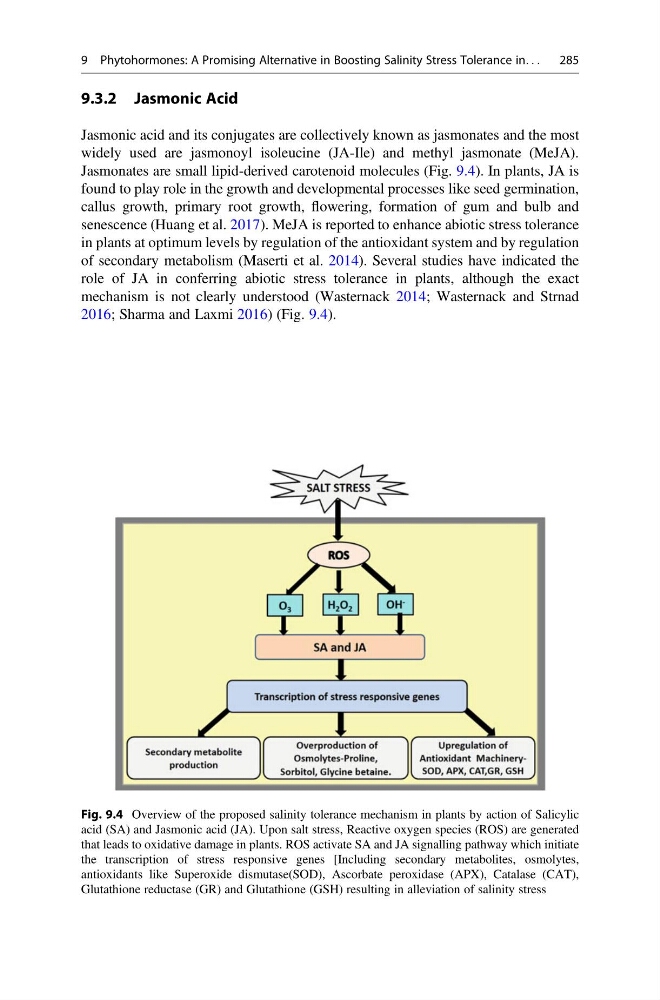
Fig. 9.4 Overview of the proposed salinity tolerance mechanism in plants by action of Salicylic
acid (SA) and Jasmonic acid (JA). Upon salt stress, Reactive oxygen species (ROS) are generated
that leads to oxidative damage in plants. ROS activate SA and JA signalling pathway which initiate
the transcription of stress responsive genes [Including secondary metabolites, osmolytes,
antioxidants like Superoxide dismutase(SOD), Ascorbate peroxidase (APX), Catalase (CAT),
Glutathione reductase (GR) and Glutathione (GSH) resulting in alleviation of salinity stress
9 Phytohormones: A Promising Alternative in Boosting Salinity Stress Tolerance in. . .
285
Jasmonic acid and its conjugates are collectively known as jasmonates and the most
widely used are jasmonoyl isoleucine (JA-Ile) and methyl jasmonate (MeJA).
Jasmonates are small lipid-derived carotenoid molecules (Fig. 9.4). In plants, JA is
found to play role in the growth and developmental processes like seed germination,
callus growth, primary root growth, flowering, formation of gum and bulb and
senescence (Huang et al. 2017). MeJA is reported to enhance abiotic stress tolerance
in plants at optimum levels by regulation of the antioxidant system and by regulation
of secondary metabolism (Maserti et al. 2014). Several studies have indicated the
role of JA in conferring abiotic stress tolerance in plants, although the exact
mechanism is not clearly understood (Wasternack 2014; Wasternack and Strnad
2016; Sharma and Laxmi 2016) (Fig. 9.4).
Fig. 9.4 Overview of the proposed salinity tolerance mechanism in plants by action of Salicylic
acid (SA) and Jasmonic acid (JA). Upon salt stress, Reactive oxygen species (ROS) are generated
that leads to oxidative damage in plants. ROS activate SA and JA signalling pathway which initiate
the transcription of stress responsive genes [Including secondary metabolites, osmolytes,
antioxidants like Superoxide dismutase(SOD), Ascorbate peroxidase (APX), Catalase (CAT),
Glutathione reductase (GR) and Glutathione (GSH) resulting in alleviation of salinity stress
9 Phytohormones: A Promising Alternative in Boosting Salinity Stress Tolerance in. . .
285