

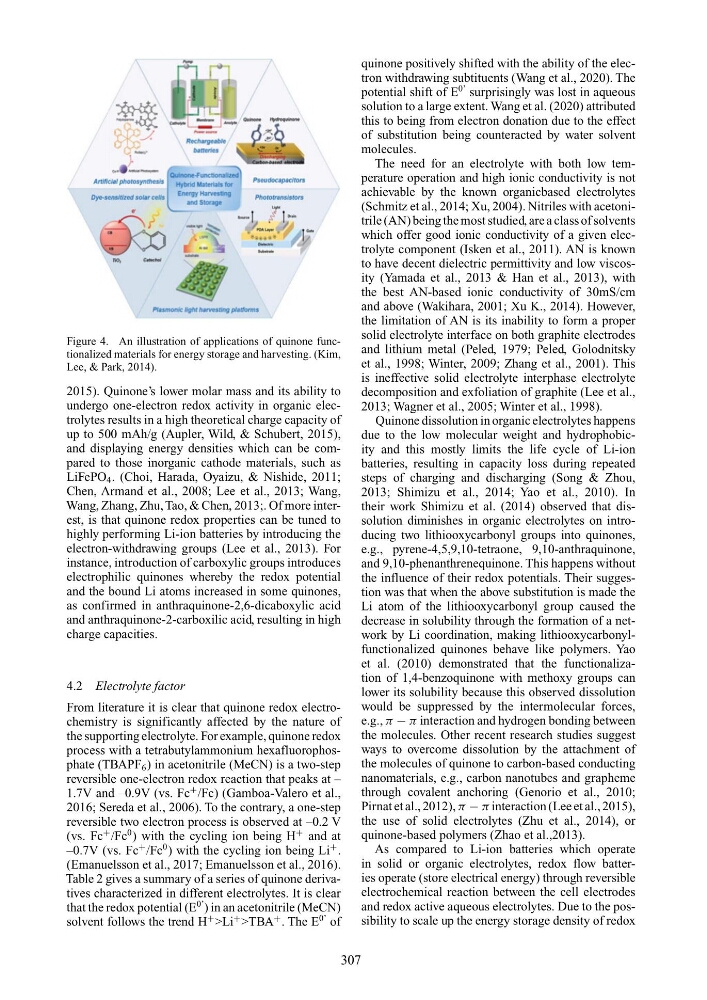
Figure 4. An illustration of applications of quinone functionalized materials for energy storage and harvesting. (Kim,
Lee, & Park, 2014).
2015). Quinone’s lower molar mass and its ability to
undergo one-electron redox activity in organic electrolytes results in a high theoretical charge capacity of
up to 500 mAh/g (Aupler, Wild, & Schubert, 2015),
and displaying energy densities which can be compared to those inorganic cathode materials, such as
LiFePO 4 . (Choi, Harada, Oyaizu, & Nishide, 2011;
Chen, Armand et al., 2008; Lee et al., 2013; Wang,
Wang, Zhang, Zhu, Tao, & Chen, 2013;. Of more interest, is that quinone redox properties can be tuned to
highly performing Li-ion batteries by introducing the
electron-withdrawing groups (Lee et al., 2013). For
instance, introduction of carboxylic groups introduces
electrophilic quinones whereby the redox potential
and the bound Li atoms increased in some quinones,
as confirmed in anthraquinone-2,6-dicaboxylic acid
and anthraquinone-2-carboxilic acid, resulting in high
charge capacities.
4.2 Electrolyte factor
From literature it is clear that quinone redox electrochemistry is significantly affected by the nature of
the supporting electrolyte. For example, quinone redox
process with a tetrabutylammonium hexafluorophosphate (TBAPF 6 ) in acetonitrile (MeCN) is a two-step
reversible one-electron redox reaction that peaks at –
1.7V and –0.9V (vs. Fc
+ /Fc) (Gamboa-Valero et al.,
2016; Sereda et al., 2006). To the contrary, a one-step
reversible two electron process is observed at –0.2 V
(vs. Fc
+ /Fc
0 ) with the cycling ion being H
+ and at
–0.7V (vs. Fc
+ /Fc
0 ) with the cycling ion being Li
+ .
(Emanuelsson et al., 2017; Emanuelsson et al., 2016).
Table 2 gives a summary of a series of quinone derivatives characterized in different electrolytes. It is clear
that the redox potential (E
0’ ) in an acetonitrile (MeCN)
solvent follows the trend H
+ >Li
+ >TBA
+ . The E
0’ of
quinone positively shifted with the ability of the electron withdrawing subtituents (Wang et al., 2020). The
potential shift of E
0’ surprisingly was lost in aqueous
solution to a large extent. Wang et al. (2020) attributed
this to being from electron donation due to the effect
of substitution being counteracted by water solvent
molecules.
The need for an electrolyte with both low temperature operation and high ionic conductivity is not
achievable by the known organicbased electrolytes
(Schmitz et al., 2014; Xu, 2004). Nitriles with acetonitrile (AN) being the most studied, are a class of solvents
which offer good ionic conductivity of a given electrolyte component (Isken et al., 2011). AN is known
to have decent dielectric permittivity and low viscosity (Yamada et al., 2013 & Han et al., 2013), with
the best AN-based ionic conductivity of 30mS/cm
and above (Wakihara, 2001; Xu K., 2014). However,
the limitation of AN is its inability to form a proper
solid electrolyte interface on both graphite electrodes
and lithium metal (Peled, 1979; Peled, Golodnitsky
et al., 1998; Winter, 2009; Zhang et al., 2001). This
is ineffective solid electrolyte interphase electrolyte
decomposition and exfoliation of graphite (Lee et al.,
2013; Wagner et al., 2005; Winter et al., 1998).
Quinone dissolution in organic electrolytes happens
due to the low molecular weight and hydrophobicity and this mostly limits the life cycle of Li-ion
batteries, resulting in capacity loss during repeated
steps of charging and discharging (Song & Zhou,
2013; Shimizu et al., 2014; Yao et al., 2010). In
their work Shimizu et al. (2014) observed that dissolution diminishes in organic electrolytes on introducing two lithiooxycarbonyl groups into quinones,
e.g., pyrene-4,5,9,10-tetraone, 9,10-anthraquinone,
and 9,10-phenanthrenequinone. This happens without
the influence of their redox potentials. Their suggestion was that when the above substitution is made the
Li atom of the lithiooxycarbonyl group caused the
decrease in solubility through the formation of a network by Li coordination, making lithiooxycarbonylfunctionalized quinones behave like polymers. Yao
et al. (2010) demonstrated that the functionalization of 1,4-benzoquinone with methoxy groups can
lower its solubility because this observed dissolution
would be suppressed by the intermolecular forces,
e.g., π − π interaction and hydrogen bonding between
the molecules. Other recent research studies suggest
ways to overcome dissolution by the attachment of
the molecules of quinone to carbon-based conducting
nanomaterials, e.g., carbon nanotubes and grapheme
through covalent anchoring (Genorio et al., 2010;
Pirnat et al., 2012), π − π interaction (Lee et al., 2015),
the use of solid electrolytes (Zhu et al., 2014), or
quinone-based polymers (Zhao et al.,2013).
As compared to Li-ion batteries which operate
in solid or organic electrolytes, redox flow batteries operate (store electrical energy) through reversible
electrochemical reaction between the cell electrodes
and redox active aqueous electrolytes. Due to the possibility to scale up the energy storage density of redox
307
Lee, & Park, 2014).
2015). Quinone’s lower molar mass and its ability to
undergo one-electron redox activity in organic electrolytes results in a high theoretical charge capacity of
up to 500 mAh/g (Aupler, Wild, & Schubert, 2015),
and displaying energy densities which can be compared to those inorganic cathode materials, such as
LiFePO 4 . (Choi, Harada, Oyaizu, & Nishide, 2011;
Chen, Armand et al., 2008; Lee et al., 2013; Wang,
Wang, Zhang, Zhu, Tao, & Chen, 2013;. Of more interest, is that quinone redox properties can be tuned to
highly performing Li-ion batteries by introducing the
electron-withdrawing groups (Lee et al., 2013). For
instance, introduction of carboxylic groups introduces
electrophilic quinones whereby the redox potential
and the bound Li atoms increased in some quinones,
as confirmed in anthraquinone-2,6-dicaboxylic acid
and anthraquinone-2-carboxilic acid, resulting in high
charge capacities.
4.2 Electrolyte factor
From literature it is clear that quinone redox electrochemistry is significantly affected by the nature of
the supporting electrolyte. For example, quinone redox
process with a tetrabutylammonium hexafluorophosphate (TBAPF 6 ) in acetonitrile (MeCN) is a two-step
reversible one-electron redox reaction that peaks at –
1.7V and –0.9V (vs. Fc
+ /Fc) (Gamboa-Valero et al.,
2016; Sereda et al., 2006). To the contrary, a one-step
reversible two electron process is observed at –0.2 V
(vs. Fc
+ /Fc
0 ) with the cycling ion being H
+ and at
–0.7V (vs. Fc
+ /Fc
0 ) with the cycling ion being Li
+ .
(Emanuelsson et al., 2017; Emanuelsson et al., 2016).
Table 2 gives a summary of a series of quinone derivatives characterized in different electrolytes. It is clear
that the redox potential (E
0’ ) in an acetonitrile (MeCN)
solvent follows the trend H
+ >Li
+ >TBA
+ . The E
0’ of
quinone positively shifted with the ability of the electron withdrawing subtituents (Wang et al., 2020). The
potential shift of E
0’ surprisingly was lost in aqueous
solution to a large extent. Wang et al. (2020) attributed
this to being from electron donation due to the effect
of substitution being counteracted by water solvent
molecules.
The need for an electrolyte with both low temperature operation and high ionic conductivity is not
achievable by the known organicbased electrolytes
(Schmitz et al., 2014; Xu, 2004). Nitriles with acetonitrile (AN) being the most studied, are a class of solvents
which offer good ionic conductivity of a given electrolyte component (Isken et al., 2011). AN is known
to have decent dielectric permittivity and low viscosity (Yamada et al., 2013 & Han et al., 2013), with
the best AN-based ionic conductivity of 30mS/cm
and above (Wakihara, 2001; Xu K., 2014). However,
the limitation of AN is its inability to form a proper
solid electrolyte interface on both graphite electrodes
and lithium metal (Peled, 1979; Peled, Golodnitsky
et al., 1998; Winter, 2009; Zhang et al., 2001). This
is ineffective solid electrolyte interphase electrolyte
decomposition and exfoliation of graphite (Lee et al.,
2013; Wagner et al., 2005; Winter et al., 1998).
Quinone dissolution in organic electrolytes happens
due to the low molecular weight and hydrophobicity and this mostly limits the life cycle of Li-ion
batteries, resulting in capacity loss during repeated
steps of charging and discharging (Song & Zhou,
2013; Shimizu et al., 2014; Yao et al., 2010). In
their work Shimizu et al. (2014) observed that dissolution diminishes in organic electrolytes on introducing two lithiooxycarbonyl groups into quinones,
e.g., pyrene-4,5,9,10-tetraone, 9,10-anthraquinone,
and 9,10-phenanthrenequinone. This happens without
the influence of their redox potentials. Their suggestion was that when the above substitution is made the
Li atom of the lithiooxycarbonyl group caused the
decrease in solubility through the formation of a network by Li coordination, making lithiooxycarbonylfunctionalized quinones behave like polymers. Yao
et al. (2010) demonstrated that the functionalization of 1,4-benzoquinone with methoxy groups can
lower its solubility because this observed dissolution
would be suppressed by the intermolecular forces,
e.g., π − π interaction and hydrogen bonding between
the molecules. Other recent research studies suggest
ways to overcome dissolution by the attachment of
the molecules of quinone to carbon-based conducting
nanomaterials, e.g., carbon nanotubes and grapheme
through covalent anchoring (Genorio et al., 2010;
Pirnat et al., 2012), π − π interaction (Lee et al., 2015),
the use of solid electrolytes (Zhu et al., 2014), or
quinone-based polymers (Zhao et al.,2013).
As compared to Li-ion batteries which operate
in solid or organic electrolytes, redox flow batteries operate (store electrical energy) through reversible
electrochemical reaction between the cell electrodes
and redox active aqueous electrolytes. Due to the possibility to scale up the energy storage density of redox
307