

1,4-BQ PO 3 H 2
Full –142.99 1.02
1,2-BQ COOH
R6 -45.00
1.03
1,4-BQ COOCH 3 Full –45.18 1.04
1,2-BQ CF 3
Full –8.19
1.11
1,4-BQ NO 2
Full –14.08 1.11
1,2-BQ CHO
R6 –33.91 1.11
1,2-BQ COOH
Full –107.66 1.12
1,2-BQ COOCH 3 R6 –34.49 1.13
1,2-BQ CN
Full -39.96
1.14
1,2-BQ NO 2
R6 –33.43 1.17
1,2-BQ CHO
Full –47.99 1.19
1,2-BQ NO 2
Full –16.68 1.19
1,2-BQ COOCH 3 Full –46.14 1.21
1,2-BQ PO 3 H 2
Full –168.34 1.23
1,4-BQ SO 3 H
Full –96.55 1.32
1,4-BQ CHO
Full –46.79 1.34
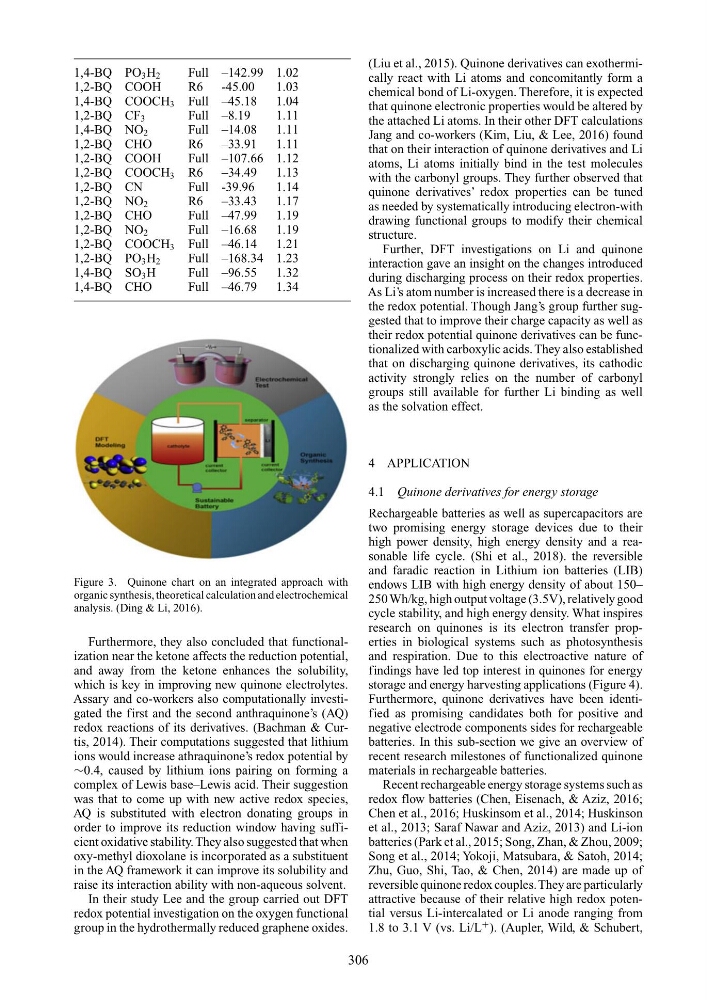
Figure 3. Quinone chart on an integrated approach with
organic synthesis, theoretical calculation and electrochemical
analysis. (Ding & Li, 2016).
Furthermore, they also concluded that functionalization near the ketone affects the reduction potential,
and away from the ketone enhances the solubility,
which is key in improving new quinone electrolytes.
Assary and co-workers also computationally investigated the first and the second anthraquinone’s (AQ)
redox reactions of its derivatives. (Bachman & Curtis, 2014). Their computations suggested that lithium
ions would increase athraquinone’s redox potential by
∼0.4, caused by lithium ions pairing on forming a
complex of Lewis base–Lewis acid. Their suggestion
was that to come up with new active redox species,
AQ is substituted with electron donating groups in
order to improve its reduction window having sufficient oxidative stability. They also suggested that when
oxy-methyl dioxolane is incorporated as a substituent
in the AQ framework it can improve its solubility and
raise its interaction ability with non-aqueous solvent.
In their study Lee and the group carried out DFT
redox potential investigation on the oxygen functional
group in the hydrothermally reduced graphene oxides.
(Liu et al., 2015). Quinone derivatives can exothermically react with Li atoms and concomitantly form a
chemical bond of Li-oxygen. Therefore, it is expected
that quinone electronic properties would be altered by
the attached Li atoms. In their other DFT calculations
Jang and co-workers (Kim, Liu, & Lee, 2016) found
that on their interaction of quinone derivatives and Li
atoms, Li atoms initially bind in the test molecules
with the carbonyl groups. They further observed that
quinone derivatives’ redox properties can be tuned
as needed by systematically introducing electron-with
drawing functional groups to modify their chemical
structure.
Further, DFT investigations on Li and quinone
interaction gave an insight on the changes introduced
during discharging process on their redox properties.
As Li’s atom number is increased there is a decrease in
the redox potential. Though Jang’s group further suggested that to improve their charge capacity as well as
their redox potential quinone derivatives can be functionalized with carboxylic acids. They also established
that on discharging quinone derivatives, its cathodic
activity strongly relies on the number of carbonyl
groups still available for further Li binding as well
as the solvation effect.
4 APPLICATION
4.1 Quinone derivatives for energy storage
Rechargeable batteries as well as supercapacitors are
two promising energy storage devices due to their
high power density, high energy density and a reasonable life cycle. (Shi et al., 2018). the reversible
and faradic reaction in Lithium ion batteries (LIB)
endows LIB with high energy density of about 150–
250 Wh/kg, high output voltage (3.5V), relatively good
cycle stability, and high energy density. What inspires
research on quinones is its electron transfer properties in biological systems such as photosynthesis
and respiration. Due to this electroactive nature of
findings have led top interest in quinones for energy
storage and energy harvesting applications (Figure 4).
Furthermore, quinone derivatives have been identified as promising candidates both for positive and
negative electrode components sides for rechargeable
batteries. In this sub-section we give an overview of
recent research milestones of functionalized quinone
materials in rechargeable batteries.
Recent rechargeable energy storage systems such as
redox flow batteries (Chen, Eisenach, & Aziz, 2016;
Chen et al., 2016; Huskinsom et al., 2014; Huskinson
et al., 2013; Saraf Nawar and Aziz, 2013) and Li-ion
batteries (Park et al., 2015; Song, Zhan, & Zhou, 2009;
Song et al., 2014; Yokoji, Matsubara, & Satoh, 2014;
Zhu, Guo, Shi, Tao, & Chen, 2014) are made up of
reversible quinone redox couples.They are particularly
attractive because of their relative high redox potential versus Li-intercalated or Li anode ranging from
1.8 to 3.1 V (vs. Li/L
+ ). (Aupler, Wild, & Schubert,
306
Full –142.99 1.02
1,2-BQ COOH
R6 -45.00
1.03
1,4-BQ COOCH 3 Full –45.18 1.04
1,2-BQ CF 3
Full –8.19
1.11
1,4-BQ NO 2
Full –14.08 1.11
1,2-BQ CHO
R6 –33.91 1.11
1,2-BQ COOH
Full –107.66 1.12
1,2-BQ COOCH 3 R6 –34.49 1.13
1,2-BQ CN
Full -39.96
1.14
1,2-BQ NO 2
R6 –33.43 1.17
1,2-BQ CHO
Full –47.99 1.19
1,2-BQ NO 2
Full –16.68 1.19
1,2-BQ COOCH 3 Full –46.14 1.21
1,2-BQ PO 3 H 2
Full –168.34 1.23
1,4-BQ SO 3 H
Full –96.55 1.32
1,4-BQ CHO
Full –46.79 1.34
Figure 3. Quinone chart on an integrated approach with
organic synthesis, theoretical calculation and electrochemical
analysis. (Ding & Li, 2016).
Furthermore, they also concluded that functionalization near the ketone affects the reduction potential,
and away from the ketone enhances the solubility,
which is key in improving new quinone electrolytes.
Assary and co-workers also computationally investigated the first and the second anthraquinone’s (AQ)
redox reactions of its derivatives. (Bachman & Curtis, 2014). Their computations suggested that lithium
ions would increase athraquinone’s redox potential by
∼0.4, caused by lithium ions pairing on forming a
complex of Lewis base–Lewis acid. Their suggestion
was that to come up with new active redox species,
AQ is substituted with electron donating groups in
order to improve its reduction window having sufficient oxidative stability. They also suggested that when
oxy-methyl dioxolane is incorporated as a substituent
in the AQ framework it can improve its solubility and
raise its interaction ability with non-aqueous solvent.
In their study Lee and the group carried out DFT
redox potential investigation on the oxygen functional
group in the hydrothermally reduced graphene oxides.
(Liu et al., 2015). Quinone derivatives can exothermically react with Li atoms and concomitantly form a
chemical bond of Li-oxygen. Therefore, it is expected
that quinone electronic properties would be altered by
the attached Li atoms. In their other DFT calculations
Jang and co-workers (Kim, Liu, & Lee, 2016) found
that on their interaction of quinone derivatives and Li
atoms, Li atoms initially bind in the test molecules
with the carbonyl groups. They further observed that
quinone derivatives’ redox properties can be tuned
as needed by systematically introducing electron-with
drawing functional groups to modify their chemical
structure.
Further, DFT investigations on Li and quinone
interaction gave an insight on the changes introduced
during discharging process on their redox properties.
As Li’s atom number is increased there is a decrease in
the redox potential. Though Jang’s group further suggested that to improve their charge capacity as well as
their redox potential quinone derivatives can be functionalized with carboxylic acids. They also established
that on discharging quinone derivatives, its cathodic
activity strongly relies on the number of carbonyl
groups still available for further Li binding as well
as the solvation effect.
4 APPLICATION
4.1 Quinone derivatives for energy storage
Rechargeable batteries as well as supercapacitors are
two promising energy storage devices due to their
high power density, high energy density and a reasonable life cycle. (Shi et al., 2018). the reversible
and faradic reaction in Lithium ion batteries (LIB)
endows LIB with high energy density of about 150–
250 Wh/kg, high output voltage (3.5V), relatively good
cycle stability, and high energy density. What inspires
research on quinones is its electron transfer properties in biological systems such as photosynthesis
and respiration. Due to this electroactive nature of
findings have led top interest in quinones for energy
storage and energy harvesting applications (Figure 4).
Furthermore, quinone derivatives have been identified as promising candidates both for positive and
negative electrode components sides for rechargeable
batteries. In this sub-section we give an overview of
recent research milestones of functionalized quinone
materials in rechargeable batteries.
Recent rechargeable energy storage systems such as
redox flow batteries (Chen, Eisenach, & Aziz, 2016;
Chen et al., 2016; Huskinsom et al., 2014; Huskinson
et al., 2013; Saraf Nawar and Aziz, 2013) and Li-ion
batteries (Park et al., 2015; Song, Zhan, & Zhou, 2009;
Song et al., 2014; Yokoji, Matsubara, & Satoh, 2014;
Zhu, Guo, Shi, Tao, & Chen, 2014) are made up of
reversible quinone redox couples.They are particularly
attractive because of their relative high redox potential versus Li-intercalated or Li anode ranging from
1.8 to 3.1 V (vs. Li/L
+ ). (Aupler, Wild, & Schubert,
306