

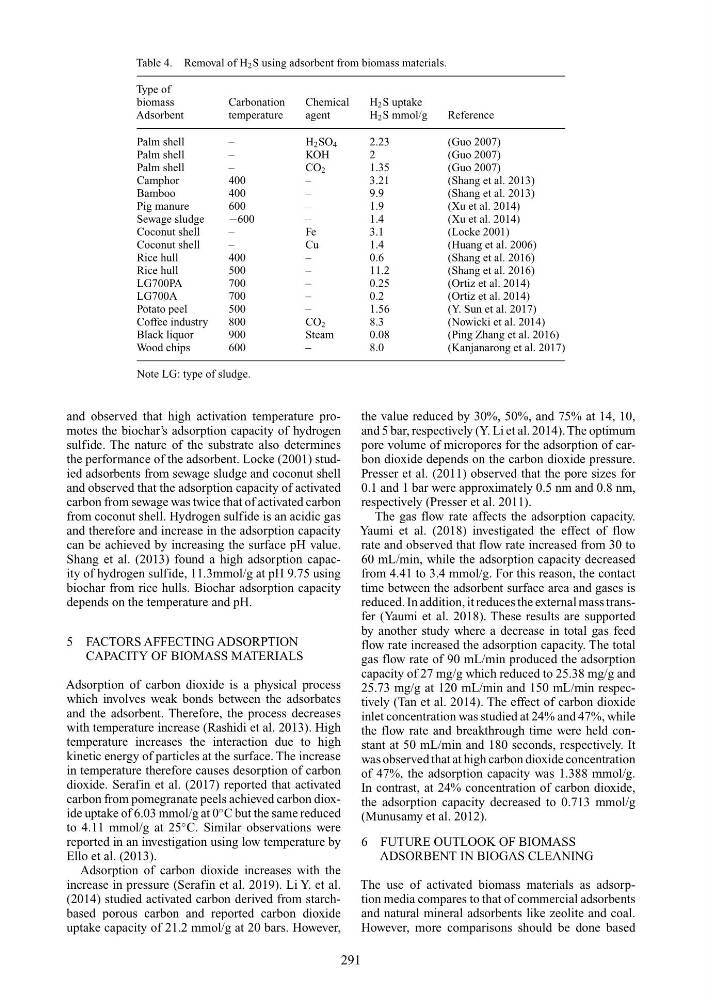
Table 4. Removal of H 2 S using adsorbent from biomass materials.
Type of
biomass
Carbonation
Chemical
H 2 S uptake
Adsorbent
temperature
agent
H 2 S mmol/g
Reference
Palm shell
–
H 2 SO 4
2.23
(Guo 2007)
Palm shell
–
KOH
2
(Guo 2007)
Palm shell
–
CO 2
1.35
(Guo 2007)
Camphor
400
–
3.21
(Shang et al. 2013)
Bamboo
400
–
9.9
(Shang et al. 2013)
Pig manure
600
–
1.9
(Xu et al. 2014)
Sewage sludge
−600
–
1.4
(Xu et al. 2014)
Coconut shell
–
Fe
3.1
(Locke 2001)
Coconut shell
–
Cu
1.4
(Huang et al. 2006)
Rice hull
400
–
0.6
(Shang et al. 2016)
Rice hull
500
–
11.2
(Shang et al. 2016)
LG700PA
700
–
0.25
(Ortiz et al. 2014)
LG700A
700
–
0.2
(Ortiz et al. 2014)
Potato peel
500
–
1.56
(Y. Sun et al. 2017)
Coffee industry
800
CO 2
8.3
(Nowicki et al. 2014)
Black liquor
900
Steam
0.08
(Ping Zhang et al. 2016)
Wood chips
600
–
8.0
(Kanjanarong et al. 2017)
Note LG: type of sludge.
and observed that high activation temperature promotes the biochar’s adsorption capacity of hydrogen
sulfide. The nature of the substrate also determines
the performance of the adsorbent. Locke (2001) studied adsorbents from sewage sludge and coconut shell
and observed that the adsorption capacity of activated
carbon from sewage was twice that of activated carbon
from coconut shell. Hydrogen sulfide is an acidic gas
and therefore and increase in the adsorption capacity
can be achieved by increasing the surface pH value.
Shang et al. (2013) found a high adsorption capacity of hydrogen sulfide, 11.3mmol/g at pH 9.75 using
biochar from rice hulls. Biochar adsorption capacity
depends on the temperature and pH.
5 FACTORS AFFECTING ADSORPTION
CAPACITY OF BIOMASS MATERIALS
Adsorption of carbon dioxide is a physical process
which involves weak bonds between the adsorbates
and the adsorbent. Therefore, the process decreases
with temperature increase (Rashidi et al. 2013). High
temperature increases the interaction due to high
kinetic energy of particles at the surface. The increase
in temperature therefore causes desorption of carbon
dioxide. Serafin et al. (2017) reported that activated
carbon from pomegranate peels achieved carbon dioxide uptake of 6.03 mmol/g at 0
◦ C but the same reduced
to 4.11 mmol/g at 25
◦ C. Similar observations were
reported in an investigation using low temperature by
Ello et al. (2013).
Adsorption of carbon dioxide increases with the
increase in pressure (Serafin et al. 2019). Li Y. et al.
(2014) studied activated carbon derived from starchbased porous carbon and reported carbon dioxide
uptake capacity of 21.2 mmol/g at 20 bars. However,
the value reduced by 30%, 50%, and 75% at 14, 10,
and 5 bar, respectively (Y. Li et al. 2014). The optimum
pore volume of micropores for the adsorption of carbon dioxide depends on the carbon dioxide pressure.
Presser et al. (2011) observed that the pore sizes for
0.1 and 1 bar were approximately 0.5 nm and 0.8 nm,
respectively (Presser et al. 2011).
The gas flow rate affects the adsorption capacity.
Yaumi et al. (2018) investigated the effect of flow
rate and observed that flow rate increased from 30 to
60 mL/min, while the adsorption capacity decreased
from 4.41 to 3.4 mmol/g. For this reason, the contact
time between the adsorbent surface area and gases is
reduced. In addition, it reduces the external mass transfer (Yaumi et al. 2018). These results are supported
by another study where a decrease in total gas feed
flow rate increased the adsorption capacity. The total
gas flow rate of 90 mL/min produced the adsorption
capacity of 27 mg/g which reduced to 25.38 mg/g and
25.73 mg/g at 120 mL/min and 150 mL/min respectively (Tan et al. 2014). The effect of carbon dioxide
inlet concentration was studied at 24% and 47%, while
the flow rate and breakthrough time were held constant at 50 mL/min and 180 seconds, respectively. It
was observed that at high carbon dioxide concentration
of 47%, the adsorption capacity was 1.388 mmol/g.
In contrast, at 24% concentration of carbon dioxide,
the adsorption capacity decreased to 0.713 mmol/g
(Munusamy et al. 2012).
6 FUTURE OUTLOOK OF BIOMASS
ADSORBENT IN BIOGAS CLEANING
The use of activated biomass materials as adsorption media compares to that of commercial adsorbents
and natural mineral adsorbents like zeolite and coal.
However, more comparisons should be done based
291
Type of
biomass
Carbonation
Chemical
H 2 S uptake
Adsorbent
temperature
agent
H 2 S mmol/g
Reference
Palm shell
–
H 2 SO 4
2.23
(Guo 2007)
Palm shell
–
KOH
2
(Guo 2007)
Palm shell
–
CO 2
1.35
(Guo 2007)
Camphor
400
–
3.21
(Shang et al. 2013)
Bamboo
400
–
9.9
(Shang et al. 2013)
Pig manure
600
–
1.9
(Xu et al. 2014)
Sewage sludge
−600
–
1.4
(Xu et al. 2014)
Coconut shell
–
Fe
3.1
(Locke 2001)
Coconut shell
–
Cu
1.4
(Huang et al. 2006)
Rice hull
400
–
0.6
(Shang et al. 2016)
Rice hull
500
–
11.2
(Shang et al. 2016)
LG700PA
700
–
0.25
(Ortiz et al. 2014)
LG700A
700
–
0.2
(Ortiz et al. 2014)
Potato peel
500
–
1.56
(Y. Sun et al. 2017)
Coffee industry
800
CO 2
8.3
(Nowicki et al. 2014)
Black liquor
900
Steam
0.08
(Ping Zhang et al. 2016)
Wood chips
600
–
8.0
(Kanjanarong et al. 2017)
Note LG: type of sludge.
and observed that high activation temperature promotes the biochar’s adsorption capacity of hydrogen
sulfide. The nature of the substrate also determines
the performance of the adsorbent. Locke (2001) studied adsorbents from sewage sludge and coconut shell
and observed that the adsorption capacity of activated
carbon from sewage was twice that of activated carbon
from coconut shell. Hydrogen sulfide is an acidic gas
and therefore and increase in the adsorption capacity
can be achieved by increasing the surface pH value.
Shang et al. (2013) found a high adsorption capacity of hydrogen sulfide, 11.3mmol/g at pH 9.75 using
biochar from rice hulls. Biochar adsorption capacity
depends on the temperature and pH.
5 FACTORS AFFECTING ADSORPTION
CAPACITY OF BIOMASS MATERIALS
Adsorption of carbon dioxide is a physical process
which involves weak bonds between the adsorbates
and the adsorbent. Therefore, the process decreases
with temperature increase (Rashidi et al. 2013). High
temperature increases the interaction due to high
kinetic energy of particles at the surface. The increase
in temperature therefore causes desorption of carbon
dioxide. Serafin et al. (2017) reported that activated
carbon from pomegranate peels achieved carbon dioxide uptake of 6.03 mmol/g at 0
◦ C but the same reduced
to 4.11 mmol/g at 25
◦ C. Similar observations were
reported in an investigation using low temperature by
Ello et al. (2013).
Adsorption of carbon dioxide increases with the
increase in pressure (Serafin et al. 2019). Li Y. et al.
(2014) studied activated carbon derived from starchbased porous carbon and reported carbon dioxide
uptake capacity of 21.2 mmol/g at 20 bars. However,
the value reduced by 30%, 50%, and 75% at 14, 10,
and 5 bar, respectively (Y. Li et al. 2014). The optimum
pore volume of micropores for the adsorption of carbon dioxide depends on the carbon dioxide pressure.
Presser et al. (2011) observed that the pore sizes for
0.1 and 1 bar were approximately 0.5 nm and 0.8 nm,
respectively (Presser et al. 2011).
The gas flow rate affects the adsorption capacity.
Yaumi et al. (2018) investigated the effect of flow
rate and observed that flow rate increased from 30 to
60 mL/min, while the adsorption capacity decreased
from 4.41 to 3.4 mmol/g. For this reason, the contact
time between the adsorbent surface area and gases is
reduced. In addition, it reduces the external mass transfer (Yaumi et al. 2018). These results are supported
by another study where a decrease in total gas feed
flow rate increased the adsorption capacity. The total
gas flow rate of 90 mL/min produced the adsorption
capacity of 27 mg/g which reduced to 25.38 mg/g and
25.73 mg/g at 120 mL/min and 150 mL/min respectively (Tan et al. 2014). The effect of carbon dioxide
inlet concentration was studied at 24% and 47%, while
the flow rate and breakthrough time were held constant at 50 mL/min and 180 seconds, respectively. It
was observed that at high carbon dioxide concentration
of 47%, the adsorption capacity was 1.388 mmol/g.
In contrast, at 24% concentration of carbon dioxide,
the adsorption capacity decreased to 0.713 mmol/g
(Munusamy et al. 2012).
6 FUTURE OUTLOOK OF BIOMASS
ADSORBENT IN BIOGAS CLEANING
The use of activated biomass materials as adsorption media compares to that of commercial adsorbents
and natural mineral adsorbents like zeolite and coal.
However, more comparisons should be done based
291