

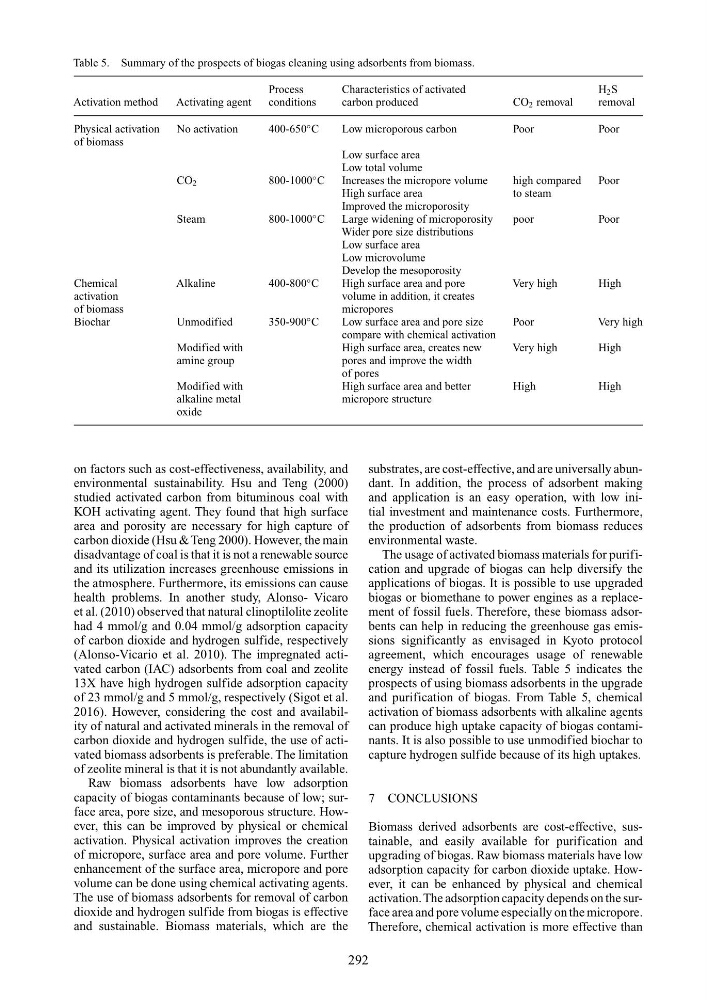
Table 5. Summary of the prospects of biogas cleaning using adsorbents from biomass.
Process
Characteristics of activated
H 2 S
Activation method
Activating agent
conditions
carbon produced
CO 2 removal
removal
Physical activation
No activation
400-650
◦ C
Low microporous carbon
Poor
Poor
of biomass
Low surface area
Low total volume
CO 2
800-1000
◦ C
Increases the micropore volume
high compared
Poor
High surface area
to steam
Improved the microporosity
Steam
800-1000
◦ C
Large widening of microporosity
poor
Poor
Wider pore size distributions
Low surface area
Low microvolume
Develop the mesoporosity
Chemical
Alkaline
400-800
◦ C
High surface area and pore
Very high
High
activation
volume in addition, it creates
of biomass
micropores
Biochar
Unmodified
350-900
◦ C
Low surface area and pore size
Poor
Very high
compare with chemical activation
Modified with
High surface area, creates new
Very high
High
amine group
pores and improve the width
of pores
Modified with
High surface area and better
High
High
alkaline metal
micropore structure
oxide
on factors such as cost-effectiveness, availability, and
environmental sustainability. Hsu and Teng (2000)
studied activated carbon from bituminous coal with
KOH activating agent. They found that high surface
area and porosity are necessary for high capture of
carbon dioxide (Hsu & Teng 2000). However, the main
disadvantage of coal is that it is not a renewable source
and its utilization increases greenhouse emissions in
the atmosphere. Furthermore, its emissions can cause
health problems. In another study, Alonso- Vicaro
et al. (2010) observed that natural clinoptilolite zeolite
had 4 mmol/g and 0.04 mmol/g adsorption capacity
of carbon dioxide and hydrogen sulfide, respectively
(Alonso-Vicario et al. 2010). The impregnated activated carbon (IAC) adsorbents from coal and zeolite
13X have high hydrogen sulfide adsorption capacity
of 23 mmol/g and 5 mmol/g, respectively (Sigot et al.
2016). However, considering the cost and availability of natural and activated minerals in the removal of
carbon dioxide and hydrogen sulfide, the use of activated biomass adsorbents is preferable. The limitation
of zeolite mineral is that it is not abundantly available.
Raw biomass adsorbents have low adsorption
capacity of biogas contaminants because of low; surface area, pore size, and mesoporous structure. However, this can be improved by physical or chemical
activation. Physical activation improves the creation
of micropore, surface area and pore volume. Further
enhancement of the surface area, micropore and pore
volume can be done using chemical activating agents.
The use of biomass adsorbents for removal of carbon
dioxide and hydrogen sulfide from biogas is effective
and sustainable. Biomass materials, which are the
substrates, are cost-effective, and are universally abundant. In addition, the process of adsorbent making
and application is an easy operation, with low initial investment and maintenance costs. Furthermore,
the production of adsorbents from biomass reduces
environmental waste.
The usage of activated biomass materials for purification and upgrade of biogas can help diversify the
applications of biogas. It is possible to use upgraded
biogas or biomethane to power engines as a replacement of fossil fuels. Therefore, these biomass adsorbents can help in reducing the greenhouse gas emissions significantly as envisaged in Kyoto protocol
agreement, which encourages usage of renewable
energy instead of fossil fuels. Table 5 indicates the
prospects of using biomass adsorbents in the upgrade
and purification of biogas. From Table 5, chemical
activation of biomass adsorbents with alkaline agents
can produce high uptake capacity of biogas contaminants. It is also possible to use unmodified biochar to
capture hydrogen sulfide because of its high uptakes.
7 CONCLUSIONS
Biomass derived adsorbents are cost-effective, sustainable, and easily available for purification and
upgrading of biogas. Raw biomass materials have low
adsorption capacity for carbon dioxide uptake. However, it can be enhanced by physical and chemical
activation. The adsorption capacity depends on the surface area and pore volume especially on the micropore.
Therefore, chemical activation is more effective than
292
Process
Characteristics of activated
H 2 S
Activation method
Activating agent
conditions
carbon produced
CO 2 removal
removal
Physical activation
No activation
400-650
◦ C
Low microporous carbon
Poor
Poor
of biomass
Low surface area
Low total volume
CO 2
800-1000
◦ C
Increases the micropore volume
high compared
Poor
High surface area
to steam
Improved the microporosity
Steam
800-1000
◦ C
Large widening of microporosity
poor
Poor
Wider pore size distributions
Low surface area
Low microvolume
Develop the mesoporosity
Chemical
Alkaline
400-800
◦ C
High surface area and pore
Very high
High
activation
volume in addition, it creates
of biomass
micropores
Biochar
Unmodified
350-900
◦ C
Low surface area and pore size
Poor
Very high
compare with chemical activation
Modified with
High surface area, creates new
Very high
High
amine group
pores and improve the width
of pores
Modified with
High surface area and better
High
High
alkaline metal
micropore structure
oxide
on factors such as cost-effectiveness, availability, and
environmental sustainability. Hsu and Teng (2000)
studied activated carbon from bituminous coal with
KOH activating agent. They found that high surface
area and porosity are necessary for high capture of
carbon dioxide (Hsu & Teng 2000). However, the main
disadvantage of coal is that it is not a renewable source
and its utilization increases greenhouse emissions in
the atmosphere. Furthermore, its emissions can cause
health problems. In another study, Alonso- Vicaro
et al. (2010) observed that natural clinoptilolite zeolite
had 4 mmol/g and 0.04 mmol/g adsorption capacity
of carbon dioxide and hydrogen sulfide, respectively
(Alonso-Vicario et al. 2010). The impregnated activated carbon (IAC) adsorbents from coal and zeolite
13X have high hydrogen sulfide adsorption capacity
of 23 mmol/g and 5 mmol/g, respectively (Sigot et al.
2016). However, considering the cost and availability of natural and activated minerals in the removal of
carbon dioxide and hydrogen sulfide, the use of activated biomass adsorbents is preferable. The limitation
of zeolite mineral is that it is not abundantly available.
Raw biomass adsorbents have low adsorption
capacity of biogas contaminants because of low; surface area, pore size, and mesoporous structure. However, this can be improved by physical or chemical
activation. Physical activation improves the creation
of micropore, surface area and pore volume. Further
enhancement of the surface area, micropore and pore
volume can be done using chemical activating agents.
The use of biomass adsorbents for removal of carbon
dioxide and hydrogen sulfide from biogas is effective
and sustainable. Biomass materials, which are the
substrates, are cost-effective, and are universally abundant. In addition, the process of adsorbent making
and application is an easy operation, with low initial investment and maintenance costs. Furthermore,
the production of adsorbents from biomass reduces
environmental waste.
The usage of activated biomass materials for purification and upgrade of biogas can help diversify the
applications of biogas. It is possible to use upgraded
biogas or biomethane to power engines as a replacement of fossil fuels. Therefore, these biomass adsorbents can help in reducing the greenhouse gas emissions significantly as envisaged in Kyoto protocol
agreement, which encourages usage of renewable
energy instead of fossil fuels. Table 5 indicates the
prospects of using biomass adsorbents in the upgrade
and purification of biogas. From Table 5, chemical
activation of biomass adsorbents with alkaline agents
can produce high uptake capacity of biogas contaminants. It is also possible to use unmodified biochar to
capture hydrogen sulfide because of its high uptakes.
7 CONCLUSIONS
Biomass derived adsorbents are cost-effective, sustainable, and easily available for purification and
upgrading of biogas. Raw biomass materials have low
adsorption capacity for carbon dioxide uptake. However, it can be enhanced by physical and chemical
activation. The adsorption capacity depends on the surface area and pore volume especially on the micropore.
Therefore, chemical activation is more effective than
292