

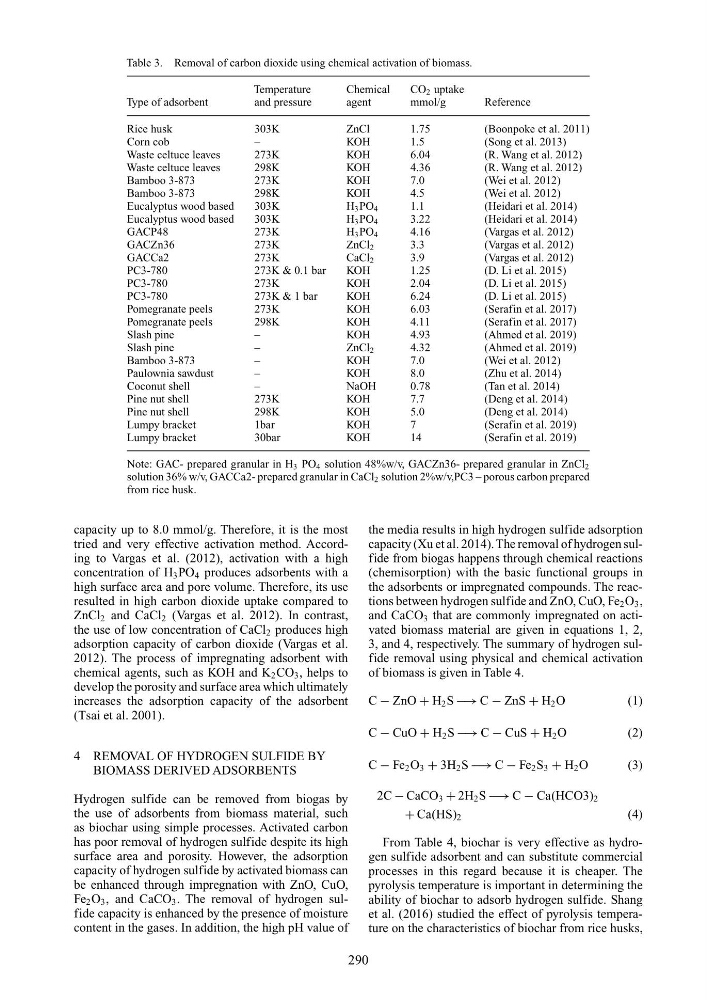
Table 3. Removal of carbon dioxide using chemical activation of biomass.
Temperature
Chemical
CO 2 uptake
Type of adsorbent
and pressure
agent
mmol/g
Reference
Rice husk
303K
ZnCl
1.75
(Boonpoke et al. 2011)
Corn cob
–
KOH
1.5
(Song et al. 2013)
Waste celtuce leaves
273K
KOH
6.04
(R. Wang et al. 2012)
Waste celtuce leaves
298K
KOH
4.36
(R. Wang et al. 2012)
Bamboo 3-873
273K
KOH
7.0
(Wei et al. 2012)
Bamboo 3-873
298K
KOH
4.5
(Wei et al. 2012)
Eucalyptus wood based
303K
H 3 PO 4
1.1
(Heidari et al. 2014)
Eucalyptus wood based
303K
H 3 PO 4
3.22
(Heidari et al. 2014)
GACP48
273K
H 3 PO 4
4.16
(Vargas et al. 2012)
GACZn36
273K
ZnCl 2
3.3
(Vargas et al. 2012)
GACCa2
273K
CaCl 2
3.9
(Vargas et al. 2012)
PC3-780
273K & 0.1 bar
KOH
1.25
(D. Li et al. 2015)
PC3-780
273K
KOH
2.04
(D. Li et al. 2015)
PC3-780
273K & 1 bar
KOH
6.24
(D. Li et al. 2015)
Pomegranate peels
273K
KOH
6.03
(Serafin et al. 2017)
Pomegranate peels
298K
KOH
4.11
(Serafin et al. 2017)
Slash pine
–
KOH
4.93
(Ahmed et al. 2019)
Slash pine
–
ZnCl 2
4.32
(Ahmed et al. 2019)
Bamboo 3-873
–
KOH
7.0
(Wei et al. 2012)
Paulownia sawdust
–
KOH
8.0
(Zhu et al. 2014)
Coconut shell
–
NaOH
0.78
(Tan et al. 2014)
Pine nut shell
273K
KOH
7.7
(Deng et al. 2014)
Pine nut shell
298K
KOH
5.0
(Deng et al. 2014)
Lumpy bracket
1bar
KOH
7
(Serafin et al. 2019)
Lumpy bracket
30bar
KOH
14
(Serafin et al. 2019)
Note: GAC- prepared granular in H 3 PO 4 solution 48%w/v, GACZn36- prepared granular in ZnCl 2
solution 36% w/v, GACCa2- prepared granular in CaCl 2 solution 2%w/v,PC3 – porous carbon prepared
from rice husk.
capacity up to 8.0 mmol/g. Therefore, it is the most
tried and very effective activation method. According to Vargas et al. (2012), activation with a high
concentration of H 3 PO 4 produces adsorbents with a
high surface area and pore volume. Therefore, its use
resulted in high carbon dioxide uptake compared to
ZnCl 2 and CaCl 2 (Vargas et al. 2012). In contrast,
the use of low concentration of CaCl 2 produces high
adsorption capacity of carbon dioxide (Vargas et al.
2012). The process of impregnating adsorbent with
chemical agents, such as KOH and K 2 CO 3 , helps to
develop the porosity and surface area which ultimately
increases the adsorption capacity of the adsorbent
(Tsai et al. 2001).
4 REMOVAL OF HYDROGEN SULFIDE BY
BIOMASS DERIVED ADSORBENTS
Hydrogen sulfide can be removed from biogas by
the use of adsorbents from biomass material, such
as biochar using simple processes. Activated carbon
has poor removal of hydrogen sulfide despite its high
surface area and porosity. However, the adsorption
capacity of hydrogen sulfide by activated biomass can
be enhanced through impregnation with ZnO, CuO,
Fe 2 O 3 , and CaCO 3 . The removal of hydrogen sulfide capacity is enhanced by the presence of moisture
content in the gases. In addition, the high pH value of
the media results in high hydrogen sulfide adsorption
capacity (Xu et al. 2014). The removal of hydrogen sulfide from biogas happens through chemical reactions
(chemisorption) with the basic functional groups in
the adsorbents or impregnated compounds. The reactions between hydrogen sulfide and ZnO, CuO, Fe 2 O 3 ,
and CaCO 3 that are commonly impregnated on activated biomass material are given in equations 1, 2,
3, and 4, respectively. The summary of hydrogen sulfide removal using physical and chemical activation
of biomass is given in Table 4.
C − ZnO + H 2 S −→ C − ZnS + H 2 O
(1)
C − CuO + H 2 S −→ C − CuS + H 2 O
(2)
C − Fe 2 O 3 + 3H 2 S −→ C − Fe 2 S 3 + H 2 O
(3)
2C − CaCO 3 + 2H 2 S −→ C − Ca(HCO3) 2
+ Ca(HS) 2
(4)
From Table 4, biochar is very effective as hydrogen sulfide adsorbent and can substitute commercial
processes in this regard because it is cheaper. The
pyrolysis temperature is important in determining the
ability of biochar to adsorb hydrogen sulfide. Shang
et al. (2016) studied the effect of pyrolysis temperature on the characteristics of biochar from rice husks,
290
Temperature
Chemical
CO 2 uptake
Type of adsorbent
and pressure
agent
mmol/g
Reference
Rice husk
303K
ZnCl
1.75
(Boonpoke et al. 2011)
Corn cob
–
KOH
1.5
(Song et al. 2013)
Waste celtuce leaves
273K
KOH
6.04
(R. Wang et al. 2012)
Waste celtuce leaves
298K
KOH
4.36
(R. Wang et al. 2012)
Bamboo 3-873
273K
KOH
7.0
(Wei et al. 2012)
Bamboo 3-873
298K
KOH
4.5
(Wei et al. 2012)
Eucalyptus wood based
303K
H 3 PO 4
1.1
(Heidari et al. 2014)
Eucalyptus wood based
303K
H 3 PO 4
3.22
(Heidari et al. 2014)
GACP48
273K
H 3 PO 4
4.16
(Vargas et al. 2012)
GACZn36
273K
ZnCl 2
3.3
(Vargas et al. 2012)
GACCa2
273K
CaCl 2
3.9
(Vargas et al. 2012)
PC3-780
273K & 0.1 bar
KOH
1.25
(D. Li et al. 2015)
PC3-780
273K
KOH
2.04
(D. Li et al. 2015)
PC3-780
273K & 1 bar
KOH
6.24
(D. Li et al. 2015)
Pomegranate peels
273K
KOH
6.03
(Serafin et al. 2017)
Pomegranate peels
298K
KOH
4.11
(Serafin et al. 2017)
Slash pine
–
KOH
4.93
(Ahmed et al. 2019)
Slash pine
–
ZnCl 2
4.32
(Ahmed et al. 2019)
Bamboo 3-873
–
KOH
7.0
(Wei et al. 2012)
Paulownia sawdust
–
KOH
8.0
(Zhu et al. 2014)
Coconut shell
–
NaOH
0.78
(Tan et al. 2014)
Pine nut shell
273K
KOH
7.7
(Deng et al. 2014)
Pine nut shell
298K
KOH
5.0
(Deng et al. 2014)
Lumpy bracket
1bar
KOH
7
(Serafin et al. 2019)
Lumpy bracket
30bar
KOH
14
(Serafin et al. 2019)
Note: GAC- prepared granular in H 3 PO 4 solution 48%w/v, GACZn36- prepared granular in ZnCl 2
solution 36% w/v, GACCa2- prepared granular in CaCl 2 solution 2%w/v,PC3 – porous carbon prepared
from rice husk.
capacity up to 8.0 mmol/g. Therefore, it is the most
tried and very effective activation method. According to Vargas et al. (2012), activation with a high
concentration of H 3 PO 4 produces adsorbents with a
high surface area and pore volume. Therefore, its use
resulted in high carbon dioxide uptake compared to
ZnCl 2 and CaCl 2 (Vargas et al. 2012). In contrast,
the use of low concentration of CaCl 2 produces high
adsorption capacity of carbon dioxide (Vargas et al.
2012). The process of impregnating adsorbent with
chemical agents, such as KOH and K 2 CO 3 , helps to
develop the porosity and surface area which ultimately
increases the adsorption capacity of the adsorbent
(Tsai et al. 2001).
4 REMOVAL OF HYDROGEN SULFIDE BY
BIOMASS DERIVED ADSORBENTS
Hydrogen sulfide can be removed from biogas by
the use of adsorbents from biomass material, such
as biochar using simple processes. Activated carbon
has poor removal of hydrogen sulfide despite its high
surface area and porosity. However, the adsorption
capacity of hydrogen sulfide by activated biomass can
be enhanced through impregnation with ZnO, CuO,
Fe 2 O 3 , and CaCO 3 . The removal of hydrogen sulfide capacity is enhanced by the presence of moisture
content in the gases. In addition, the high pH value of
the media results in high hydrogen sulfide adsorption
capacity (Xu et al. 2014). The removal of hydrogen sulfide from biogas happens through chemical reactions
(chemisorption) with the basic functional groups in
the adsorbents or impregnated compounds. The reactions between hydrogen sulfide and ZnO, CuO, Fe 2 O 3 ,
and CaCO 3 that are commonly impregnated on activated biomass material are given in equations 1, 2,
3, and 4, respectively. The summary of hydrogen sulfide removal using physical and chemical activation
of biomass is given in Table 4.
C − ZnO + H 2 S −→ C − ZnS + H 2 O
(1)
C − CuO + H 2 S −→ C − CuS + H 2 O
(2)
C − Fe 2 O 3 + 3H 2 S −→ C − Fe 2 S 3 + H 2 O
(3)
2C − CaCO 3 + 2H 2 S −→ C − Ca(HCO3) 2
+ Ca(HS) 2
(4)
From Table 4, biochar is very effective as hydrogen sulfide adsorbent and can substitute commercial
processes in this regard because it is cheaper. The
pyrolysis temperature is important in determining the
ability of biochar to adsorb hydrogen sulfide. Shang
et al. (2016) studied the effect of pyrolysis temperature on the characteristics of biochar from rice husks,
290