

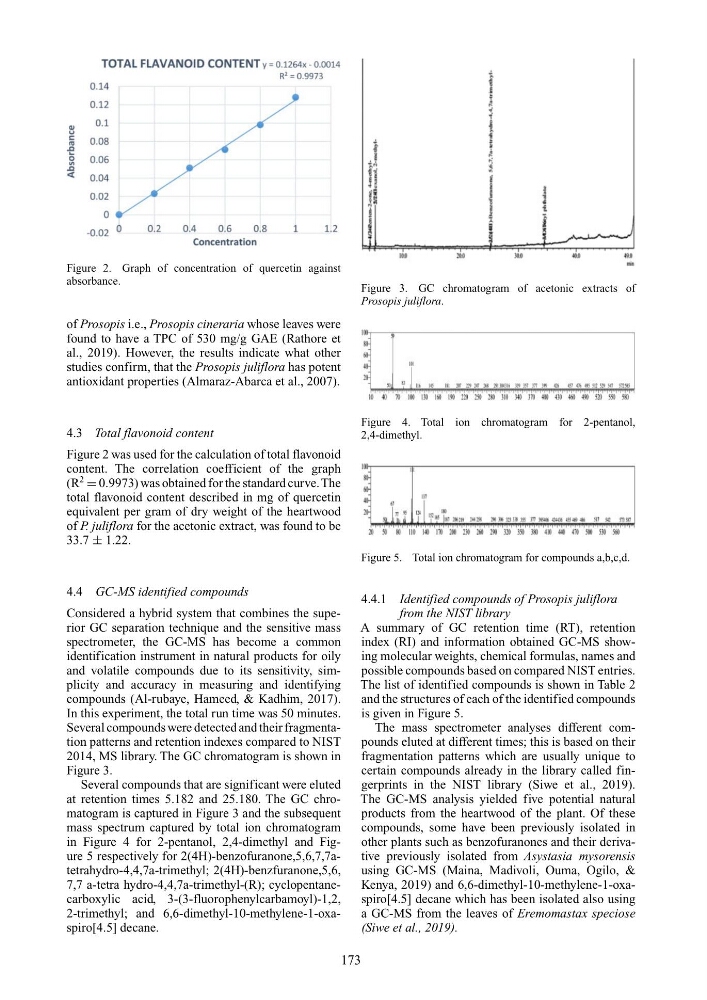
Figure 2. Graph of concentration of quercetin against
absorbance.
of Prosopis i.e., Prosopis cineraria whose leaves were
found to have a TPC of 530 mg/g GAE (Rathore et
al., 2019). However, the results indicate what other
studies confirm, that the Prosopis juliflora has potent
antioxidant properties (Almaraz-Abarca et al., 2007).
4.3 Total flavonoid content
Figure 2 was used for the calculation of total flavonoid
content. The correlation coefficient of the graph
(R
2
= 0.9973) was obtained for the standard curve.The
total flavonoid content described in mg of quercetin
equivalent per gram of dry weight of the heartwood
of P. juliflora for the acetonic extract, was found to be
33.7 ± 1.22.
4.4 GC-MS identified compounds
Considered a hybrid system that combines the superior GC separation technique and the sensitive mass
spectrometer, the GC-MS has become a common
identification instrument in natural products for oily
and volatile compounds due to its sensitivity, simplicity and accuracy in measuring and identifying
compounds (Al-rubaye, Hameed, & Kadhim, 2017).
In this experiment, the total run time was 50 minutes.
Several compounds were detected and their fragmentation patterns and retention indexes compared to NIST
2014, MS library. The GC chromatogram is shown in
Figure 3.
Several compounds that are significant were eluted
at retention times 5.182 and 25.180. The GC chromatogram is captured in Figure 3 and the subsequent
mass spectrum captured by total ion chromatogram
in Figure 4 for 2-pentanol, 2,4-dimethyl and Figure 5 respectively for 2(4H)-benzofuranone,5,6,7,7atetrahydro-4,4,7a-trimethyl; 2(4H)-benzfuranone,5,6,
7,7 a-tetra hydro-4,4,7a-trimethyl-(R); cyclopentanecarboxylic acid, 3-(3-fluorophenylcarbamoyl)-1,2,
2-trimethyl; and 6,6-dimethyl-10-methylene-1-oxaspiro[4.5] decane.
Figure 3. GC chromatogram of acetonic extracts of
Prosopis juliflora.
Figure 4. Total ion chromatogram for 2-pentanol,
2,4-dimethyl.
Figure 5. Total ion chromatogram for compounds a,b,c,d.
4.4.1 Identified compounds of Prosopis juliflora
from the NIST library
A summary of GC retention time (RT), retention
index (RI) and information obtained GC-MS showing molecular weights, chemical formulas, names and
possible compounds based on compared NIST entries.
The list of identified compounds is shown in Table 2
and the structures of each of the identified compounds
is given in Figure 5.
The mass spectrometer analyses different compounds eluted at different times; this is based on their
fragmentation patterns which are usually unique to
certain compounds already in the library called fingerprints in the NIST library (Siwe et al., 2019).
The GC-MS analysis yielded five potential natural
products from the heartwood of the plant. Of these
compounds, some have been previously isolated in
other plants such as benzofuranones and their derivative previously isolated from Asystasia mysorensis
using GC-MS (Maina, Madivoli, Ouma, Ogilo, &
Kenya, 2019) and 6,6-dimethyl-10-methylene-1-oxaspiro[4.5] decane which has been isolated also using
a GC-MS from the leaves of Eremomastax speciose
(Siwe et al., 2019).
173
absorbance.
of Prosopis i.e., Prosopis cineraria whose leaves were
found to have a TPC of 530 mg/g GAE (Rathore et
al., 2019). However, the results indicate what other
studies confirm, that the Prosopis juliflora has potent
antioxidant properties (Almaraz-Abarca et al., 2007).
4.3 Total flavonoid content
Figure 2 was used for the calculation of total flavonoid
content. The correlation coefficient of the graph
(R
2
= 0.9973) was obtained for the standard curve.The
total flavonoid content described in mg of quercetin
equivalent per gram of dry weight of the heartwood
of P. juliflora for the acetonic extract, was found to be
33.7 ± 1.22.
4.4 GC-MS identified compounds
Considered a hybrid system that combines the superior GC separation technique and the sensitive mass
spectrometer, the GC-MS has become a common
identification instrument in natural products for oily
and volatile compounds due to its sensitivity, simplicity and accuracy in measuring and identifying
compounds (Al-rubaye, Hameed, & Kadhim, 2017).
In this experiment, the total run time was 50 minutes.
Several compounds were detected and their fragmentation patterns and retention indexes compared to NIST
2014, MS library. The GC chromatogram is shown in
Figure 3.
Several compounds that are significant were eluted
at retention times 5.182 and 25.180. The GC chromatogram is captured in Figure 3 and the subsequent
mass spectrum captured by total ion chromatogram
in Figure 4 for 2-pentanol, 2,4-dimethyl and Figure 5 respectively for 2(4H)-benzofuranone,5,6,7,7atetrahydro-4,4,7a-trimethyl; 2(4H)-benzfuranone,5,6,
7,7 a-tetra hydro-4,4,7a-trimethyl-(R); cyclopentanecarboxylic acid, 3-(3-fluorophenylcarbamoyl)-1,2,
2-trimethyl; and 6,6-dimethyl-10-methylene-1-oxaspiro[4.5] decane.
Figure 3. GC chromatogram of acetonic extracts of
Prosopis juliflora.
Figure 4. Total ion chromatogram for 2-pentanol,
2,4-dimethyl.
Figure 5. Total ion chromatogram for compounds a,b,c,d.
4.4.1 Identified compounds of Prosopis juliflora
from the NIST library
A summary of GC retention time (RT), retention
index (RI) and information obtained GC-MS showing molecular weights, chemical formulas, names and
possible compounds based on compared NIST entries.
The list of identified compounds is shown in Table 2
and the structures of each of the identified compounds
is given in Figure 5.
The mass spectrometer analyses different compounds eluted at different times; this is based on their
fragmentation patterns which are usually unique to
certain compounds already in the library called fingerprints in the NIST library (Siwe et al., 2019).
The GC-MS analysis yielded five potential natural
products from the heartwood of the plant. Of these
compounds, some have been previously isolated in
other plants such as benzofuranones and their derivative previously isolated from Asystasia mysorensis
using GC-MS (Maina, Madivoli, Ouma, Ogilo, &
Kenya, 2019) and 6,6-dimethyl-10-methylene-1-oxaspiro[4.5] decane which has been isolated also using
a GC-MS from the leaves of Eremomastax speciose
(Siwe et al., 2019).
173