

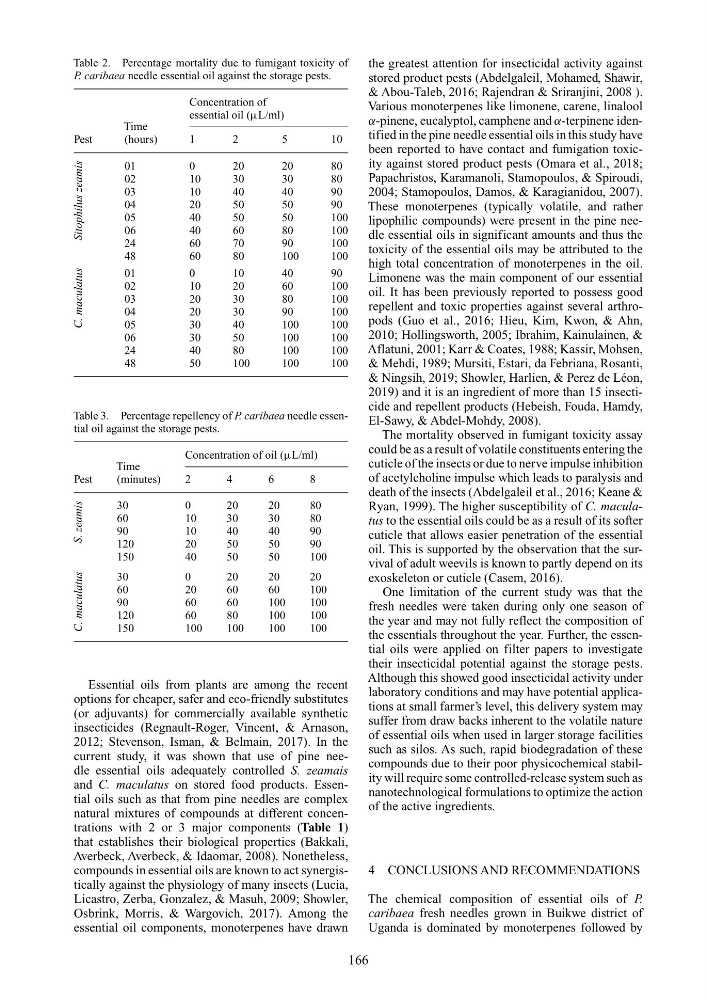
Table 2. Percentage mortality due to fumigant toxicity of
P. caribaea needle essential oil against the storage pests.
Concentration of
essential oil (µL/ml)
Time
Pest
(hours)
1
2
5
10
Sitophilus zeamis
0 1
0
2 0
2 0
8 0
02
10
30
30
80
03
10
40
40
90
04
20
50
50
90
05
40
50
50
100
06
40
60
80
100
24
60
70
90
100
48
60
80
100
100
C. maculatus
0 1
0
1 0
4 0
9 0
02
10
20
60
100
03
20
30
80
100
04
20
30
90
100
05
30
40
100
100
06
30
50
100
100
24
40
80
100
100
48
50
100
100
100
Table 3. Percentage repellency of P. caribaea needle essential oil against the storage pests.
Concentration of oil (µL/ml)
Time
Pest
(minutes)
2
4
6
8
S. zeamis
3 0
0
2 0
2 0
8 0
60
10
30
30
80
90
10
40
40
90
120
20
50
50
90
150
40
50
50
100
C. maculatus
3 0
0
2 0
2 0
2 0
60
20
60
60
100
90
60
60
100
100
120
60
80
100
100
150
100
100
100
100
Essential oils from plants are among the recent
options for cheaper, safer and eco-friendly substitutes
(or adjuvants) for commercially available synthetic
insecticides (Regnault-Roger, Vincent, & Arnason,
2012; Stevenson, Isman, & Belmain, 2017). In the
current study, it was shown that use of pine needle essential oils adequately controlled S. zeamais
and C. maculatus on stored food products. Essential oils such as that from pine needles are complex
natural mixtures of compounds at different concentrations with 2 or 3 major components (Table 1)
that establishes their biological properties (Bakkali,
Averbeck, Averbeck, & Idaomar, 2008). Nonetheless,
compounds in essential oils are known to act synergistically against the physiology of many insects (Lucia,
Licastro, Zerba, Gonzalez, & Masuh, 2009; Showler,
Osbrink, Morris, & Wargovich, 2017). Among the
essential oil components, monoterpenes have drawn
the greatest attention for insecticidal activity against
stored product pests (Abdelgaleil, Mohamed, Shawir,
& Abou-Taleb, 2016; Rajendran & Sriranjini, 2008 ).
Various monoterpenes like limonene, carene, linalool
α-pinene, eucalyptol, camphene and α-terpinene identified in the pine needle essential oils in this study have
been reported to have contact and fumigation toxicity against stored product pests (Omara et al., 2018;
Papachristos, Karamanoli, Stamopoulos, & Spiroudi,
2004; Stamopoulos, Damos, & Karagianidou, 2007).
These monoterpenes (typically volatile, and rather
lipophilic compounds) were present in the pine needle essential oils in significant amounts and thus the
toxicity of the essential oils may be attributed to the
high total concentration of monoterpenes in the oil.
Limonene was the main component of our essential
oil. It has been previously reported to possess good
repellent and toxic properties against several arthropods (Guo et al., 2016; Hieu, Kim, Kwon, & Ahn,
2010; Hollingsworth, 2005; Ibrahim, Kainulainen, &
Aflatuni, 2001; Karr & Coates, 1988; Kassir, Mohsen,
& Mehdi, 1989; Mursiti, Estari, da Febriana, Rosanti,
& Ningsih, 2019; Showler, Harlien, & Perez de Léon,
2019) and it is an ingredient of more than 15 insecticide and repellent products (Hebeish, Fouda, Hamdy,
El-Sawy, & Abdel-Mohdy, 2008).
The mortality observed in fumigant toxicity assay
could be as a result of volatile constituents entering the
cuticle of the insects or due to nerve impulse inhibition
of acetylcholine impulse which leads to paralysis and
death of the insects (Abdelgaleil et al., 2016; Keane &
Ryan, 1999). The higher susceptibility of C. maculatus to the essential oils could be as a result of its softer
cuticle that allows easier penetration of the essential
oil. This is supported by the observation that the survival of adult weevils is known to partly depend on its
exoskeleton or cuticle (Casem, 2016).
One limitation of the current study was that the
fresh needles were taken during only one season of
the year and may not fully reflect the composition of
the essentials throughout the year. Further, the essential oils were applied on filter papers to investigate
their insecticidal potential against the storage pests.
Although this showed good insecticidal activity under
laboratory conditions and may have potential applications at small farmer’s level, this delivery system may
suffer from draw backs inherent to the volatile nature
of essential oils when used in larger storage facilities
such as silos. As such, rapid biodegradation of these
compounds due to their poor physicochemical stability will require some controlled-release system such as
nanotechnological formulations to optimize the action
of the active ingredients.
4 CONCLUSIONS AND RECOMMENDATIONS
The chemical composition of essential oils of P.
caribaea fresh needles grown in Buikwe district of
Uganda is dominated by monoterpenes followed by
166
P. caribaea needle essential oil against the storage pests.
Concentration of
essential oil (µL/ml)
Time
Pest
(hours)
1
2
5
10
Sitophilus zeamis
0 1
0
2 0
2 0
8 0
02
10
30
30
80
03
10
40
40
90
04
20
50
50
90
05
40
50
50
100
06
40
60
80
100
24
60
70
90
100
48
60
80
100
100
C. maculatus
0 1
0
1 0
4 0
9 0
02
10
20
60
100
03
20
30
80
100
04
20
30
90
100
05
30
40
100
100
06
30
50
100
100
24
40
80
100
100
48
50
100
100
100
Table 3. Percentage repellency of P. caribaea needle essential oil against the storage pests.
Concentration of oil (µL/ml)
Time
Pest
(minutes)
2
4
6
8
S. zeamis
3 0
0
2 0
2 0
8 0
60
10
30
30
80
90
10
40
40
90
120
20
50
50
90
150
40
50
50
100
C. maculatus
3 0
0
2 0
2 0
2 0
60
20
60
60
100
90
60
60
100
100
120
60
80
100
100
150
100
100
100
100
Essential oils from plants are among the recent
options for cheaper, safer and eco-friendly substitutes
(or adjuvants) for commercially available synthetic
insecticides (Regnault-Roger, Vincent, & Arnason,
2012; Stevenson, Isman, & Belmain, 2017). In the
current study, it was shown that use of pine needle essential oils adequately controlled S. zeamais
and C. maculatus on stored food products. Essential oils such as that from pine needles are complex
natural mixtures of compounds at different concentrations with 2 or 3 major components (Table 1)
that establishes their biological properties (Bakkali,
Averbeck, Averbeck, & Idaomar, 2008). Nonetheless,
compounds in essential oils are known to act synergistically against the physiology of many insects (Lucia,
Licastro, Zerba, Gonzalez, & Masuh, 2009; Showler,
Osbrink, Morris, & Wargovich, 2017). Among the
essential oil components, monoterpenes have drawn
the greatest attention for insecticidal activity against
stored product pests (Abdelgaleil, Mohamed, Shawir,
& Abou-Taleb, 2016; Rajendran & Sriranjini, 2008 ).
Various monoterpenes like limonene, carene, linalool
α-pinene, eucalyptol, camphene and α-terpinene identified in the pine needle essential oils in this study have
been reported to have contact and fumigation toxicity against stored product pests (Omara et al., 2018;
Papachristos, Karamanoli, Stamopoulos, & Spiroudi,
2004; Stamopoulos, Damos, & Karagianidou, 2007).
These monoterpenes (typically volatile, and rather
lipophilic compounds) were present in the pine needle essential oils in significant amounts and thus the
toxicity of the essential oils may be attributed to the
high total concentration of monoterpenes in the oil.
Limonene was the main component of our essential
oil. It has been previously reported to possess good
repellent and toxic properties against several arthropods (Guo et al., 2016; Hieu, Kim, Kwon, & Ahn,
2010; Hollingsworth, 2005; Ibrahim, Kainulainen, &
Aflatuni, 2001; Karr & Coates, 1988; Kassir, Mohsen,
& Mehdi, 1989; Mursiti, Estari, da Febriana, Rosanti,
& Ningsih, 2019; Showler, Harlien, & Perez de Léon,
2019) and it is an ingredient of more than 15 insecticide and repellent products (Hebeish, Fouda, Hamdy,
El-Sawy, & Abdel-Mohdy, 2008).
The mortality observed in fumigant toxicity assay
could be as a result of volatile constituents entering the
cuticle of the insects or due to nerve impulse inhibition
of acetylcholine impulse which leads to paralysis and
death of the insects (Abdelgaleil et al., 2016; Keane &
Ryan, 1999). The higher susceptibility of C. maculatus to the essential oils could be as a result of its softer
cuticle that allows easier penetration of the essential
oil. This is supported by the observation that the survival of adult weevils is known to partly depend on its
exoskeleton or cuticle (Casem, 2016).
One limitation of the current study was that the
fresh needles were taken during only one season of
the year and may not fully reflect the composition of
the essentials throughout the year. Further, the essential oils were applied on filter papers to investigate
their insecticidal potential against the storage pests.
Although this showed good insecticidal activity under
laboratory conditions and may have potential applications at small farmer’s level, this delivery system may
suffer from draw backs inherent to the volatile nature
of essential oils when used in larger storage facilities
such as silos. As such, rapid biodegradation of these
compounds due to their poor physicochemical stability will require some controlled-release system such as
nanotechnological formulations to optimize the action
of the active ingredients.
4 CONCLUSIONS AND RECOMMENDATIONS
The chemical composition of essential oils of P.
caribaea fresh needles grown in Buikwe district of
Uganda is dominated by monoterpenes followed by
166