

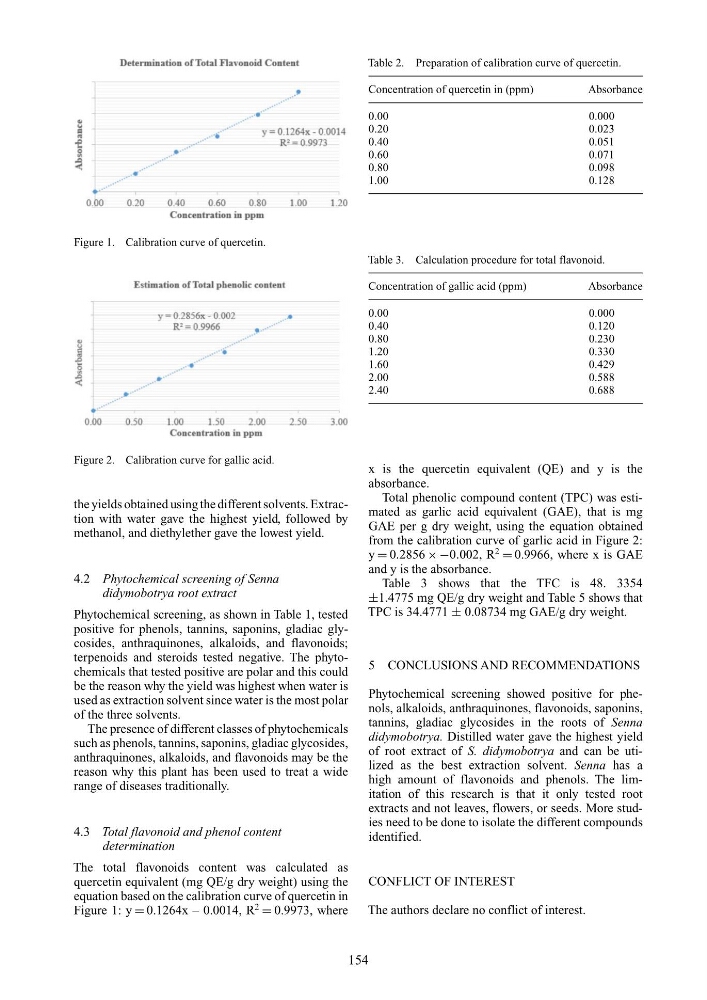
Figure 1. Calibration curve of quercetin.
Figure 2. Calibration curve for gallic acid.
the yields obtained using the different solvents. Extraction with water gave the highest yield, followed by
methanol, and diethylether gave the lowest yield.
4.2 Phytochemical screening of Senna
didymobotrya root extract
Phytochemical screening, as shown in Table 1, tested
positive for phenols, tannins, saponins, gladiac glycosides, anthraquinones, alkaloids, and flavonoids;
terpenoids and steroids tested negative. The phytochemicals that tested positive are polar and this could
be the reason why the yield was highest when water is
used as extraction solvent since water is the most polar
of the three solvents.
The presence of different classes of phytochemicals
such as phenols, tannins, saponins, gladiac glycosides,
anthraquinones, alkaloids, and flavonoids may be the
reason why this plant has been used to treat a wide
range of diseases traditionally.
4.3 Total flavonoid and phenol content
determination
The total flavonoids content was calculated as
quercetin equivalent (mg QE/g dry weight) using the
equation based on the calibration curve of quercetin in
Figure 1: y = 0.1264x – 0.0014, R
2
= 0.9973, where
Table 2. Preparation of calibration curve of quercetin.
Concentration of quercetin in (ppm)
Absorbance
0.00
0.000
0.20
0.023
0.40
0.051
0.60
0.071
0.80
0.098
1.00
0.128
Table 3. Calculation procedure for total flavonoid.
Concentration of gallic acid (ppm)
Absorbance
0.00
0.000
0.40
0.120
0.80
0.230
1.20
0.330
1.60
0.429
2.00
0.588
2.40
0.688
x is the quercetin equivalent (QE) and y is the
absorbance.
Total phenolic compound content (TPC) was estimated as garlic acid equivalent (GAE), that is mg
GAE per g dry weight, using the equation obtained
from the calibration curve of garlic acid in Figure 2:
y = 0.2856 × −0.002, R
2
= 0.9966, where x is GAE
and y is the absorbance.
Table 3 shows that the TFC is 48. 3354
±1.4775 mg QE/g dry weight and Table 5 shows that
TPC is 34.4771 ± 0.08734 mg GAE/g dry weight.
5 CONCLUSIONS AND RECOMMENDATIONS
Phytochemical screening showed positive for phenols, alkaloids, anthraquinones, flavonoids, saponins,
tannins, gladiac glycosides in the roots of Senna
didymobotrya. Distilled water gave the highest yield
of root extract of S. didymobotrya and can be utilized as the best extraction solvent. Senna has a
high amount of flavonoids and phenols. The limitation of this research is that it only tested root
extracts and not leaves, flowers, or seeds. More studies need to be done to isolate the different compounds
identified.
CONFLICT OF INTEREST
The authors declare no conflict of interest.
154
Figure 2. Calibration curve for gallic acid.
the yields obtained using the different solvents. Extraction with water gave the highest yield, followed by
methanol, and diethylether gave the lowest yield.
4.2 Phytochemical screening of Senna
didymobotrya root extract
Phytochemical screening, as shown in Table 1, tested
positive for phenols, tannins, saponins, gladiac glycosides, anthraquinones, alkaloids, and flavonoids;
terpenoids and steroids tested negative. The phytochemicals that tested positive are polar and this could
be the reason why the yield was highest when water is
used as extraction solvent since water is the most polar
of the three solvents.
The presence of different classes of phytochemicals
such as phenols, tannins, saponins, gladiac glycosides,
anthraquinones, alkaloids, and flavonoids may be the
reason why this plant has been used to treat a wide
range of diseases traditionally.
4.3 Total flavonoid and phenol content
determination
The total flavonoids content was calculated as
quercetin equivalent (mg QE/g dry weight) using the
equation based on the calibration curve of quercetin in
Figure 1: y = 0.1264x – 0.0014, R
2
= 0.9973, where
Table 2. Preparation of calibration curve of quercetin.
Concentration of quercetin in (ppm)
Absorbance
0.00
0.000
0.20
0.023
0.40
0.051
0.60
0.071
0.80
0.098
1.00
0.128
Table 3. Calculation procedure for total flavonoid.
Concentration of gallic acid (ppm)
Absorbance
0.00
0.000
0.40
0.120
0.80
0.230
1.20
0.330
1.60
0.429
2.00
0.588
2.40
0.688
x is the quercetin equivalent (QE) and y is the
absorbance.
Total phenolic compound content (TPC) was estimated as garlic acid equivalent (GAE), that is mg
GAE per g dry weight, using the equation obtained
from the calibration curve of garlic acid in Figure 2:
y = 0.2856 × −0.002, R
2
= 0.9966, where x is GAE
and y is the absorbance.
Table 3 shows that the TFC is 48. 3354
±1.4775 mg QE/g dry weight and Table 5 shows that
TPC is 34.4771 ± 0.08734 mg GAE/g dry weight.
5 CONCLUSIONS AND RECOMMENDATIONS
Phytochemical screening showed positive for phenols, alkaloids, anthraquinones, flavonoids, saponins,
tannins, gladiac glycosides in the roots of Senna
didymobotrya. Distilled water gave the highest yield
of root extract of S. didymobotrya and can be utilized as the best extraction solvent. Senna has a
high amount of flavonoids and phenols. The limitation of this research is that it only tested root
extracts and not leaves, flowers, or seeds. More studies need to be done to isolate the different compounds
identified.
CONFLICT OF INTEREST
The authors declare no conflict of interest.
154