

Anthraquinones
Borntreger’s test
A sample of 5 g of the extract was put in a test tube and
10 mL of benzene was added. The mixture was shaken
and filtered. 5 mL of ammonia solution was added to
the filtrate and the mixture shaken. The presence of
a violet colour in the ammonia phase (lower phase)
indicates the presence of anthraquinones.
3.6 Determination of total flavonoid content
Total flavonoid content (TFC) was determined by aluminium chloride colourimetric assay adapted from
Sandip et al. (2014) with a slight modification.
Quercetin was used as the standard and the flavonoid
content of the extract was expressed as mg of quercetin
equivalent per gram of dried extract. 10 mg of
quercetin was dissolved in 10 mL of 80% methanol
(v/v) and filtered. This was labelled as stock solution.
Then serial dilutions were performed: Five 50 mL volumetric flask were cleaned and 10, 20, 30, 40, and 50
µL of the stock solution added to the flask and made
to the mark and the final concentrations were 0.2, 0.4,
0.6, 0.8, and 1.0 ppm, respectively. The blank consisted
of all the reagents, except for the extract or quercetin
in standard solution which was substituted with 1 mL
of methanol. With a pipette 3 mL of plant extract or
standard of different concentration solution was transferred into a test tube. Then 1 mL of 2% AlCl 3 , 80%
methanol solution and 1 mL of 1 M sodium acetate
solution was added to 3 mL of the extract or standard.
The test tube of the mixture was then allowed to stand
at room temperature for 1 hour. The extract mixture
was diluted to 50 mL to give absorbance below 1.0
in the UV–Vis spectrophotometer. The absorbance of
the solution was measured at 446 nm using a UV–Vis
spectrophotometer against a blank. The total content
of flavonoid compounds in plant extracts in quercetin
equivalents was calculated by the following equation
C = DF
c × V
m
(1)
Where C is the total content of flavonoid compounds in mg/g plant extract, in Gallic equivalents
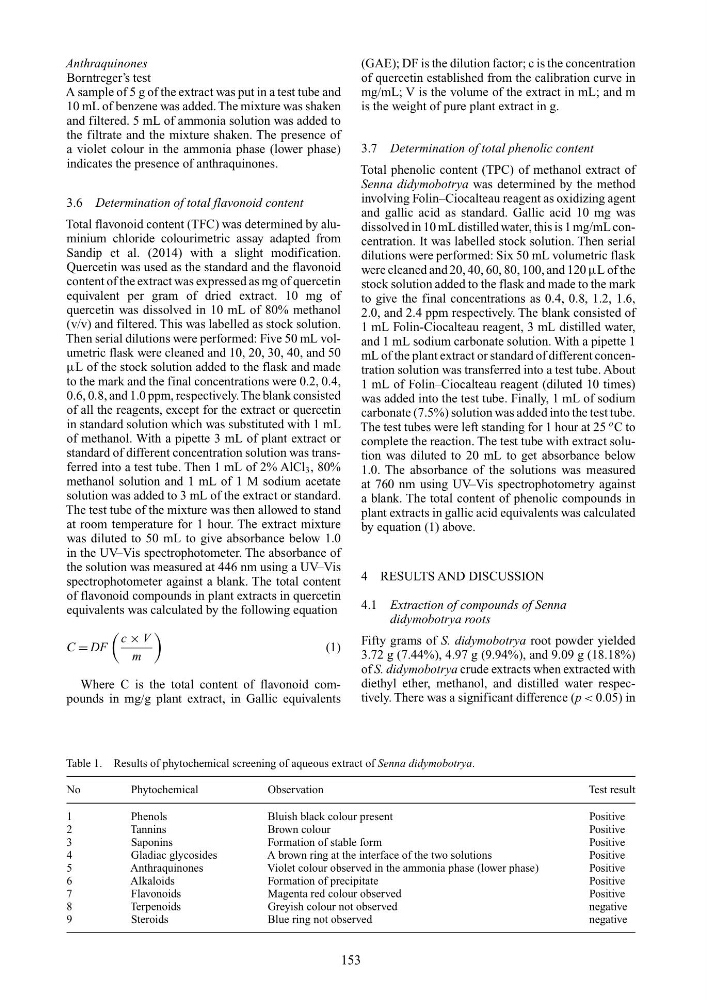
Table 1. Results of phytochemical screening of aqueous extract of Senna didymobotrya.
No
Phytochemical
Observation
Test result
1
Phenols
Bluish black colour present
Positive
2
Tannins
Brown colour
Positive
3
Saponins
Formation of stable form
Positive
4
Gladiac glycosides
A brown ring at the interface of the two solutions
Positive
5
Anthraquinones
Violet colour observed in the ammonia phase (lower phase)
Positive
6
Alkaloids
Formation of precipitate
Positive
7
Flavonoids
Magenta red colour observed
Positive
8
Terpenoids
Greyish colour not observed
negative
9
Steroids
Blue ring not observed
negative
(GAE); DF is the dilution factor; c is the concentration
of quercetin established from the calibration curve in
mg/mL; V is the volume of the extract in mL; and m
is the weight of pure plant extract in g.
3.7 Determination of total phenolic content
Total phenolic content (TPC) of methanol extract of
Senna didymobotrya was determined by the method
involving Folin–Ciocalteau reagent as oxidizing agent
and gallic acid as standard. Gallic acid 10 mg was
dissolved in 10 mL distilled water, this is 1 mg/mL concentration. It was labelled stock solution. Then serial
dilutions were performed: Six 50 mL volumetric flask
were cleaned and 20, 40, 60, 80, 100, and 120 µL of the
stock solution added to the flask and made to the mark
to give the final concentrations as 0.4, 0.8, 1.2, 1.6,
2.0, and 2.4 ppm respectively. The blank consisted of
1 mL Folin-Ciocalteau reagent, 3 mL distilled water,
and 1 mL sodium carbonate solution. With a pipette 1
mL of the plant extract or standard of different concentration solution was transferred into a test tube. About
1 mL of Folin–Ciocalteau reagent (diluted 10 times)
was added into the test tube. Finally, 1 mL of sodium
carbonate (7.5%) solution was added into the test tube.
The test tubes were left standing for 1 hour at 25
o C to
complete the reaction. The test tube with extract solution was diluted to 20 mL to get absorbance below
1.0. The absorbance of the solutions was measured
at 760 nm using UV–Vis spectrophotometry against
a blank. The total content of phenolic compounds in
plant extracts in gallic acid equivalents was calculated
by equation (1) above.
4 RESULTS AND DISCUSSION
4.1 Extraction of compounds of Senna
didymobotrya roots
Fifty grams of S. didymobotrya root powder yielded
3.72 g (7.44%), 4.97 g (9.94%), and 9.09 g (18.18%)
of S. didymobotrya crude extracts when extracted with
diethyl ether, methanol, and distilled water respectively. There was a significant difference (p < 0.05) in
153
Borntreger’s test
A sample of 5 g of the extract was put in a test tube and
10 mL of benzene was added. The mixture was shaken
and filtered. 5 mL of ammonia solution was added to
the filtrate and the mixture shaken. The presence of
a violet colour in the ammonia phase (lower phase)
indicates the presence of anthraquinones.
3.6 Determination of total flavonoid content
Total flavonoid content (TFC) was determined by aluminium chloride colourimetric assay adapted from
Sandip et al. (2014) with a slight modification.
Quercetin was used as the standard and the flavonoid
content of the extract was expressed as mg of quercetin
equivalent per gram of dried extract. 10 mg of
quercetin was dissolved in 10 mL of 80% methanol
(v/v) and filtered. This was labelled as stock solution.
Then serial dilutions were performed: Five 50 mL volumetric flask were cleaned and 10, 20, 30, 40, and 50
µL of the stock solution added to the flask and made
to the mark and the final concentrations were 0.2, 0.4,
0.6, 0.8, and 1.0 ppm, respectively. The blank consisted
of all the reagents, except for the extract or quercetin
in standard solution which was substituted with 1 mL
of methanol. With a pipette 3 mL of plant extract or
standard of different concentration solution was transferred into a test tube. Then 1 mL of 2% AlCl 3 , 80%
methanol solution and 1 mL of 1 M sodium acetate
solution was added to 3 mL of the extract or standard.
The test tube of the mixture was then allowed to stand
at room temperature for 1 hour. The extract mixture
was diluted to 50 mL to give absorbance below 1.0
in the UV–Vis spectrophotometer. The absorbance of
the solution was measured at 446 nm using a UV–Vis
spectrophotometer against a blank. The total content
of flavonoid compounds in plant extracts in quercetin
equivalents was calculated by the following equation
C = DF
c × V
m
(1)
Where C is the total content of flavonoid compounds in mg/g plant extract, in Gallic equivalents
Table 1. Results of phytochemical screening of aqueous extract of Senna didymobotrya.
No
Phytochemical
Observation
Test result
1
Phenols
Bluish black colour present
Positive
2
Tannins
Brown colour
Positive
3
Saponins
Formation of stable form
Positive
4
Gladiac glycosides
A brown ring at the interface of the two solutions
Positive
5
Anthraquinones
Violet colour observed in the ammonia phase (lower phase)
Positive
6
Alkaloids
Formation of precipitate
Positive
7
Flavonoids
Magenta red colour observed
Positive
8
Terpenoids
Greyish colour not observed
negative
9
Steroids
Blue ring not observed
negative
(GAE); DF is the dilution factor; c is the concentration
of quercetin established from the calibration curve in
mg/mL; V is the volume of the extract in mL; and m
is the weight of pure plant extract in g.
3.7 Determination of total phenolic content
Total phenolic content (TPC) of methanol extract of
Senna didymobotrya was determined by the method
involving Folin–Ciocalteau reagent as oxidizing agent
and gallic acid as standard. Gallic acid 10 mg was
dissolved in 10 mL distilled water, this is 1 mg/mL concentration. It was labelled stock solution. Then serial
dilutions were performed: Six 50 mL volumetric flask
were cleaned and 20, 40, 60, 80, 100, and 120 µL of the
stock solution added to the flask and made to the mark
to give the final concentrations as 0.4, 0.8, 1.2, 1.6,
2.0, and 2.4 ppm respectively. The blank consisted of
1 mL Folin-Ciocalteau reagent, 3 mL distilled water,
and 1 mL sodium carbonate solution. With a pipette 1
mL of the plant extract or standard of different concentration solution was transferred into a test tube. About
1 mL of Folin–Ciocalteau reagent (diluted 10 times)
was added into the test tube. Finally, 1 mL of sodium
carbonate (7.5%) solution was added into the test tube.
The test tubes were left standing for 1 hour at 25
o C to
complete the reaction. The test tube with extract solution was diluted to 20 mL to get absorbance below
1.0. The absorbance of the solutions was measured
at 760 nm using UV–Vis spectrophotometry against
a blank. The total content of phenolic compounds in
plant extracts in gallic acid equivalents was calculated
by equation (1) above.
4 RESULTS AND DISCUSSION
4.1 Extraction of compounds of Senna
didymobotrya roots
Fifty grams of S. didymobotrya root powder yielded
3.72 g (7.44%), 4.97 g (9.94%), and 9.09 g (18.18%)
of S. didymobotrya crude extracts when extracted with
diethyl ether, methanol, and distilled water respectively. There was a significant difference (p < 0.05) in
153