

252
Subtle Agroecologies
7000
6000
5000
4000
3000
2000
1000
0
2009-2010
2010-2011
2011-2012
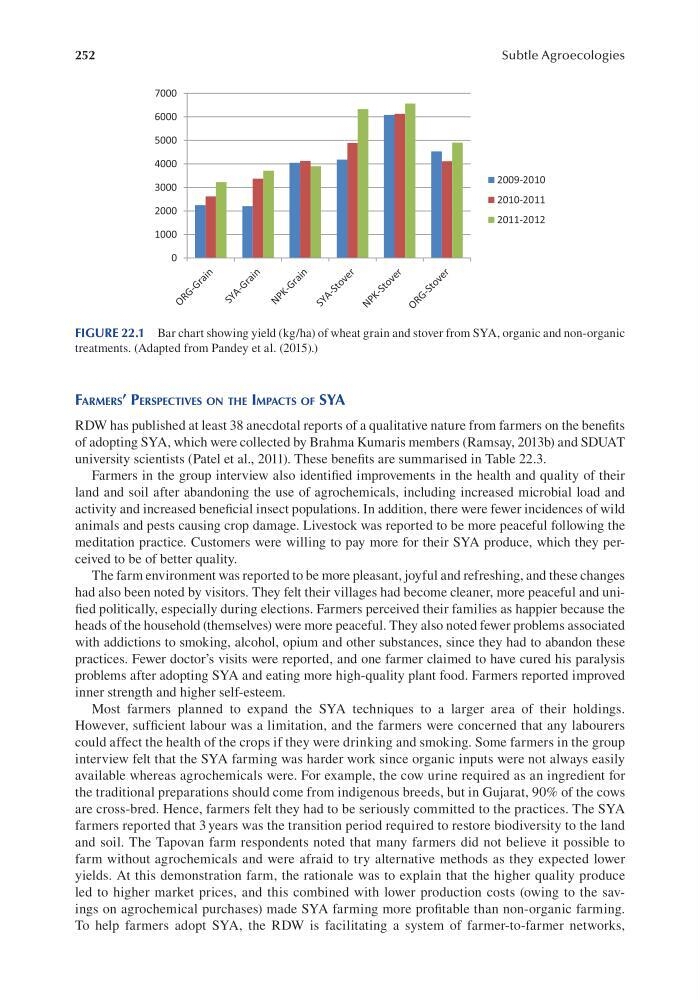
FIGURE 22.1 Bar chart showing yield (kg/ha) of wheat grain and stover from SYA, organic and non-organic
treatments. (Adapted from Pandey et al. (2015).)
FARMERS’ PERSPECTIVES ON THE IMPACTS OF SYA
RDW has published at least 38 anecdotal reports of a qualitative nature from farmers on the benefts
of adopting SYA, which were collected by Brahma Kumaris members (Ramsay, 2013b) and SDUAT
university scientists (Patel et al., 2011). These benefts are summarised in Table 22.3.
Farmers in the group interview also identifed improvements in the health and quality of their
land and soil after abandoning the use of agrochemicals, including increased microbial load and
activity and increased benefcial insect populations. In addition, there were fewer incidences of wild
animals and pests causing crop damage. Livestock was reported to be more peaceful following the
meditation practice. Customers were willing to pay more for their SYA produce, which they perceived to be of better quality.
The farm environment was reported to be more pleasant, joyful and refreshing, and these changes
had also been noted by visitors. They felt their villages had become cleaner, more peaceful and unifed politically, especially during elections. Farmers perceived their families as happier because the
heads of the household (themselves) were more peaceful. They also noted fewer problems associated
with addictions to smoking, alcohol, opium and other substances, since they had to abandon these
practices. Fewer doctor’s visits were reported, and one farmer claimed to have cured his paralysis
problems after adopting SYA and eating more high-quality plant food. Farmers reported improved
inner strength and higher self-esteem.
Most farmers planned to expand the SYA techniques to a larger area of their holdings.
However, suffcient labour was a limitation, and the farmers were concerned that any labourers
could affect the health of the crops if they were drinking and smoking. Some farmers in the group
interview felt that the SYA farming was harder work since organic inputs were not always easily
available whereas agrochemicals were. For example, the cow urine required as an ingredient for
the traditional preparations should come from indigenous breeds, but in Gujarat, 90% of the cows
are cross-bred. Hence, farmers felt they had to be seriously committed to the practices. The SYA
farmers reported that 3 years was the transition period required to restore biodiversity to the land
and soil. The Tapovan farm respondents noted that many farmers did not believe it possible to
farm without agrochemicals and were afraid to try alternative methods as they expected lower
yields. At this demonstration farm, the rationale was to explain that the higher quality produce
led to higher market prices, and this combined with lower production costs (owing to the savings on agrochemical purchases) made SYA farming more proftable than non-organic farming.
To help farmers adopt SYA, the RDW is facilitating a system of farmer-to-farmer networks,