

160
Subtle Agroecologies
from each variety and ten root samples were taken from each replicate. Histological sampling was
performed in the area between 1.0 and 1.5 cm from the apex of the root upwards.
The root samples were kept in liquid nitrogen until they were taken to the lab. From there, crosssections of 0.2 mm thickness were made and analysed under an optical microscope. Digital photos
were taken, and the aerenchyma tissue area was calculated using the Motic Images Plus 2.0 program
(Motic Instruments Inc., Richmond, Canada) through morphometric methods that gave a magnifcation of up to 400×.
Prior to the analysis of variance of variations in vegetative bud break in this experiment, it was
checked whether the variable met the premises of the analysis of variance, the normal distribution
of the data through the Shapiro–Wilk test (Di Rienzo et al., 2019) and the homogeneity of variances
using the multiple comparison test (Minitab, 2013). The data were statistically processed through
a fxed-effect simple-classifcation variance analysis, with three treatments for both crops, cuttings
with their shoots that received lasers for 10 seconds and a life cycle of 30 days in non-fooding
conditions (10´30d NF) and in fooding conditions (10´30d F) and one treatment control (laser-free
and stress-free). As the data collected did not follow a normal distribution, the variance analysis
of nonparametric form was by the Kruskal–Wallis test. The comparison of treatments was made
through the range means (Conover, 1999). For each treatment, the mean of means and their standard
error were determined.
RESULTS AND DISCUSSION
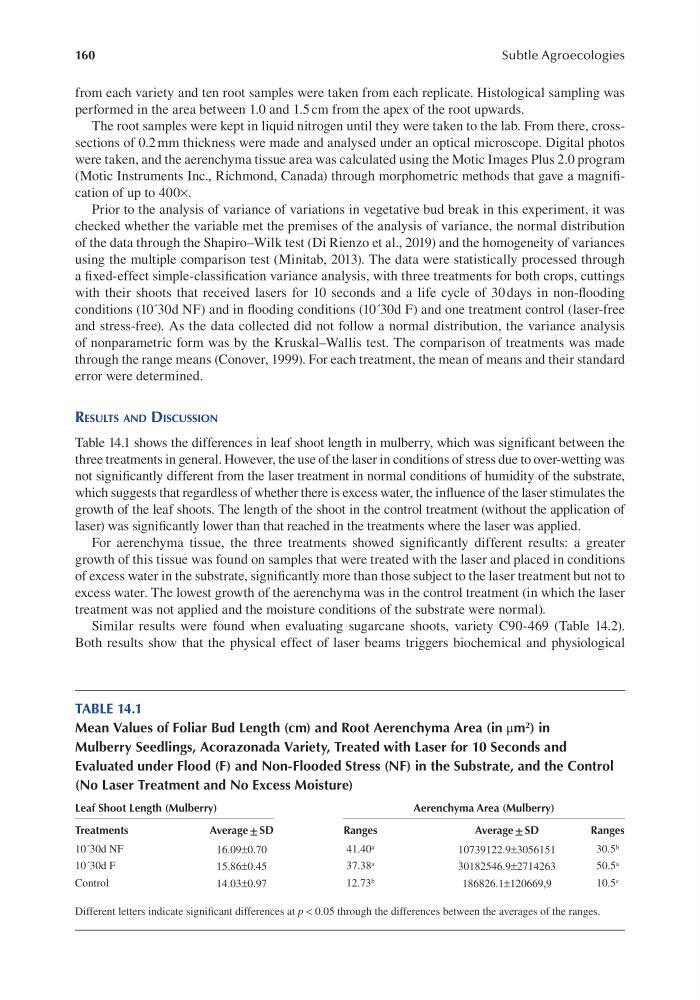
Table 14.1 shows the differences in leaf shoot length in mulberry, which was signifcant between the
three treatments in general. However, the use of the laser in conditions of stress due to over-wetting was
not signifcantly different from the laser treatment in normal conditions of humidity of the substrate,
which suggests that regardless of whether there is excess water, the infuence of the laser stimulates the
growth of the leaf shoots. The length of the shoot in the control treatment (without the application of
laser) was signifcantly lower than that reached in the treatments where the laser was applied.
For aerenchyma tissue, the three treatments showed signifcantly different results: a greater
growth of this tissue was found on samples that were treated with the laser and placed in conditions
of excess water in the substrate, signifcantly more than those subject to the laser treatment but not to
excess water. The lowest growth of the aerenchyma was in the control treatment (in which the laser
treatment was not applied and the moisture conditions of the substrate were normal).
Similar results were found when evaluating sugarcane shoots, variety C90-469 (Table 14.2).
Both results show that the physical effect of laser beams triggers biochemical and physiological
TABLE 14.1
Mean Values of Foliar Bud Length (cm) and Root Aerenchyma Area (in μm 2 ) in
Mulberry Seedlings, Acorazonada Variety, Treated with Laser for 10 Seconds and
Evaluated under Flood (F) and Non-Flooded Stress (NF) in the Substrate, and the Control
(No Laser Treatment and No Excess Moisture)
Leaf Shoot Length (Mulberry)
Aerenchyma Area (Mulberry)
Treatments
Average ± SD
Ranges
Average ± SD
Ranges
10´30d NF
16.09±0.70
41.40 a
10739122.9±3056151
30.5 b
10´30d F
15.86±0.45
37.38 a
30182546.9±2714263
50.5 a
Control
14.03±0.97
12.73 b
186826.1±120669,9
10.5 c
Different letters indicate signifcant differences at p < 0.05 through the differences between the averages of the ranges.
Subtle Agroecologies
from each variety and ten root samples were taken from each replicate. Histological sampling was
performed in the area between 1.0 and 1.5 cm from the apex of the root upwards.
The root samples were kept in liquid nitrogen until they were taken to the lab. From there, crosssections of 0.2 mm thickness were made and analysed under an optical microscope. Digital photos
were taken, and the aerenchyma tissue area was calculated using the Motic Images Plus 2.0 program
(Motic Instruments Inc., Richmond, Canada) through morphometric methods that gave a magnifcation of up to 400×.
Prior to the analysis of variance of variations in vegetative bud break in this experiment, it was
checked whether the variable met the premises of the analysis of variance, the normal distribution
of the data through the Shapiro–Wilk test (Di Rienzo et al., 2019) and the homogeneity of variances
using the multiple comparison test (Minitab, 2013). The data were statistically processed through
a fxed-effect simple-classifcation variance analysis, with three treatments for both crops, cuttings
with their shoots that received lasers for 10 seconds and a life cycle of 30 days in non-fooding
conditions (10´30d NF) and in fooding conditions (10´30d F) and one treatment control (laser-free
and stress-free). As the data collected did not follow a normal distribution, the variance analysis
of nonparametric form was by the Kruskal–Wallis test. The comparison of treatments was made
through the range means (Conover, 1999). For each treatment, the mean of means and their standard
error were determined.
RESULTS AND DISCUSSION
Table 14.1 shows the differences in leaf shoot length in mulberry, which was signifcant between the
three treatments in general. However, the use of the laser in conditions of stress due to over-wetting was
not signifcantly different from the laser treatment in normal conditions of humidity of the substrate,
which suggests that regardless of whether there is excess water, the infuence of the laser stimulates the
growth of the leaf shoots. The length of the shoot in the control treatment (without the application of
laser) was signifcantly lower than that reached in the treatments where the laser was applied.
For aerenchyma tissue, the three treatments showed signifcantly different results: a greater
growth of this tissue was found on samples that were treated with the laser and placed in conditions
of excess water in the substrate, signifcantly more than those subject to the laser treatment but not to
excess water. The lowest growth of the aerenchyma was in the control treatment (in which the laser
treatment was not applied and the moisture conditions of the substrate were normal).
Similar results were found when evaluating sugarcane shoots, variety C90-469 (Table 14.2).
Both results show that the physical effect of laser beams triggers biochemical and physiological
TABLE 14.1
Mean Values of Foliar Bud Length (cm) and Root Aerenchyma Area (in μm 2 ) in
Mulberry Seedlings, Acorazonada Variety, Treated with Laser for 10 Seconds and
Evaluated under Flood (F) and Non-Flooded Stress (NF) in the Substrate, and the Control
(No Laser Treatment and No Excess Moisture)
Leaf Shoot Length (Mulberry)
Aerenchyma Area (Mulberry)
Treatments
Average ± SD
Ranges
Average ± SD
Ranges
10´30d NF
16.09±0.70
41.40 a
10739122.9±3056151
30.5 b
10´30d F
15.86±0.45
37.38 a
30182546.9±2714263
50.5 a
Control
14.03±0.97
12.73 b
186826.1±120669,9
10.5 c
Different letters indicate signifcant differences at p < 0.05 through the differences between the averages of the ranges.