

161
Low-Power Laser Biotechnology Pretreatment
TABLE 14.2
Mean Values of Foliar Shoot Length (cm) and Root Aerenchyma Area (in μm 2 ) in
Sugarcane Seedlings, Variety C90-469, Treated with Laser for 10 Seconds and
Evaluated under Flood (F) and Non-Flooded Stress (NF) in the Substrate, and the Control
(No Laser Treatment and No Excess Moisture)
Leaf Shoot Length (Sugarcane)
Aerenchyma Area (Sugarcane)
Treatments
Average ± SD
Ranges
Average ± SD
Ranges
10´30d NF F
96.08±5.59
35.15 a
6437131±2010409
30.5 b
10´30d F
96.23±5.88
35.25 a
18046968.8±1406608.9
50.5 a
Control
91.51±4.64
21.10 b
108691±72487.7
10.5 c
Different letters indicate signifcant differences at p < 0.05 through the differences between the averages of the ranges.
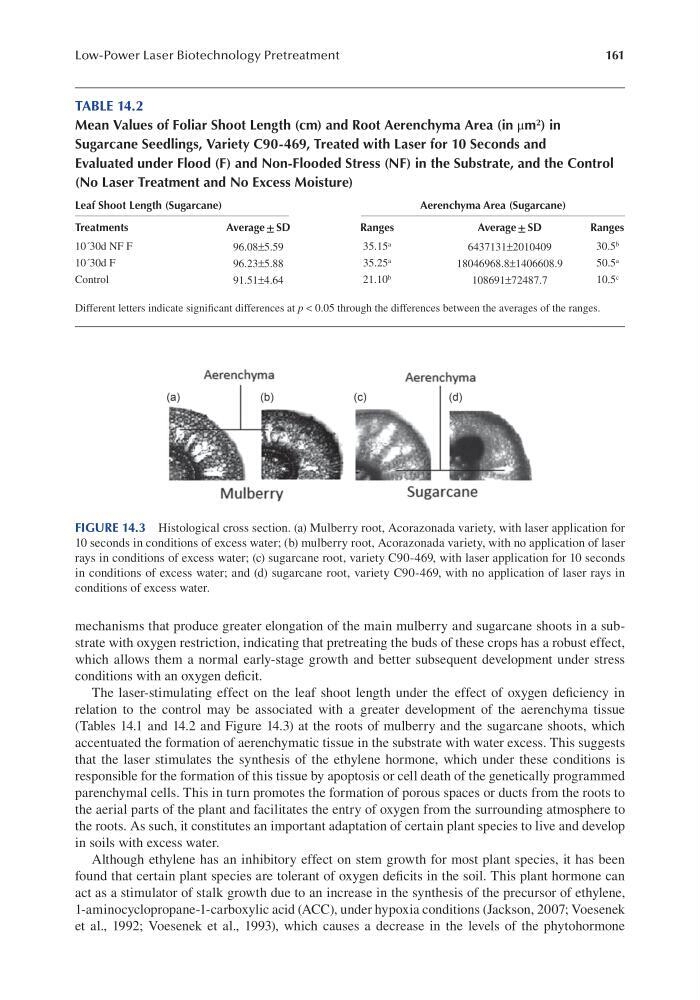
FIGURE 14.3 Histological cross section. (a) Mulberry root, Acorazonada variety, with laser application for
10 seconds in conditions of excess water; (b) mulberry root, Acorazonada variety, with no application of laser
rays in conditions of excess water; (c) sugarcane root, variety C90-469, with laser application for 10 seconds
in conditions of excess water; and (d) sugarcane root, variety C90-469, with no application of laser rays in
conditions of excess water.
mechanisms that produce greater elongation of the main mulberry and sugarcane shoots in a substrate with oxygen restriction, indicating that pretreating the buds of these crops has a robust effect,
which allows them a normal early-stage growth and better subsequent development under stress
conditions with an oxygen defcit.
The laser-stimulating effect on the leaf shoot length under the effect of oxygen defciency in
relation to the control may be associated with a greater development of the aerenchyma tissue
(Tables 14.1 and 14.2 and Figure 14.3) at the roots of mulberry and the sugarcane shoots, which
accentuated the formation of aerenchymatic tissue in the substrate with water excess. This suggests
that the laser stimulates the synthesis of the ethylene hormone, which under these conditions is
responsible for the formation of this tissue by apoptosis or cell death of the genetically programmed
parenchymal cells. This in turn promotes the formation of porous spaces or ducts from the roots to
the aerial parts of the plant and facilitates the entry of oxygen from the surrounding atmosphere to
the roots. As such, it constitutes an important adaptation of certain plant species to live and develop
in soils with excess water.
Although ethylene has an inhibitory effect on stem growth for most plant species, it has been
found that certain plant species are tolerant of oxygen defcits in the soil. This plant hormone can
act as a stimulator of stalk growth due to an increase in the synthesis of the precursor of ethylene,
1-aminocyclopropane-1-carboxylic acid (ACC), under hypoxia conditions (Jackson, 2007; Voesenek
et al., 1992; Voesenek et al., 1993), which causes a decrease in the levels of the phytohormone